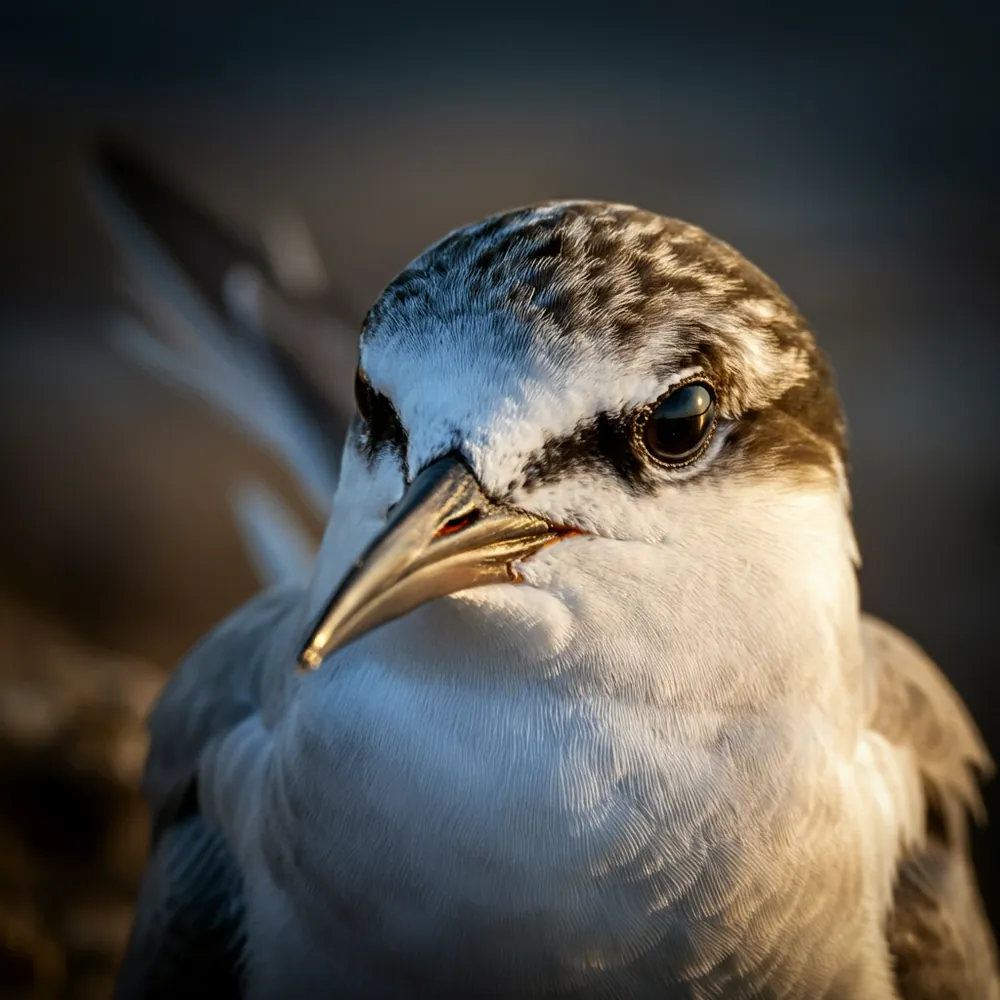
Hey adventurers! Get ready to meet one of California's coolest, tiniest superheroes of the sky: the California Least Tern! Imagine a bird smaller than a robin, zipping through the air like a feathered fighter jet. With its sleek pearl-gray back, bright white tummy, and a snazzy black cap, it looks like it's ready for a fancy party. And check out its little yellow beak – perfect for munching on tasty fish!
But this little bird isn't just pretty; it's a super-duper hunter! Watch closely as it hovers high above the water, flapping its long wings like a tiny helicopter. Then, *SPLASH!* It folds its wings and dives headfirst into the waves, emerging triumphantly with a wriggling fishy snack like anchovies. This amazing dive-bombing skill means it loves to make its nests in simple little scrapes right on our sandy beaches and muddy shores, always close to its favorite fishing spots. Listen for its cheerful 'kip-kip' calls as it chats with its friends!
Why is this tiny tern so special? Well, it's like a super important health report card for our beaches! Because it needs clean water and lots of fish, if the California Least Tern is struggling, it means our coastal homes are struggling too. Sadly, this incredible bird is endangered, which means it needs our help to protect its sandy nests and fishing grounds. By looking after these amazing little dive-bombers, we're helping to keep our precious beaches healthy and beautiful for everyone, including you!
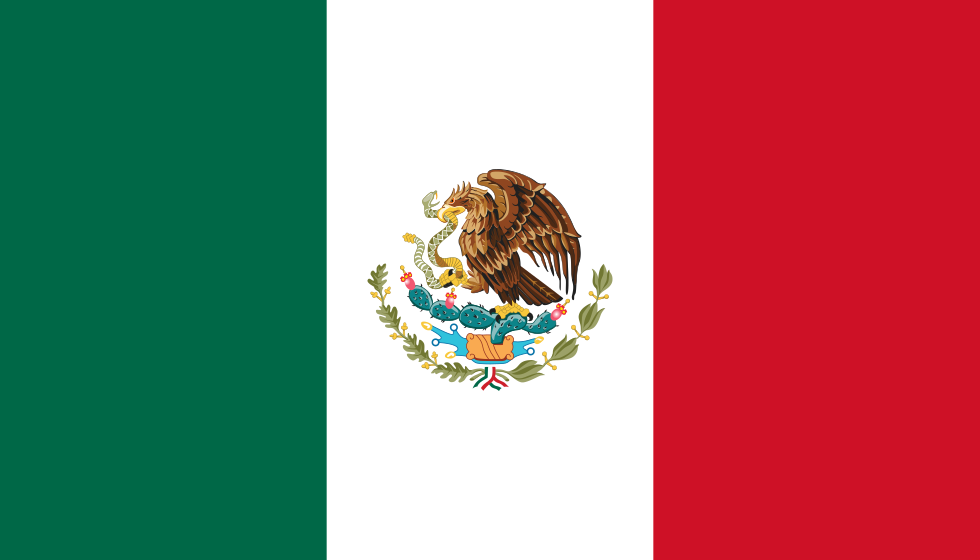
Where the california least tern still lives — United States, Mexico
Imagine your favorite playground suddenly disappearing because someone built a big building on it! That's what happens to the California Least Tern when its sandy beach homes, where it lays tiny eggs, get taken over by human buildings or crowded activities. This means fewer safe spots for them to build nests and raise their fluffy chicks.
Being done about itPeople are working hard to protect special beach areas just for these birds, putting up fences and signs to keep them safe from disturbance. Scientists also create new, safe nesting spots, like building sandy islands, to give the terns more places to call home.
Invasive species
Sometimes, animals that don't belong on the beach, like hungry foxes, sneaky cats, or even big birds like crows, come too close to the terns' nests. These "invaders" can easily find and eat the terns' tiny eggs or helpless baby chicks, which makes it very hard for the tern families to grow.
Being done about itWildlife rangers help by carefully watching the nesting areas and gently moving away these unwanted animals to protect the terns. They also build special small fences or barriers around nests that are too tiny for the tern chicks to get through, but big enough to keep out bigger predators.
Brave scientists and wildlife protectors are on an important mission to save these birds by carefully fencing off their nesting beaches to keep them safe from curious people and sneaky predators, and even building new, special sandy spots just for them to raise their babies! This helps give every little tern chick the best chance to grow up strong.