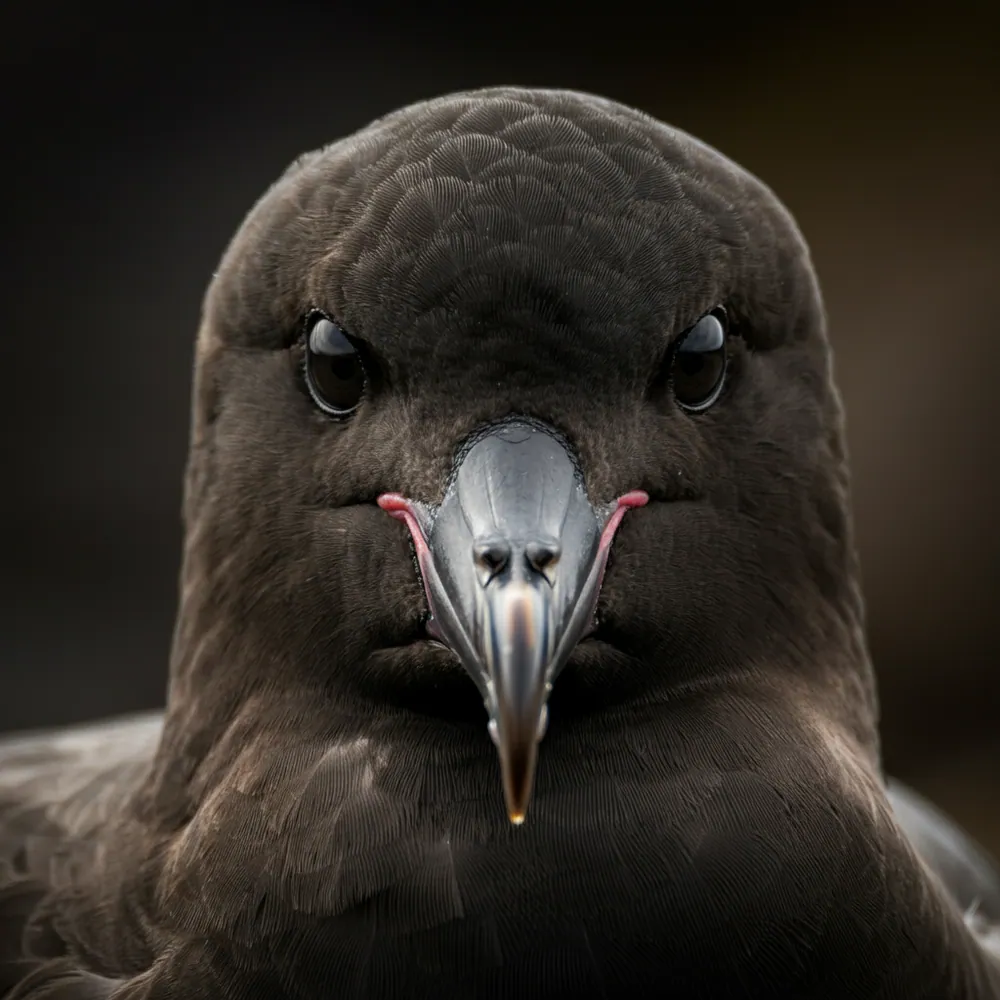
Hey there, future wildlife explorers! Get ready to meet a true superstar of the sky and sea, a bird so mysterious and cool, it's nicknamed "Diablotin" – that means "little devil"! Don't worry, it's not a real devil, just super sneaky and fast. This is the Black-capped Petrel, and it looks like it's wearing a fancy tuxedo with a dark cap, bright white belly, and a secret white patch on its neck. Imagine a bird with wings almost as long as you are tall, built for gliding effortlessly over the sparkling ocean – it's like a feathered airplane, but way cooler!
For most of its life, this amazing bird is a true ocean adventurer, flying thousands of miles across the Caribbean Sea and Atlantic, barely ever touching land! It's a master glider, using the wind to zoom around with hardly any effort, swooping down to snatch tasty squid and fish with its strong, hooked beak. But here's the really wild part: when it's time to have a baby, these ocean wanderers fly *all the way* to the tops of remote, misty mountains in places like Hispaniola! Under the cover of darkness, they sneak into hidden burrows, often in old tree roots, to raise their one precious chick. How incredible is that – an ocean bird nesting in the mountains!
The Black-capped Petrel isn't just a pretty face; it's super important to both the ocean and the mountains! By eating fish, it helps keep the ocean healthy, and when it goes to its mountain nest, it brings nutrients from the sea to the forest soil. It's like a living bridge connecting two totally different worlds! Sadly, these "little devils" need our help to keep flying. Isn't it amazing how one bird can be so important and connect such different parts of our planet? The Black-capped Petrel truly is one of nature's most wondrous and special creatures!
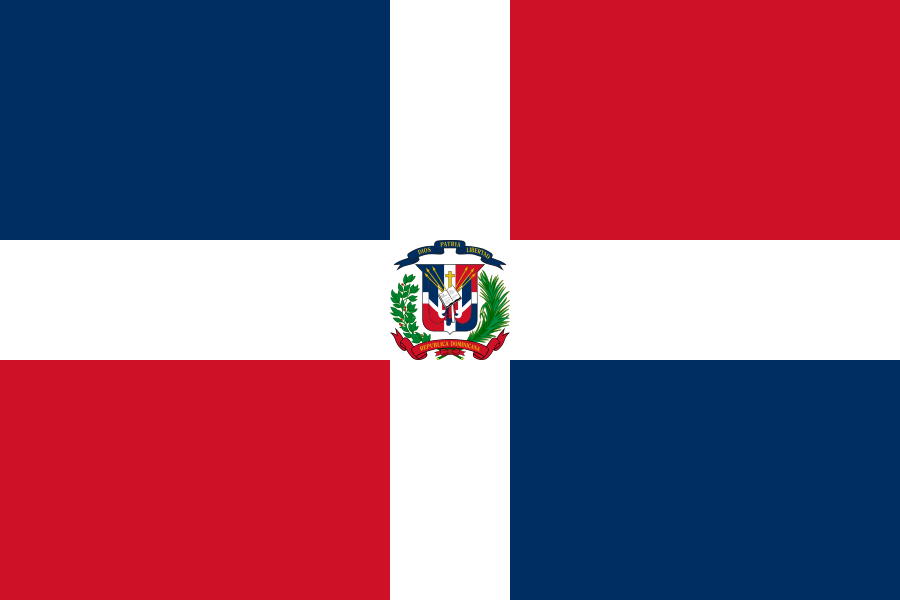
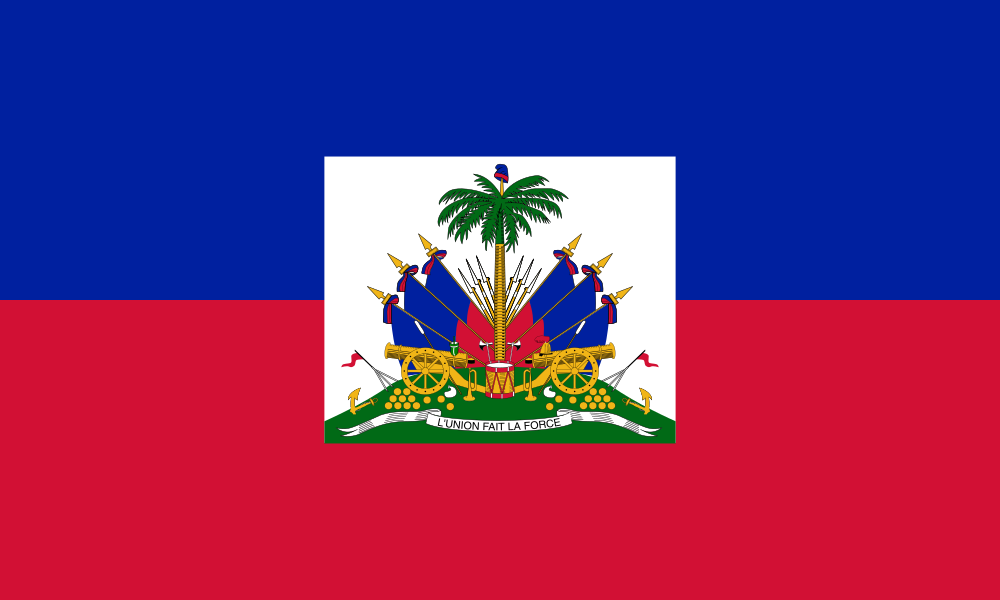
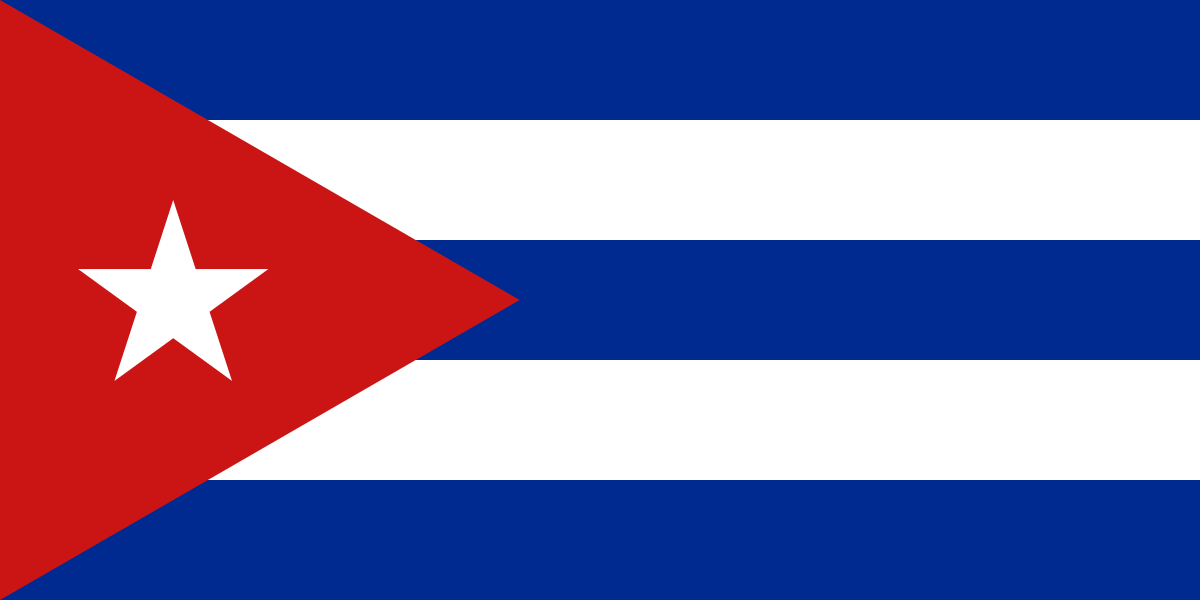
Where the black-capped petrel still lives — Dominican Republic, Haiti, Jamaica, Cuba
Imagine your house disappearing! People are clearing forests and building on the mountainsides where Black-capped Petrels like to dig their burrows and raise their babies. This means the petrels lose their special homes and safe places to live.
Being done about itScientists and park rangers are working hard to protect the forests where petrels nest, making sure these important areas are not cut down. They are also looking for new, safe places where petrels can build their homes and raise their families.
Invasive species
Sometimes, animals like sneaky rats, hungry cats, or mongoose, which don't naturally live where petrels nest, get introduced to these islands. These new animals can easily find and eat the petrels' eggs and fluffy chicks, making it very dangerous for the baby birds.
Being done about itBrave conservationists are setting special traps and working to carefully remove these harmful animals from the petrels' nesting sites. They are also building fences to create safe zones where petrels can nest without worrying about these predators.
Brave scientists are on a special mission to save these amazing birds, using solar-powered speakers to call them to safe nesting spots on mountains and carefully removing sneaky predators like rats from their homes. This important work helps give the petrels a better chance to raise their chicks and grow their tiny population!
Also known asPterodroma hasitata
GroupAnimal
DietCarnivore (primarily squid and small fish, some crustaceans)