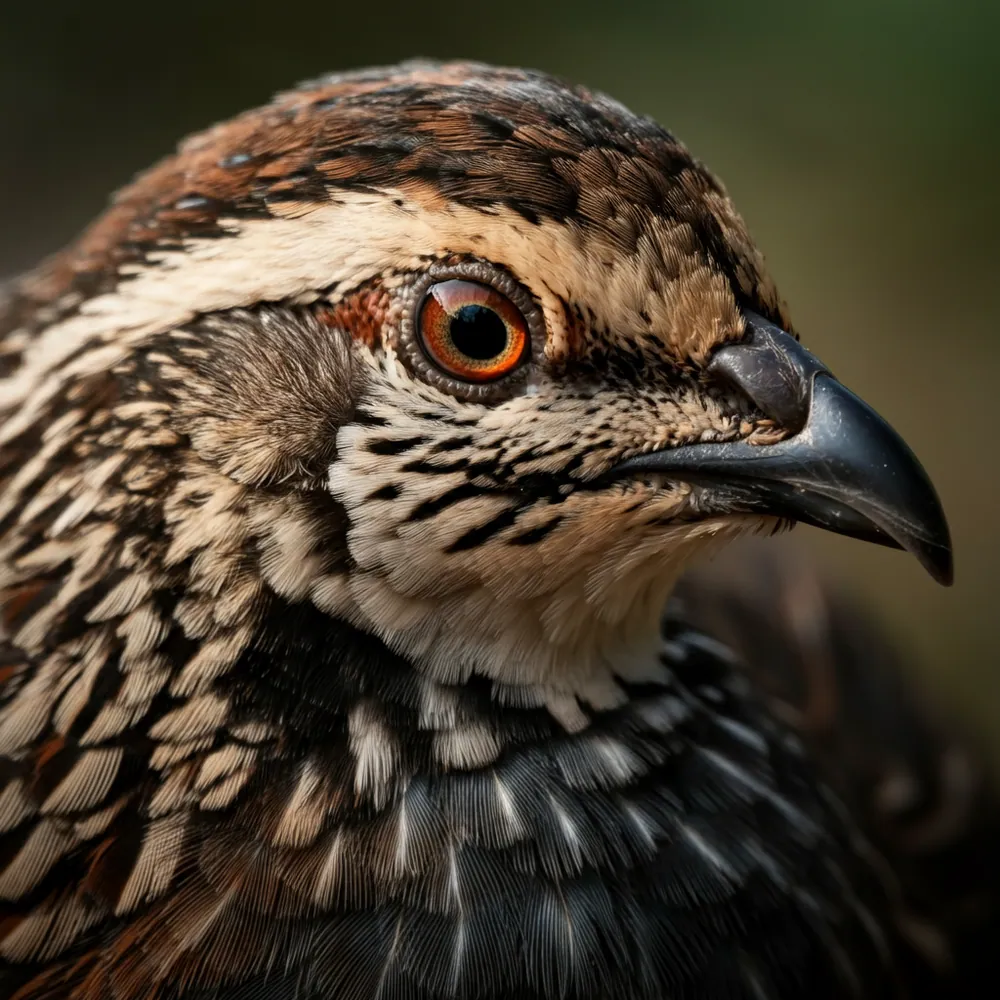
Hey everyone, get ready to meet one of Australia's most incredible and surprising birds: the Black-breasted Buttonquail! Imagine a bird that looks like a plump, fluffy quail, but with feathers that are a true work of art. It's covered in amazing marbled patterns of black, reddish-brown, and pale brown, all dotted with bright white spots and stripes. And get this – it has striking white eyes that really pop! This special bird is found only in eastern Australia, making it a true Aussie original.
But here’s where it gets really exciting! In the Buttonquail world, everything is a little bit upside down compared to most birds. The female is actually bigger and much more colorful than the male, with a super snazzy black head and neck. And guess who does all the hard work of raising the babies? Not the mom! After the female lays her eggs, she leaves them for the *dad* to look after. He's the one who sits on the nest, keeps the eggs warm, and raises the fluffy chicks all by himself. Talk about a super dad!
This makes the Black-breasted Buttonquail truly unique and incredibly cool. These amazing birds are quite rare, which makes them even more precious. They remind us that nature is full of fantastic surprises and that every animal, even a little buttonquail, has a special and incredible story to tell!
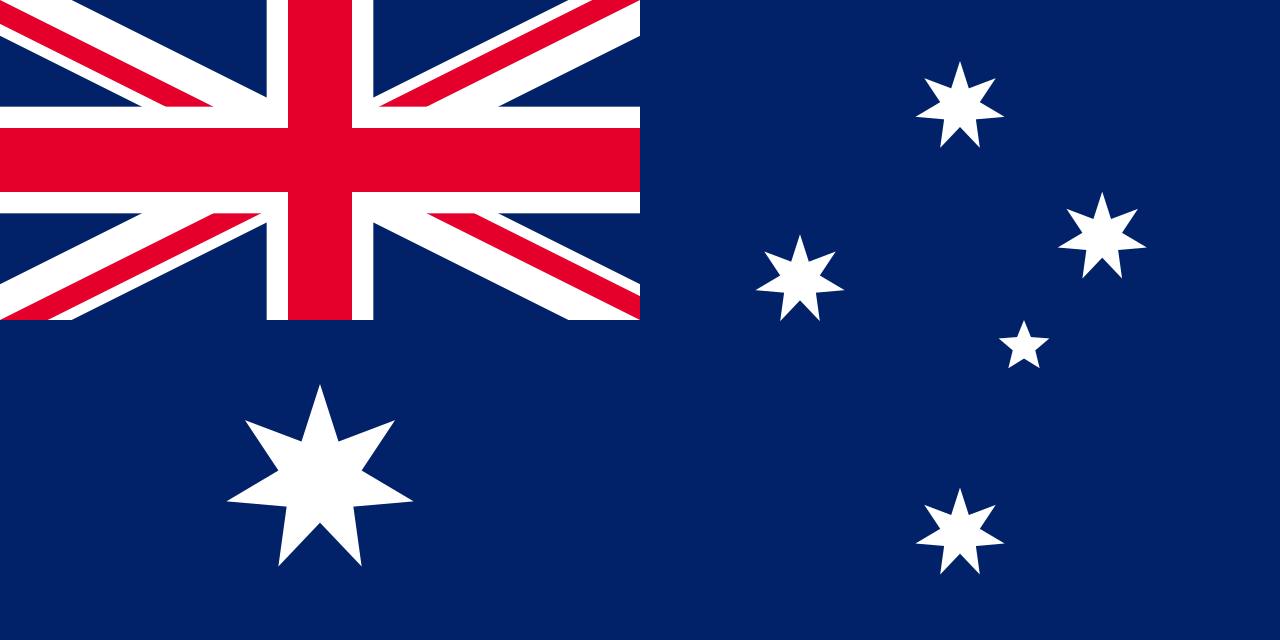
Where the black-breasted buttonquail still lives — Australia
Imagine if your house or playground suddenly disappeared! That's what happens to the Black-breasted Buttonquail when their rainforest homes are cut down. These special birds need thick, viney forests with lots of leaves on the ground to hide and find yummy food, but these forests are getting smaller.
Being done about itBut don't worry, many people are working hard to help! Scientists and park rangers are protecting the rainforests that are left, making sure no one cuts them down. They are also helping to grow new trees and plants so the buttonquails have safe places to live again.
Brave scientists and conservationists are on an important mission to save these special birds! They are working hard to protect the buttonquails' rainforest homes and learn more about their secret lives, so we can help them thrive again.