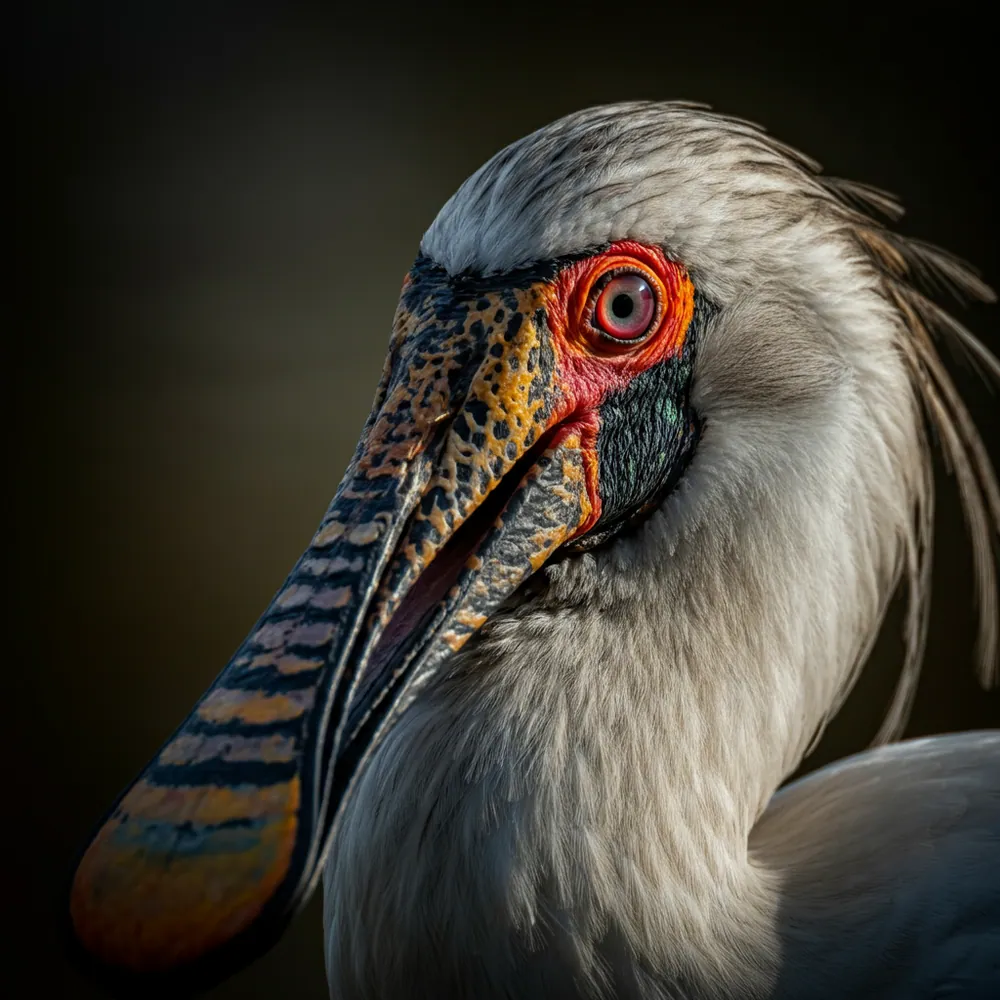
Get ready to meet one of the most amazing birds on Earth – the Black-faced Spoonbill! Imagine having a giant, super-flat spoon right at the end of your nose. That's exactly what this incredible bird has! It's not for eating soup, though. This special spoon-bill is a brilliant tool for finding food. Our Black-faced Spoonbill wades through shallow water, swinging its head from side to side like a gentle underwater metal detector. It feels for tasty snacks like tiny fish and insects hidden in the mud. How cool is that?
But wait, there's even more that makes this bird super special! The Black-faced Spoonbill is one of the rarest spoonbills in the world, and it only lives in the beautiful coastal areas of East Asia. From rocky islands where it builds its nests, to warmer places like Taiwan, Hong Kong, and even Japan where it spends the winter, these birds are amazing travelers! They fly thousands of miles to find the best spots to live and eat, making them true adventurers of the sky. Sadly, because there aren't many of these fantastic birds left, they are considered endangered. This means every single Black-faced Spoonbill is precious, and it’s super important that we learn about them and protect their homes!
Where the black-faced spoonbill still lives — China, North Korea, South Korea, Vietnam, Japan, Taiwan
Pollution, like trash and dirty chemicals in the water, makes the Black-faced Spoonbill's wetland home unhealthy. This dirty water can poison the tiny fish and bugs they eat, making the spoonbills sick.
Being done about itPeople are working hard to clean up polluted wetlands and beaches where spoonbills live, removing trash and stopping harmful chemicals from getting into the water. Scientists are also teaching us how to create less pollution so their homes stay clean.
Habitat loss
Black-faced Spoonbills are losing their wetland homes because these special places are sometimes filled in to build cities or farms. When this happens, they lose their safe spots to rest, find food, and build nests for their chicks.
Being done about itPeople are working to protect important wetland areas, making them safe parks where spoonbills can live without being disturbed. They also help restore damaged wetlands by planting new plants and making sure the water flows correctly, giving the spoonbills their homes back.
Scientists and conservationists are working like real-life superheroes to save them! They are protecting the wetlands where the Spoonbills live and stopping pollution so these birds have safe places to eat and raise their babies.