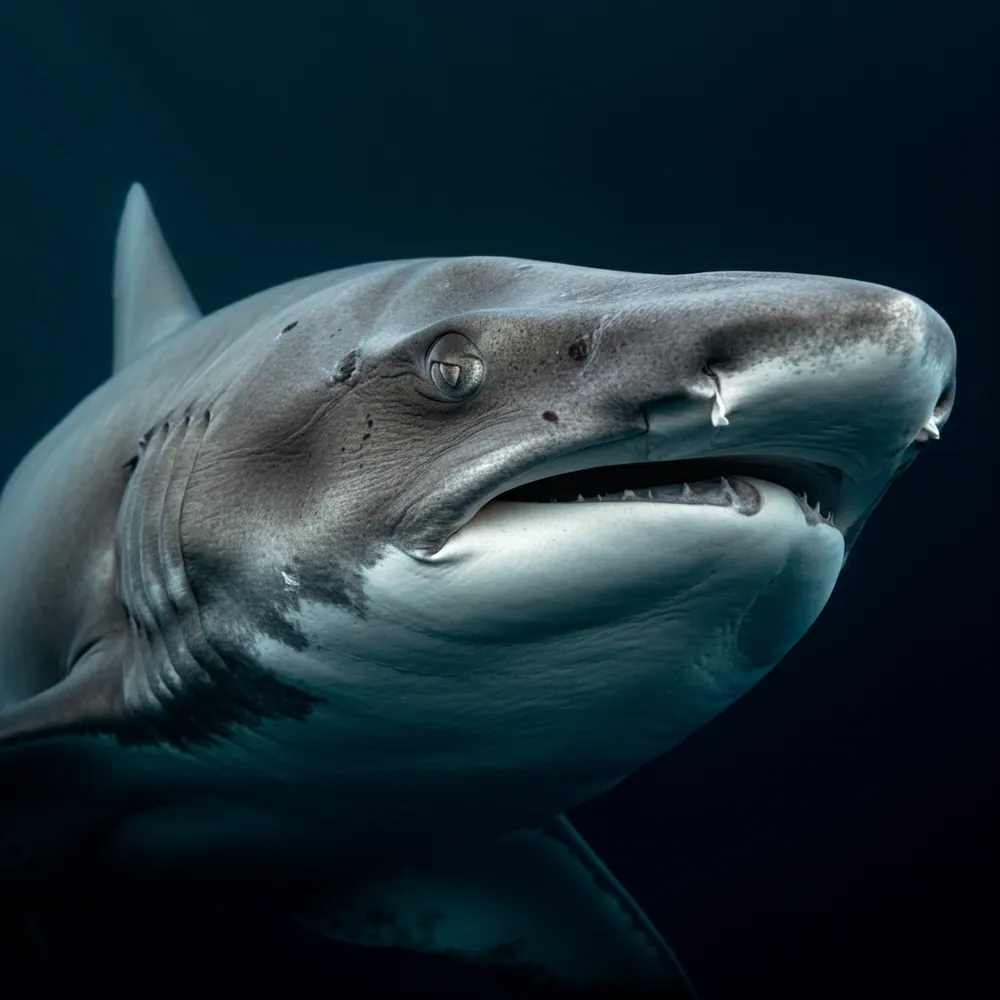
Get ready to meet one of the ocean's most magnificent and mysterious giants – the Basking Shark! Imagine a creature so enormous it can grow longer than a school bus, sometimes stretching over 33 feet! That makes it the second-biggest shark in the whole world, right after the Whale Shark. But don't let its colossal size fool you; this incredible ocean wanderer is the gentlest giant you could ever hope to meet. It's not interested in chasing fish or seals, but has a super-special secret diet!
So, what does a creature this massive eat? Tiny, tiny plankton! The Basking Shark is like a living, swimming vacuum cleaner, gliding through the water with its enormous mouth wide open, filtering out all the microscopic plants and animals. That's why you often see them swimming slowly near the surface, looking like they're "basking" in the warm sunshine – which is how they got their name! With their cool greyish-brown skin and a surprisingly bright white mouth, these amazing sharks show us that even the biggest ocean inhabitants can be peaceful, plankton-munching marvels. They truly are one of the ocean's most wondrous and unique treasures!
Where the basking shark still lives — United Kingdom
Basking sharks are gentle giants that swim slowly with their huge mouths open to catch tiny food. Sometimes, they accidentally get tangled in big fishing nets meant for other fish, which is called 'bycatch', or they were hunted too much in the past.
Being done about itScientists are working with fishing boats to use special nets that let sharks swim free, and many countries now protect basking sharks so they cannot be purposely fished. People also report sightings to help scientists track and protect them better.
Lots of amazing people are working hard to protect these gentle giants! Countries have made special rules to stop hunting them, and scientists are using cameras and special tags to track their journeys, helping us understand how to keep them safe from dangers like getting tangled in fishing nets.
Also known asCetorhinus maximus
GroupAnimal
DietPlanktivore
SizeTypically 4, 000-7, 000 kg (8, 800-15, 400 lbs), with some individuals reaching up to 10, 000 kg (22, 000 lbs)