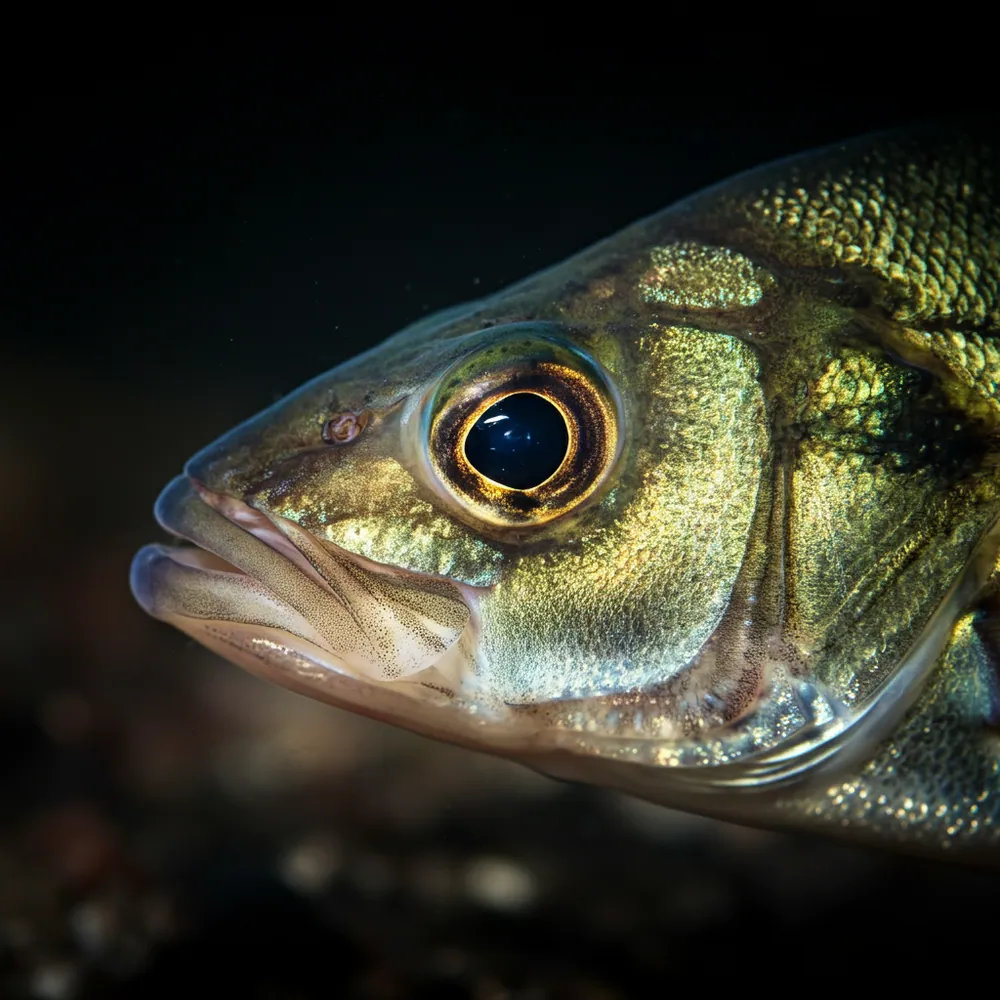
Hey there, future ocean explorers! Get ready to dive deep and meet one of the ocean's coolest super-swimmers: the European Sea Bass! Imagine a living torpedo, sleek and shiny, zooming through the water. This fish is a true underwater athlete, with shimmery silver scales that help it disappear against the seabed. Its powerful dark fins are like built-in rocket boosters, letting it dart and weave with incredible speed. And those big, watchful eyes? They're always on the lookout, because this fish is a hunter through and through!
But the Sea Bass isn't just a pretty face; it's super smart and super tough! These amazing fish can live almost anywhere, from the salty ocean shores and busy river mouths to even swimming up into freshwater rivers! How cool is that? When they're young, they hang out with their friends, hunting together like a synchronized swimming team, gobbling up yummy shrimp and crabs. As they get bigger, some become lone wolves of the water, patiently waiting, hidden, before launching a lightning-fast attack on unsuspecting fish. Their sharp senses and clever tricks make them one of the ocean's best predators, keeping the underwater world balanced and exciting!
European Sea Bass love to live in warm, shallow places like estuaries (where rivers meet the sea) and grassy seabeds. Sadly, these important homes are getting damaged by pollution from land and by people building too much along the coast.
Being done about itScientists and conservationists are working to clean up polluted areas and protect these special coastal habitats. They are even helping to replant seagrass meadows to give the sea bass their safe homes back.
Bycatch / Overfishing
Too many European Sea Bass are being caught by fishermen, sometimes even small ones that haven't had a chance to grow up and have their own babies yet. They can also get accidentally caught in nets meant for other fish, which is called bycatch.
Being done about itGovernments are setting rules about how many sea bass can be caught and how big they need to be before they are taken from the sea. Some fishermen are also using smarter fishing gear to avoid catching young sea bass or other animals by accident.
Scientists and ocean heroes are on a super important mission to protect them! They are creating special 'no-fishing zones' underwater, like safe neighborhoods for sea bass, and teaching fishermen to only catch certain sizes or amounts, so baby sea bass have a chance to grow big and strong for the future.
Also known asDicentrarchus labrax
GroupAnimal
DietCarnivore
Size0.5 kg to 5 kg, with larger specimens reaching up to 12 kg