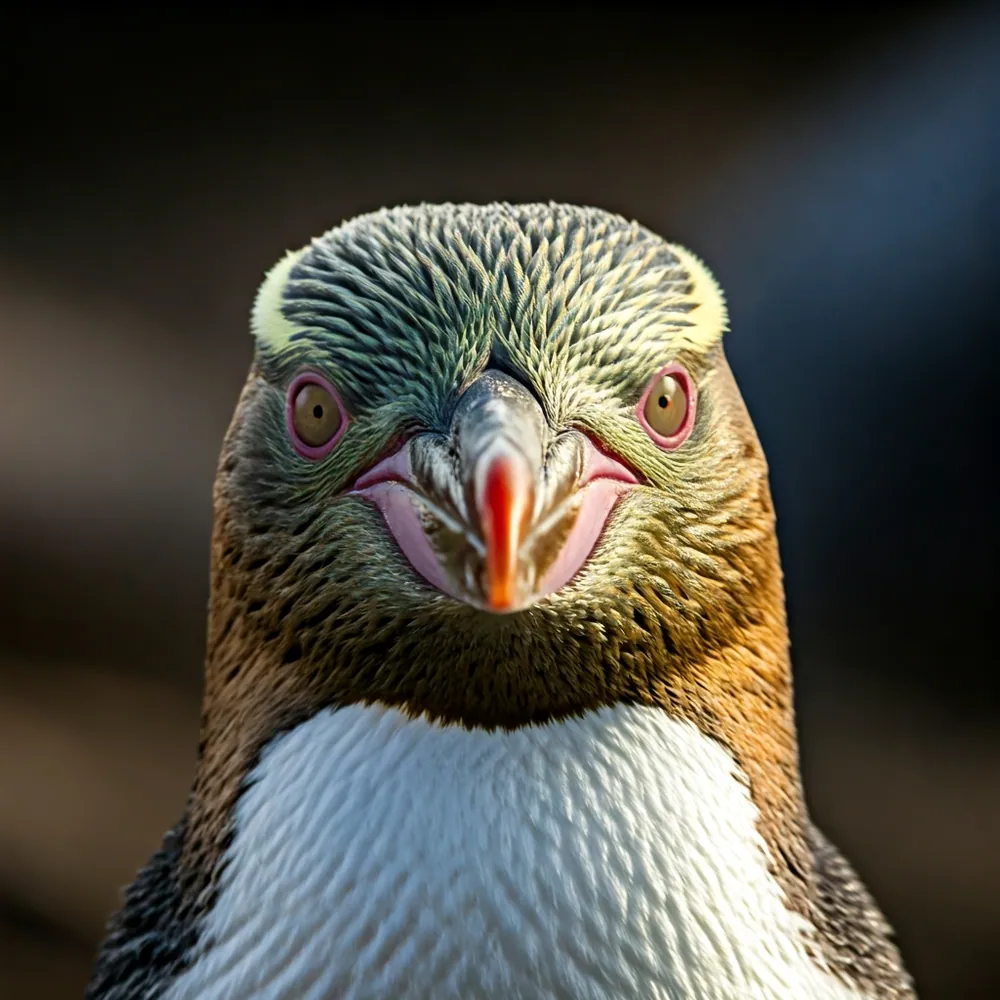
Hey there, wildlife explorers! Get ready to meet one of the coolest birds on the planet – the Yellow-eyed Penguin! You might know other penguins, but trust me, this one is extra special. In New Zealand, where it lives, people call it "Hoiho" (pronounced Hoy-ho), which means "noise shouter" in Māori! But the most amazing thing about the Hoiho? Just look at its eyes! It has a brilliant band of bright yellow feathers that sweeps right from its intelligent, amber-yellow eyes all the way around its head, like a fancy, sunny crown. With a sleek grey back and a super white belly, it’s like a secret agent in the water, perfectly camouflaged and ready for adventure!
Unlike big, noisy penguin parties, our Hoiho is a bit of a loner. It loves peace and quiet, nesting deep in cozy forests along the coast, often under logs or thick bushes – talk about privacy! Every morning, these amazing birds waddle down to the ocean, ready for an epic journey. They're super deep-sea divers, plunging over 120 meters deep to hunt for yummy squid and fish, using their powerful flippers like super-speed paddles. Then, as the day ends, they waddle back to shore, sometimes calling out a soft "hoo-hoo" to their hungry chicks. How cool is it that a bird can dive deeper than a 30-story building is tall?!
But here's why the Yellow-eyed Penguin is truly a superstar: it's one of the rarest penguins in the *entire world*! Because it's so rare and special, it helps us know if the ocean around New Zealand is healthy. Protecting these incredible birds means we're also taking care of their beautiful home and all the other amazing creatures that live there. So, next time you think of penguins, remember the magnificent Hoiho – a shy, deep-diving, yellow-eyed wonder that's a true treasure of the ocean!
Where the yellow-eyed penguin still lives — New Zealand
Climate change is making the ocean warmer, which means there's less food like fish and squid for the Yellow-eyed Penguins to find. It also causes more big storms that can wash away their nests on the beach.
Being done about itScientists are carefully watching the ocean to see how much food is available and if nests are safe. People around the world are also trying to use less energy to help slow down climate change and protect the penguins' home.
Invasive species
Nasty animals like stoats, ferrets, and wild cats, which don't naturally live where the penguins do, hunt and eat their eggs, fluffy chicks, and even sometimes the grown-up penguins. These invaders are very good at finding the penguin nests.
Being done about itRangers and volunteers set up special traps to catch these invading predators and build fences to keep them away from nesting areas. This helps keep the penguin families safe from harm.
Habitat loss
People sometimes build houses, farms, or roads too close to the beaches where Yellow-eyed Penguins like to nest and rest. This takes away the important plants and safe places they need to raise their families and hide from danger.
Being done about itConservation groups are buying land or working with landowners to protect coastal areas and plant new native trees and bushes. This gives the penguins more safe and quiet places to build their nests and raise their chicks.
Dedicated conservation heroes are working tirelessly to save these special penguins by restoring their forest homes, protecting them from predators like stoats, and building safe nesting sites. It's a critical mission to make sure these amazing birds can thrive and have a bright future!