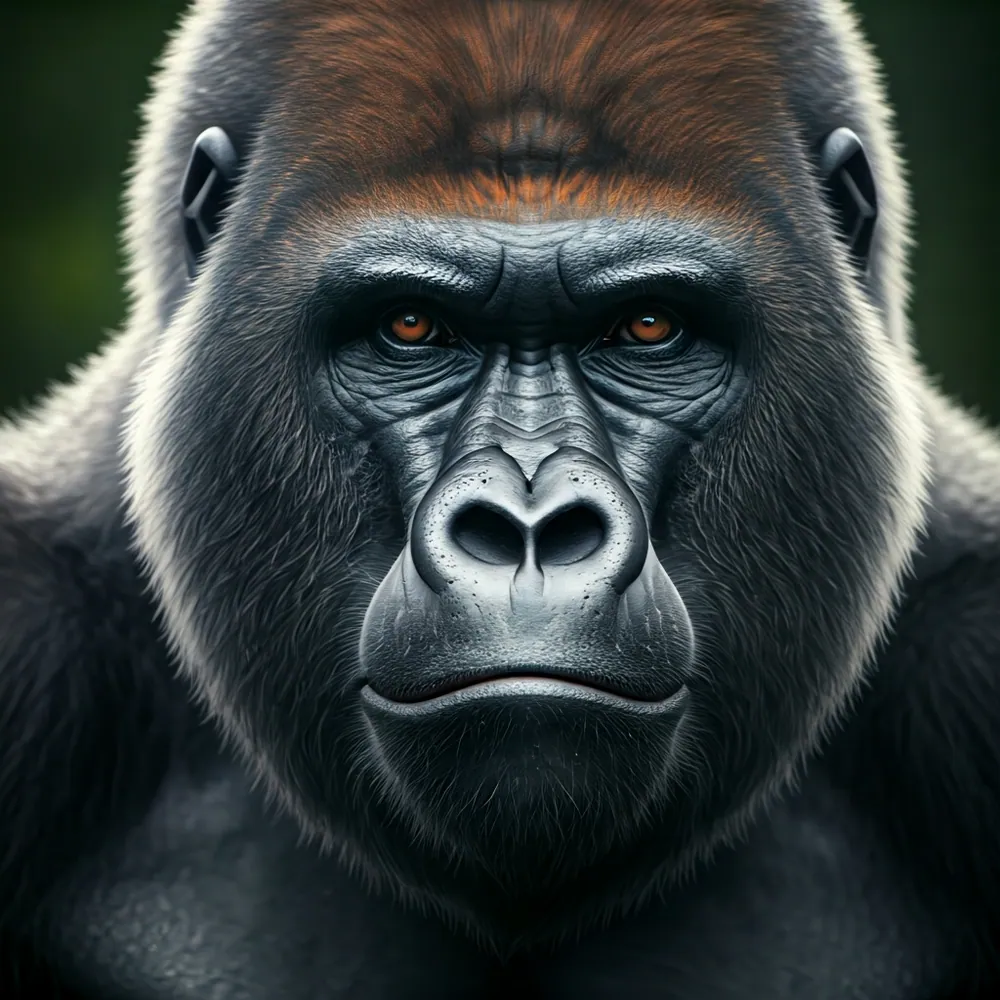
Imagine a real-life superhero of the jungle, but instead of a cape, they wear a dazzling coat of dark fur! Meet the Western Lowland Gorilla, a super-strong, super-smart, and surprisingly gentle giant from the heart of Africa. These amazing animals are the biggest kind of gorilla, with powerful muscles and sometimes even a cool reddish-brown cap on their heads. And guess what? The grown-up boy gorillas, called silverbacks, get a shiny silver stripe on their backs as they get older – like a badge of honor showing everyone who's boss!
But they're not just strong; they're super social too! Western Lowland Gorillas live in close-knit families, always looked after by their wise silverback leader. They spend their days exploring their lush rainforest home, munching on yummy leaves, stems, roots, and their very favorite fruits. Every night, they even build cozy nests out of branches and leaves to sleep in! They chat with each other using all sorts of hoots, grunts, and even funny facial expressions, showing just how smart and connected they are.
Here's what makes them extra special: these gentle giants are like the best gardeners the rainforest could ever ask for! When they gobble up tons of fruit, they swallow the seeds whole. Later, when they poop, those seeds get spread all over the forest, helping new plants grow and keeping the entire jungle healthy and green. So, Western Lowland Gorillas aren't just incredible animals; they're true rainforest heroes, making sure their amazing home stays full of life for everyone!
Where the western lowland gorilla still lives — Central Africa
Imagine your house disappearing! That's what happens when people cut down the forests where gorillas live, leaving them without homes or enough food to eat.
Being done about itPeople are working hard to protect these forests, setting aside special areas called national parks where gorillas are safe and even planting new trees to help grow back their homes.
Poaching / Illegal hunting
Sadly, some people hunt gorillas illegally for their meat or to try and sell baby gorillas, which is very dangerous and breaks apart their families.
Being done about itBrave park rangers patrol the forests every day to catch poachers, remove dangerous traps, and make sure gorillas are safe from illegal hunting.
Disease
Just like us, gorillas can get sick, and diseases like Ebola can spread quickly through their groups, making many of them very ill or even causing them to die.
Being done about itScientists and veterinarians are working to understand these diseases, monitor gorilla health, and find ways to prevent them from getting sick, like keeping a safe distance from humans.
Brave conservation heroes are working hard to save these amazing gorillas by protecting their forest homes from harm and stopping illegal hunting. Zoos also have special breeding programs, like a 'gorilla nursery,' to help grow their numbers safely!
Also known asGorilla gorilla gorilla
GroupAnimal
HabitatRainforests, swamp forests, brush, secondary vegetation, forest edges, abandoned farming fields and riverine forests in Central Africa.
DietPrimarily herbivorous, their diet consists mainly of leaves, stems, roots, and fruits found in their rainforest habitat.