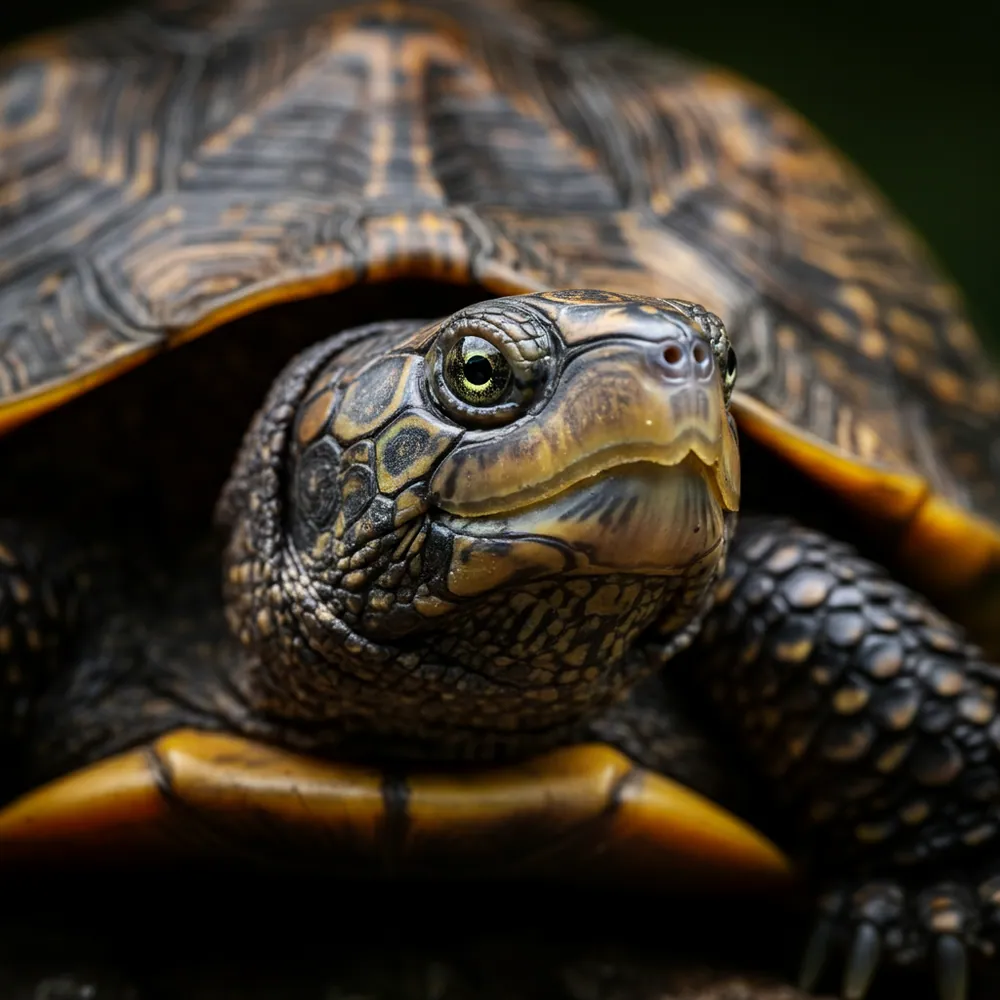
Imagine finding a secret treasure deep in the forest! That's exactly what the Philippine Forest Turtle is like. This amazing reptile, also called the Palawan Forest Turtle, has a shell that's a super cool velvety black or dark brown, often painted with bright, sunny yellow or orange stripes and spots that look like they're glowing! Its head is just as fancy, with a colorful mask of yellow and orange patterns. Growing up to about 12 inches long, these turtles are like tiny, living jewels, perfect for their sneaky hide-and-seek games in the forest.
These shy turtles love to play hide-and-seek! You'll usually find them tucked away in fallen leaves near clear, slow-moving streams and puddles in their home, the beautiful island of Palawan. They're often most active when the sun is just coming up or going down, but sometimes you might spot them during the day. What do they eat? Oh, all sorts of yummy things! They're omnivores, which means they munch on fallen fruits, tender water plants, and even tiny critters like worms, insects, and snails. They're like the forest's very own little gardeners and pest controllers!
But wait, there's more! The Philippine Forest Turtle isn't just pretty; it's super important for its forest home. When it eats fruit, it helps spread seeds all over the place, helping new plants grow! And by looking for food, it helps keep the soil healthy. If you see one of these special turtles, it's a great sign that the stream is clean and the forest is happy. So, protecting these incredible, masked heroes means we're helping to keep the whole Palawan rainforest strong and amazing!
Where the philippine forest turtle still lives — Philippines
Sadly, some people illegally catch Philippine Forest Turtles from their forest homes to sell them as exotic pets or for food. This cruel practice is very dangerous for the turtles and makes their numbers in the wild shrink rapidly.
Being done about itBrave wildlife rangers and police work hard to stop animal traffickers and rescue these turtles, while scientists teach people why these special creatures belong in their natural homes, not in cages.
Habitat loss
The Philippine Forest Turtle's beautiful forest homes are disappearing because trees are being cut down to make space for farms, roads, or buildings. This leaves the turtles with nowhere safe to live, find food, or raise their families.
Being done about itConservation groups are working to protect and restore parts of the forest where these turtles live, and regular people can help by supporting sustainable choices and learning to plant new trees to rebuild their homes.
Brave scientists and conservationists are on an important mission to save them, working at places like the Palawan Wildlife Rescue and Conservation Center to protect these turtles and even help baby turtles hatch! They also work hard to stop people from illegally taking them from their forest homes, making sure they can live safely in the wild.