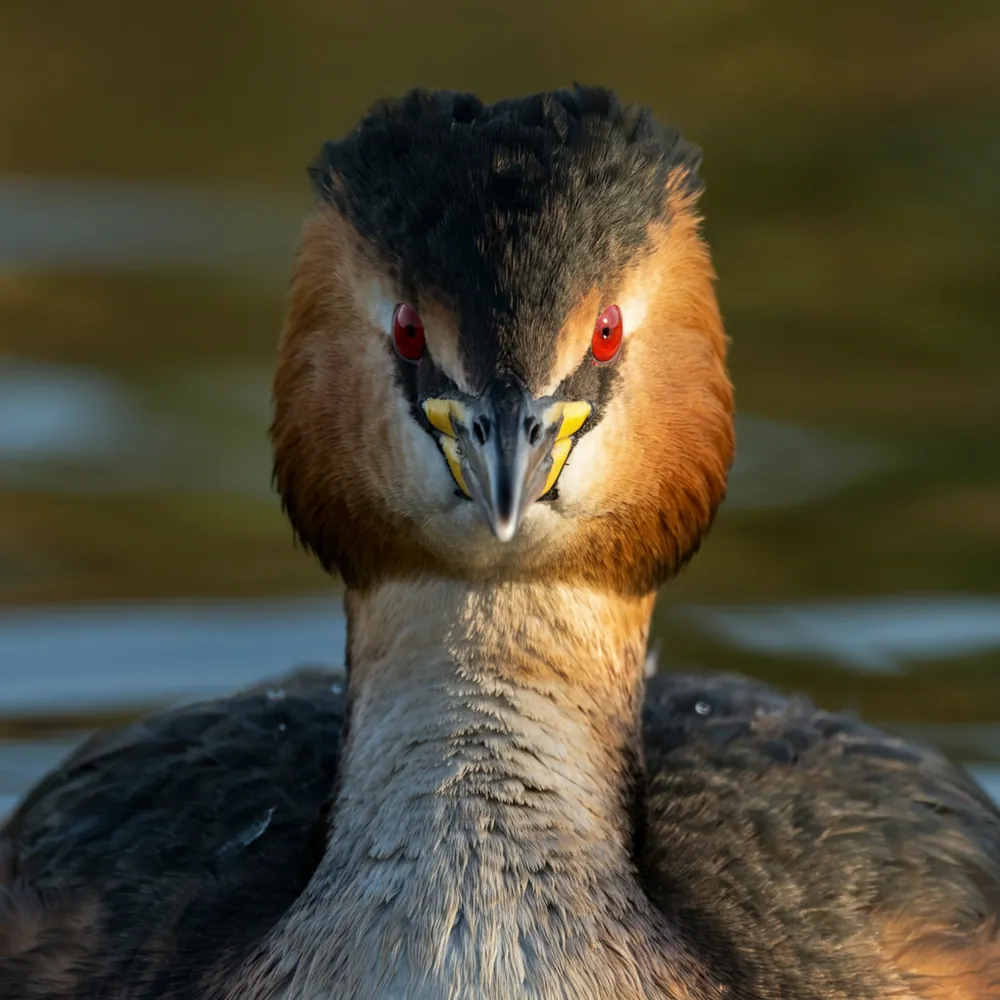
Hey explorers! Get ready to meet one of the coolest birds you've ever imagined! Picture this: a bird that lives way up high in the mountains, on a super-duper special lake called Lake Titicaca. But here's the totally wild part – this bird can't fly! Nope, not a single flap! It's called the Titicaca Flightless Grebe, and it's a real-life superhero of the water.
This amazing grebe is like a sleek, black and white submarine, perfectly built for life in the water. Its back and head are dark, dark black, with a bright white belly. And check this out: it has a cool white stripe near its piercing red eyes, making it look super mysterious! Instead of wings for flying, it has powerful, paddle-like feet set way back on its body, which help it zoom through the water like a torpedo. Its pointed beak is perfect for snatching up yummy fish and tiny lake snacks!
The Titicaca Flightless Grebe spends almost all its time diving deep, deep down, sometimes for a whole minute, hunting for its dinner. It even builds clever floating nests right on the water! What makes this bird extra, extra special is that it lives *only* in Lake Titicaca – nowhere else on Earth! It's a true one-of-a-kind treasure, showing us just how incredible and adaptable nature can be. Isn't that just mind-blowing?
Where the titicaca flightless grebe still lives — Peru, Bolivia
Lake Titicaca, where these grebes live, sometimes gets dirty from trash, chemicals, and sewage. This pollution makes it hard for the grebes to find clean food and can even make them sick.
Being done about itScientists and local communities are working to clean up the lake, stop litter from entering the water, and teach everyone how to keep the grebes' home sparkling clean.
Habitat loss
The Titicaca Flightless Grebe needs special floating reeds and quiet areas along the lake's edge to build their nests and hide. When these reeds are cut down or people build too close to the shore, the grebes lose their safe homes.
Being done about itConservationists are protecting these important reed beds and working with people to make sure new developments don't destroy the grebes' nesting and hiding places.
Invasive species
Sometimes, new fish or animals that don't naturally belong in Lake Titicaca are introduced. These 'invasive' species can eat the grebes' food, like small fish, or even attack their chicks, making it harder for the grebes to survive.
Being done about itExperts are carefully watching the lake to find and remove these unwelcome animals, and they are teaching people why it's important not to release new species into the wild.
People are working super hard to protect their lake home from pollution and fishing nets, which can accidentally trap these amazing birds. It's a big mission to make sure their special lake stays safe and clean for them to live and raise their families!