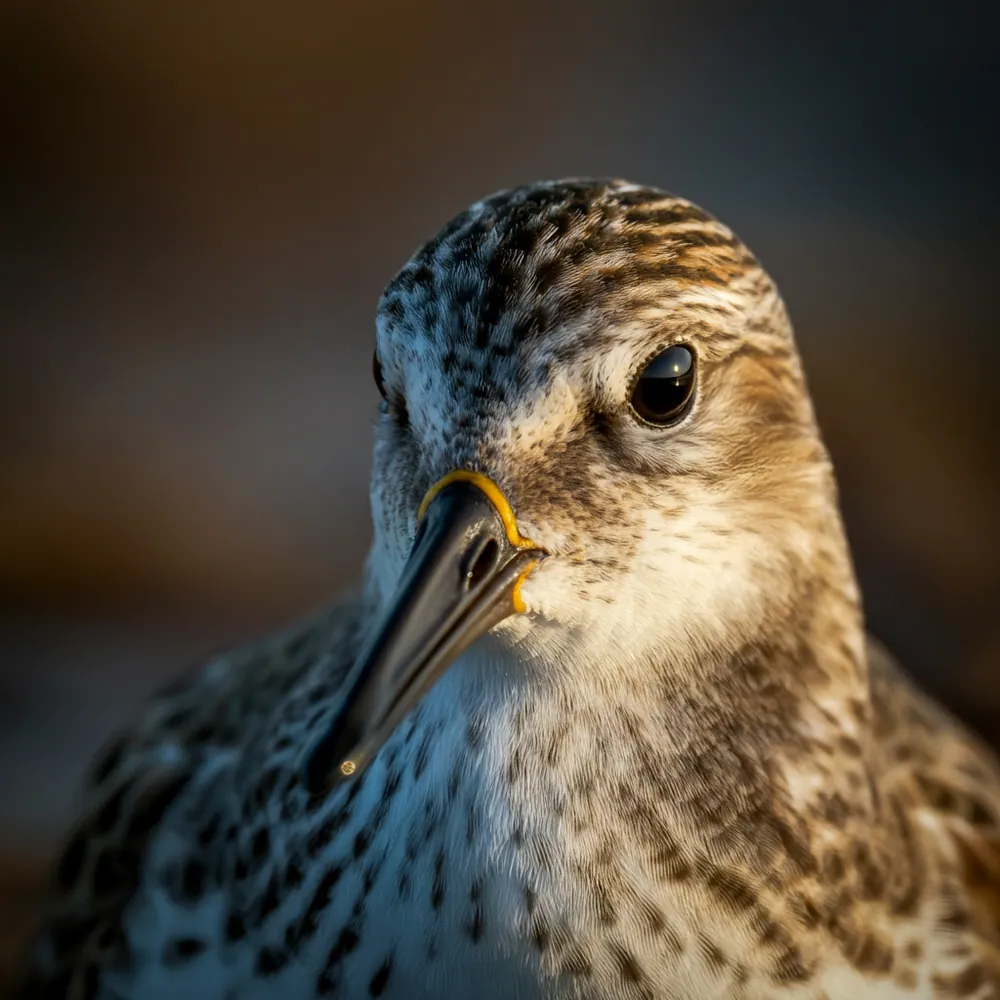
Imagine a bird no bigger than your hand, but with a beak so amazing, it looks like it belongs in a cartoon! Meet the Spoon-billed Sandpiper, or "Spoony" for short. Its super-special bill isn't pointed like most birds; it's flat and wide at the end, just like a tiny spoon or a paddle! In summer, it shows off a fancy reddish-brown head and chest, but in winter, it puts on a cozy grey and white outfit to blend in. This little bird is truly one of a kind!
But wait, there's more! Spoony doesn't just *have* a spoon-bill, it *uses* it in the coolest way. When it's hungry, it wades into shallow water and sweeps its head from side to side, like a miniature metal detector looking for treasure! It scoops up tiny bugs and snacks that other birds miss. And get this: every year, this little superstar flies THOUSANDS of kilometers, all the way from the cold Arctic to sunny Southeast Asia, just to find the best food and raise its babies. Talk about an epic journey!
Why is this tiny traveler so important? Well, Spoony is like a superhero that helps keep our wetlands healthy by eating tiny critters. But it's also a super rare bird, which means if Spoony is doing well, it's a sign that our planet's special watery places are healthy too. Protecting this incredible little bird helps protect so many other animals and the amazing places they call home. Isn't that awesome?
Where the spoon-billed sandpiper still lives — Russia, Myanmar, Bangladesh
Spoon-billed Sandpipers need special muddy beaches and wetlands to find yummy food and raise their chicks. Sadly, many of these important homes are being covered up by buildings or turned into farms, leaving the little birds with nowhere to live.
Being done about itLots of grown-ups, like scientists and nature helpers, are working hard to protect these special muddy places. They create safe areas called nature reserves and even try to fix wetlands that have been damaged, so the sandpipers always have a home.
Poaching / Illegal hunting
Even though it's against the law, some people still catch these small birds, often by accident in big nets meant for other birds. Because there are so few Spoon-billed Sandpipers left, losing even a few more birds makes it very difficult for them to survive.
Being done about itBrave rangers and conservationists are working hard to stop illegal hunting by patrolling the beaches and talking to local communities. They teach people why it's important to protect these special birds and help find safer ways to fish that don't accidentally catch them.
Brave scientists are on a special mission to save these birds by collecting some eggs, hatching the chicks safely, and then releasing them back into the wild when they're bigger, a bit like giving them a 'head start' in life! They are also working hard to protect the muddy beaches where these birds eat during their long journeys.