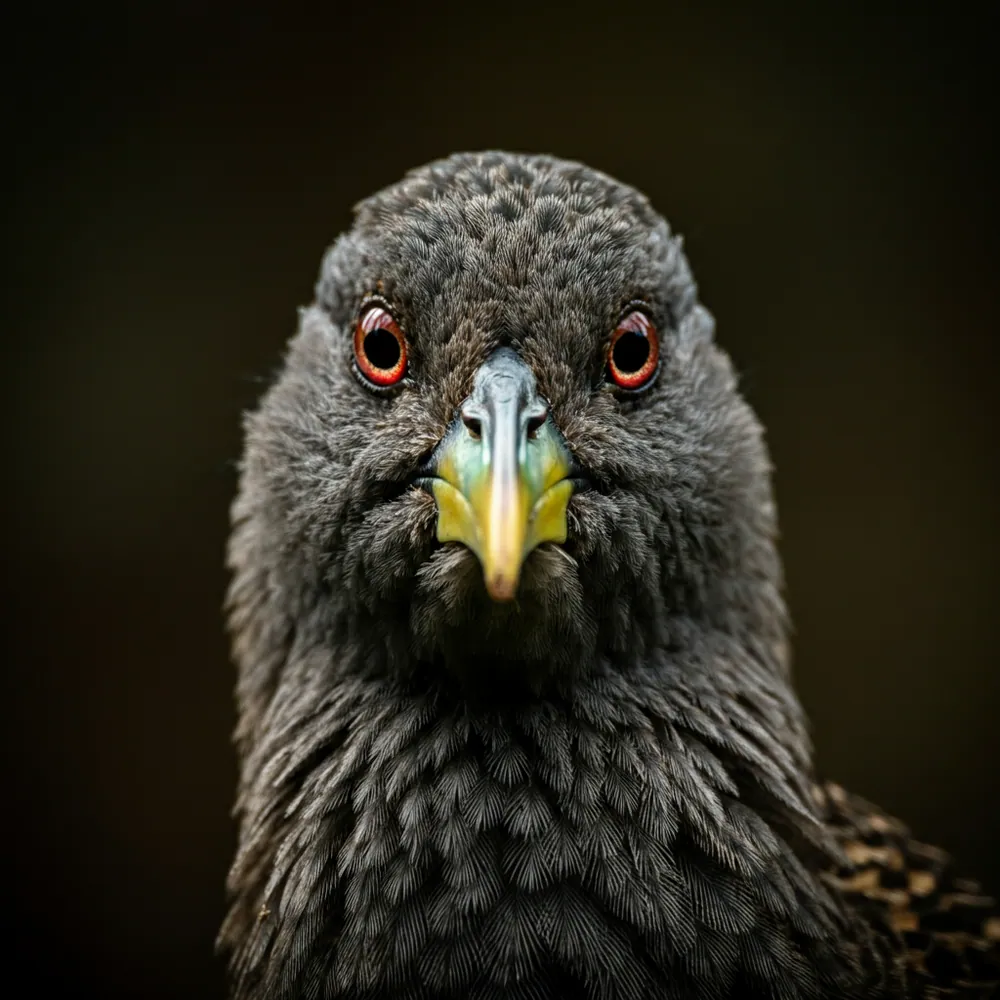
Hey there, wildlife explorers! Get ready to meet one of nature's most amazing secret agents: the Colombian Crake! Imagine a bird so tiny and so good at hiding, it's like a feathered phantom flitting through the tall grasses. This little superstar wears a super cool camouflage coat of olive-brown and grey, perfectly streaked to vanish into its marshy home. With super strong legs for zipping through plants and a short tail, it's a master of disguise, rarely letting you get more than a peek at its bright, watchful eyes before it disappears like magic!
This super shy bird lives high up in the wetlands of Colombia, where it spends its evenings sneaking and running through thick plants. Forget flying – this crake prefers to use its powerful legs to dart and weave, making it incredibly tricky to spot! But even if you can't see it, you might hear its secret code: a sharp, distinctive call that echoes through the marsh. It munches on yummy insects, tiny critters, and seeds, helping to keep the wetland healthy.
And even though it's small, the Colombian Crake is a GIANT hero for its home! By eating insects, it helps keep pests in check, and by carrying seeds, it helps new plants grow. If you see or hear a crake, it means that wetland is super healthy and full of life! But these amazing birds need our help because their marshy homes are disappearing. Protecting the Colombian Crake means protecting a whole world of water, plants, and other animals. Isn't that incredible?
Where the colombian crake still lives — Colombia, Ecuador
When trash and yucky chemicals from farms get into the water where Colombian Crakes live, it makes their homes dirty and their food unsafe to eat. This can make them very sick or even make it hard for them to find enough healthy food.
Being done about itPeople are working hard to clean up polluted wetlands and teach everyone not to throw trash or harmful chemicals into nature. This helps keep the crake's home clean and safe for them to live and find food.
Habitat loss
Colombian Crakes need special wetlands and tall grassy areas to live, but people are building too many houses and farms in these places. This means the crakes lose their homes, hiding spots, and safe places to raise their little chicks.
Being done about itScientists and conservationists are working to protect the remaining wetlands where crakes live and even restore old ones that were damaged. They are also helping communities understand why these special places are so important for the crake and other wildlife.
Many dedicated people are working like wildlife detectives to protect their precious wetland homes and learn more about their secret lives, which is a super important mission to save these unique birds!