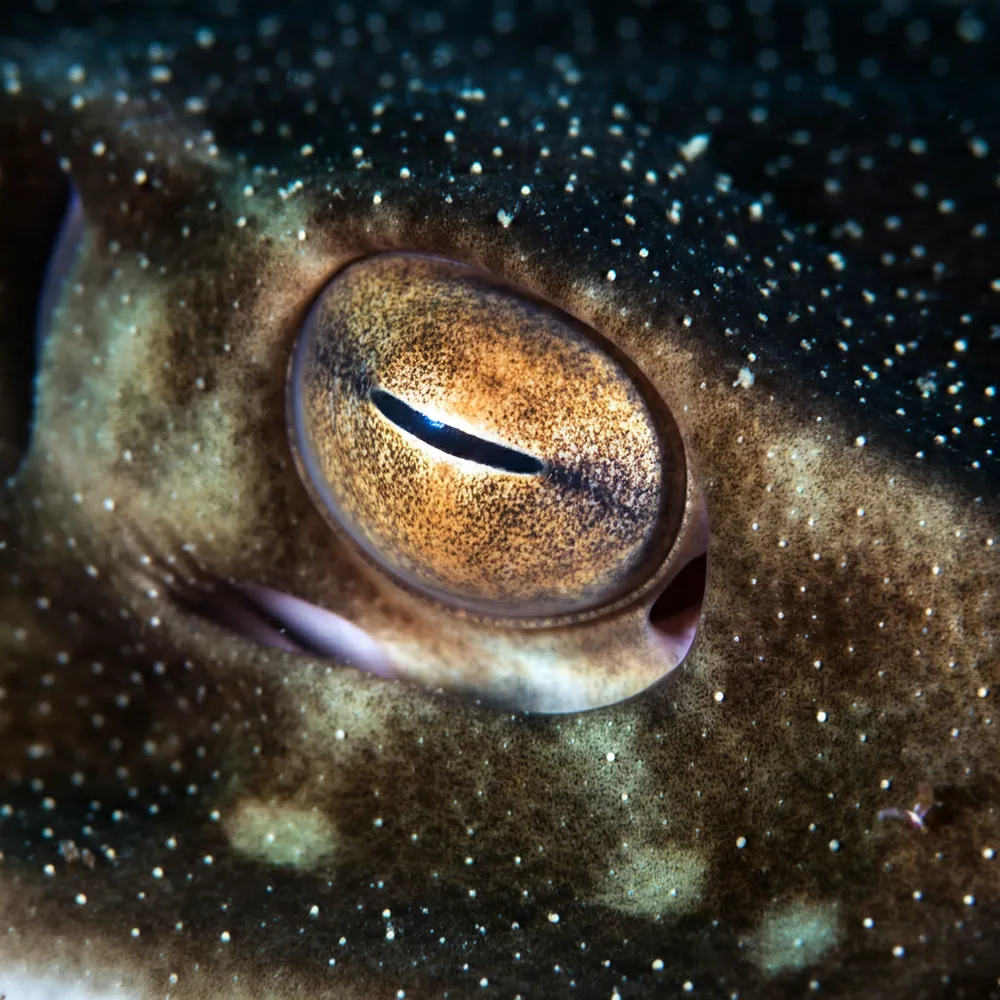
Imagine soaring through the ocean like a superhero, but instead of a cape, you have giant, graceful wings! Meet the Sicklefin Devil Ray, a magnificent ocean glider. Its name comes from its special fins that curve like a sickle, helping it zoom through the water. This ray wears a fancy purplish-brown suit on top, perfect for blending in with the deep blue, and a bright white belly. But wait, there's more! It has two funny-looking 'horns' on its head. Don't worry, they're not for fighting; these super tools actually unfurl to scoop up tiny snacks!
So, what does a super-glider eat? Tiny plankton and small fish! The Sicklefin Devil Ray is a fantastic filter-feeder. It opens its huge mouth and uses those 'horns' (called cephalic fins) like giant scoops to funnel in its food. And get this: they often swim together in huge groups, sometimes hundreds of them, performing an amazing underwater dance! But the coolest trick? They can leap high out of the water, spinning and twisting before splashing back down! Scientists think they might do this to talk to each other, shake off tiny critters, or just for fun!
These gentle giants, which can grow as wide as a small car (up to 12 feet!), are like the ocean's clean-up crew, helping keep the water healthy by eating all that plankton. Every time they glide or leap, they're showing us how amazing our oceans are. But sadly, they need our help. Sometimes they get caught in fishing nets by accident. Protecting these incredible 'ocean flyers' is super important, not just for them, but for all the other amazing creatures that share their underwater home. Let's help keep them soaring!
Sicklefin Devil Rays often get caught by accident in giant fishing nets meant for other ocean animals, which is called 'bycatch.' Sometimes, people also fish for them directly because parts of their bodies are used in certain traditional medicines, even though this practice is very harmful to their populations.
Being done about itScientists are working with fishermen to create special fishing nets that let rays swim free while still catching the target fish. Also, many countries are creating new laws and protected areas to keep these magnificent rays safe from harmful fishing practices.
Brave ocean heroes are on a mission to protect Sicklefin Devil Rays by creating safe swimming zones in the ocean and teaching people how to fish in ways that don't accidentally catch these gentle giants. Every effort helps ensure these magnificent rays have a future!
Also known asMobula tarapacana
GroupAnimal
DietPlanktivore
SizeUp to 150 kg (330 lbs), with an average of 60-100 kg (132-220 lbs)