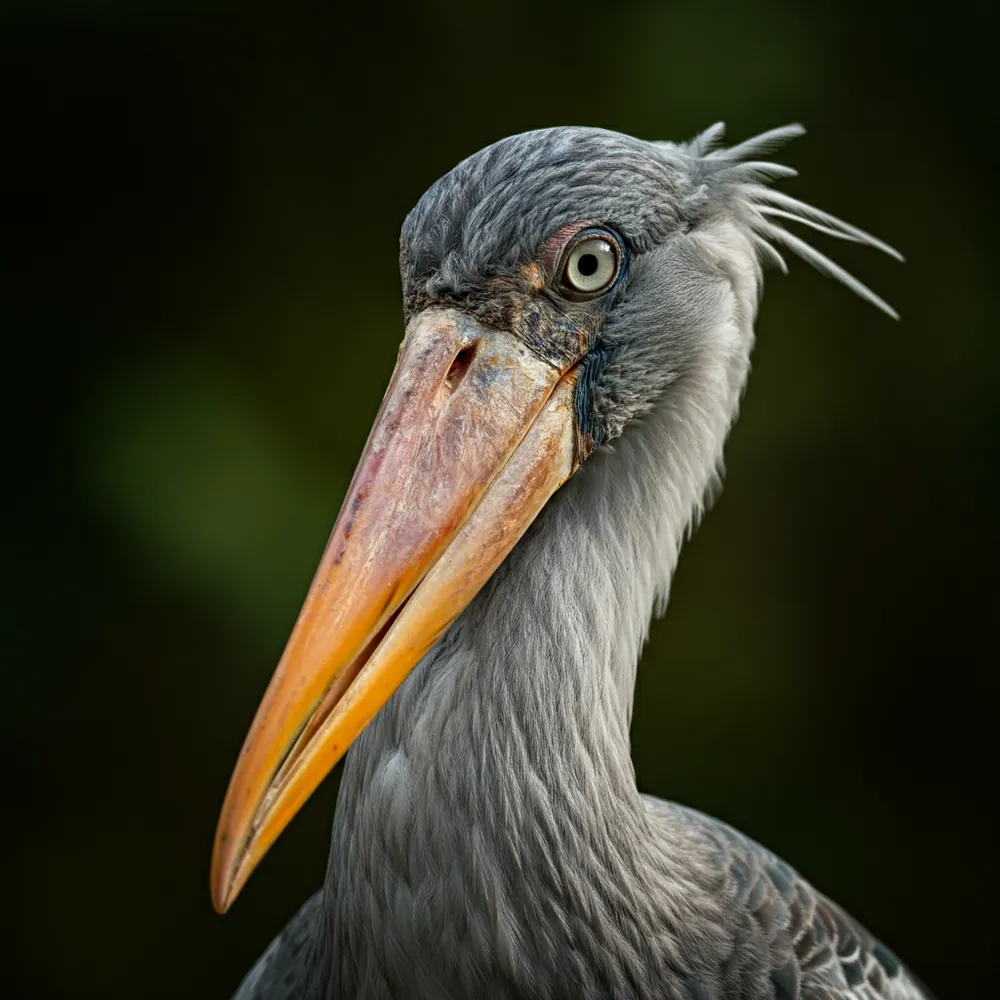
Imagine a bird so ancient and mysterious, it looks like it flew straight out of a dinosaur movie! Meet the incredible Shoebill Stork, a true feathered marvel from the heart of Africa. Its most amazing feature? A giant, shoe-shaped beak – almost a foot long! This isn't just any beak; it's like a super-scooper with a sharp hook, perfect for catching slippery snacks. With its calm, piercing yellow eyes and a towering, grey body, it truly looks like a "King Whalehead" – a living relic from another time!
This awesome bird is a master of patience, spending hours perfectly still in the swamps and papyrus beds, like a living statue. It's waiting for just the right moment! Then, BAM! With a lightning-fast lunge, it uses that enormous beak like a giant net to scoop up lungfish, catfish, frogs, snakes, and even baby crocodiles! Talk about a super hunter! These quiet giants mostly chat by clattering their huge bills together – a sound that can travel surprisingly far – making them even more mysterious.
The Shoebill isn't just cool to look at; it's super important too! By being a top hunter, it helps keep its wetland home healthy and balanced. When we protect the Shoebill and its amazing habitat, we're also helping countless other animals and plants that live there. So, next time you think of amazing birds, remember the Shoebill Stork – a truly unique and ancient wonder that helps keep its world in perfect harmony!
It is about as tall as you.
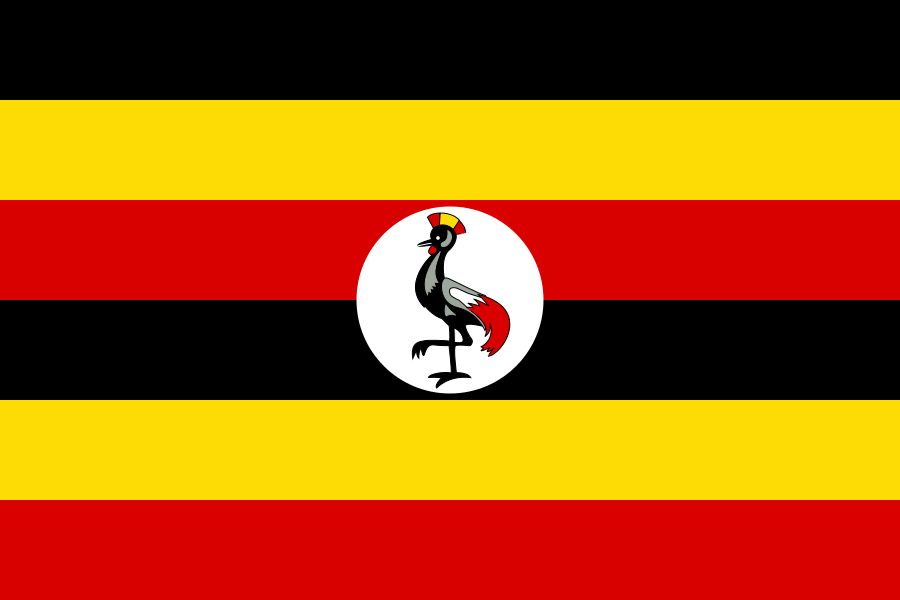
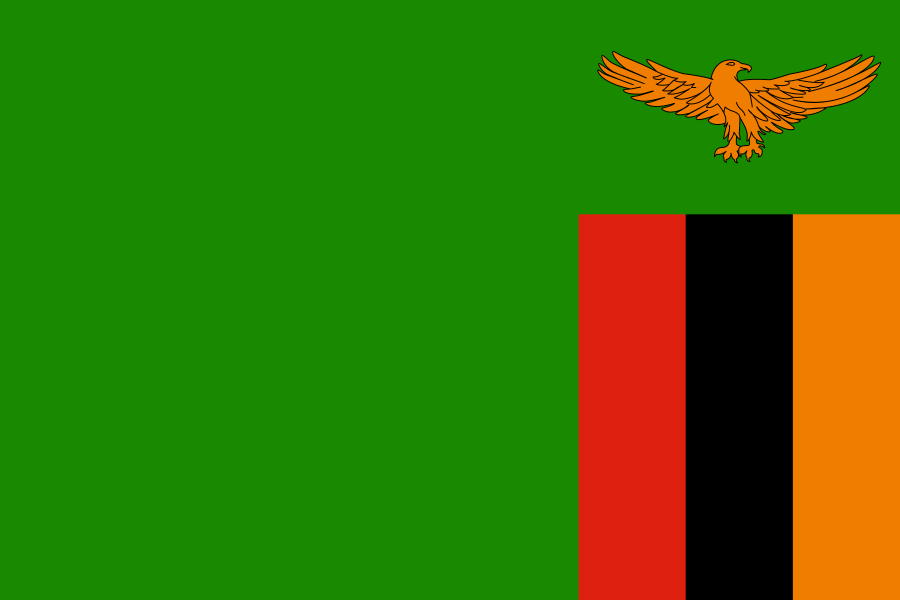
Where the shoebill stork still lives — Uganda, Sudan, Zambia
Shoebills need big, quiet swamps and marshy areas to live and find their food, like lungfish. But sometimes, people drain these important wetlands to build farms or houses, which means the shoebills lose their special homes.
Being done about itScientists and park rangers are working hard to protect these precious swampy places, setting up special nature reserves where shoebills can live safely. They also teach people why these wetlands are super important for shoebills and many other amazing creatures.
Brave conservation heroes are working tirelessly to protect the shoebills' precious swampy homes and teach local communities how to live peacefully with these amazing birds, ensuring a bright future for them!
Also known asBalaeniceps rex
GroupAnimal
HabitatFreshwater swamps
DietPrimarily eats lungfish, but also frogs, snakes, and even baby crocodiles.
PredatorsNests and chicks are vulnerable to crocodiles and snakes; adults have few predators.