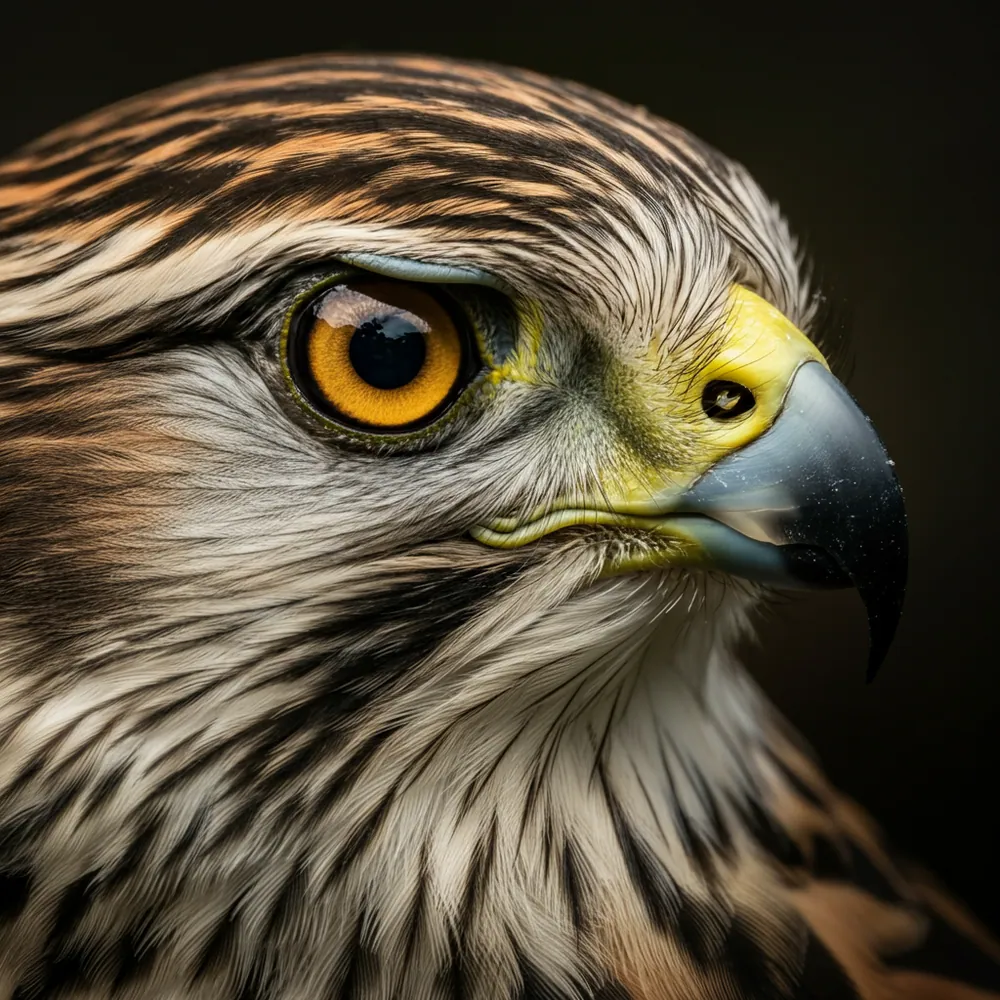
Hey adventurers! Get ready to meet one of the coolest birds in the world – the Seychelles Kestrel, or 'Katiti' as the locals lovingly call it! This amazing little falcon is like a secret treasure found only on the beautiful, sunny islands of Seychelles. Imagine a bird dressed in stunning reddish-brown feathers with tiny dark spots, always watching with super-sharp dark eyes. With a beak built for action and strong claws, Katiti is a pint-sized powerhouse, perfectly designed for its island home!
Watch Katiti in action, and you'll be amazed! It's a master hunter, famous for its incredible hovering trick. It beats its wings super fast to stay perfectly still in the air, like a tiny helicopter, staring down at the ground for its next meal. Zoom! Once it spots a tasty insect like a grasshopper or a quick gecko, it dives with breathtaking speed, grabbing its snack with incredible accuracy. It's like watching a real-life aerial superhero!
But Katiti isn't just a pretty face or a super hunter; it's super important for its island home! Because it's an apex predator, it helps keep the populations of insects and lizards just right, stopping them from getting too numerous. Katiti is truly special because you can only find it in the Seychelles – nowhere else on Earth! Protecting this magnificent bird means we're also protecting the amazing and unique natural world of these islands. How cool is that?
Where the seychelles kestrel still lives — Seychelles
When trash, plastic, or harmful chemicals get into the kestrel's home, the small lizards and insects they eat can become poisoned. If a kestrel eats these sick animals, it can become very unwell and unable to fly or have healthy babies.
Being done about itPeople are working hard to keep the Seychelles islands clean by picking up litter and making sure dangerous chemicals aren't used near where kestrels live. This helps keep the kestrel's food safe and their environment healthy.
Habitat loss
Seychelles Kestrels need special trees and natural spaces to build their nests and find food, but sometimes these areas are cleared for buildings or farms. When their homes disappear, it's very hard for them to survive and raise their young.
Being done about itConservationists are protecting the forests and natural areas where kestrels live, making sure these important places are not cut down. They are also planting new trees and restoring damaged parts of the island to create more safe homes for the kestrels.
But don't worry, brave scientists and wildlife heroes are on a special mission to save these little falcons! They are carefully protecting the kestrel's forest homes and even keeping an eye on their nests to make sure baby kestrels grow up strong and healthy.