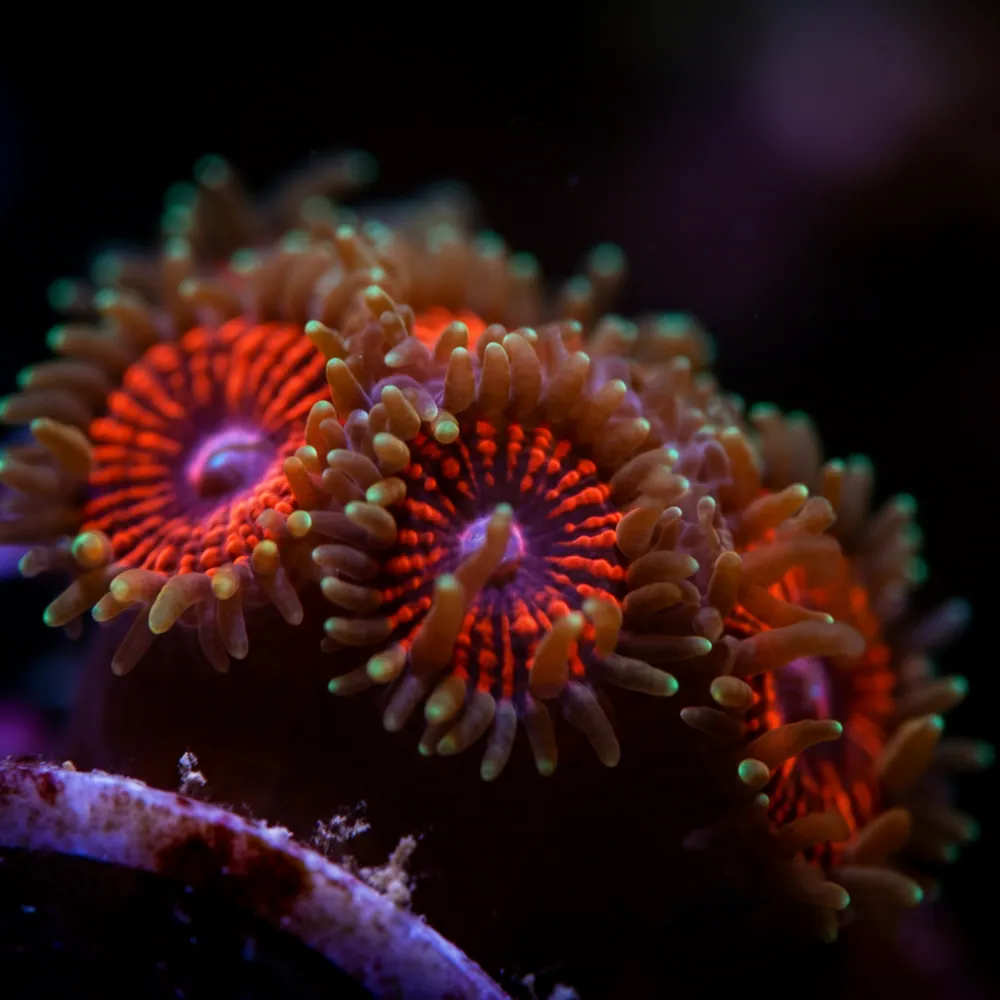
Imagine an underwater city, bustling with life and bursting with color, built not by humans, but by tiny, incredible animals! Meet the Vulnerable Coral, also known as Staghorn Coral! You might think it looks like a rock, but look closer – each coral is actually made up of thousands of super-tiny animals called polyps, no bigger than a pencil eraser! These little superstars work together to build amazing, branching structures that look like deer antlers, creating vibrant underwater forests. And get this: they have tiny, living solar panels inside them, called zooxanthellae, that give them their beautiful colors and most of their energy!
These coral builders are busy day and night! While their tiny solar panels soak up sunlight, the polyps also have a secret superpower: at night, they stretch out their delicate, stinging tentacles to grab microscopic snacks floating by. It's like having a fridge that refills itself! And when it’s time to have babies, entire coral reefs can put on the most spectacular show. Once a year, under the moonlight, they release billions of tiny egg and sperm bundles into the ocean, creating a magical, milky cloud. This amazing 'mass spawning' helps create new coral babies to keep their underwater cities growing!
Why are these corals so special? Because they are the ultimate ocean architects! Their amazing branching homes provide shelter, hideouts, and hunting grounds for countless sea creatures, from clownfish to sea turtles. Think of them as giant underwater apartment buildings and restaurants all rolled into one! But these magnificent living structures are facing big challenges, like changes in ocean temperature. That’s why they're called 'Vulnerable' – they need our help to protect their homes and all the amazing animals that depend on them. Protecting corals means protecting the whole ocean!
It is smaller than your thumb.
Where the vulnerable coral still lives — Caribbean
When the ocean water gets too warm because of climate change, the coral gets stressed and loses its colorful algae, turning white in a process called coral bleaching. If the water stays warm, the coral can't get enough food and might die.
Being done about itScientists are growing new coral babies in special underwater nurseries and then carefully planting them back onto the reefs to help them grow bigger and stronger. Everyone can help by using less energy and creating less pollution to keep our oceans healthy and cool.
Disease
Just like people can get sick, corals can catch diseases from tiny germs in the water, which can make parts of their bodies rot away. These diseases can spread quickly through a coral colony, making it very weak and sometimes killing it.
Being done about itCoral doctors, who are scientists, are studying these diseases to find out how they spread and how to stop them from harming more corals. They also work to keep the ocean clean and healthy, because strong corals are better at fighting off sickness!
Scientists are like super gardeners for the ocean, growing baby Staghorn corals in special underwater nurseries, then carefully replanting them onto the reefs to help them grow big and strong again. This important mission helps bring our coral reefs back to life!
Also known asAcropora cervicornis
GroupAnimal
DietMixotrophic (primarily photosynthetic via symbiotic zooxanthellae, supplemented by filter feeding on plankton and dissolved organic matter).
SizeColonies can grow several meters in diameter and height, forming dense, branching thickets. Individual polyps are tiny, typically 1-2 mm in diameter.