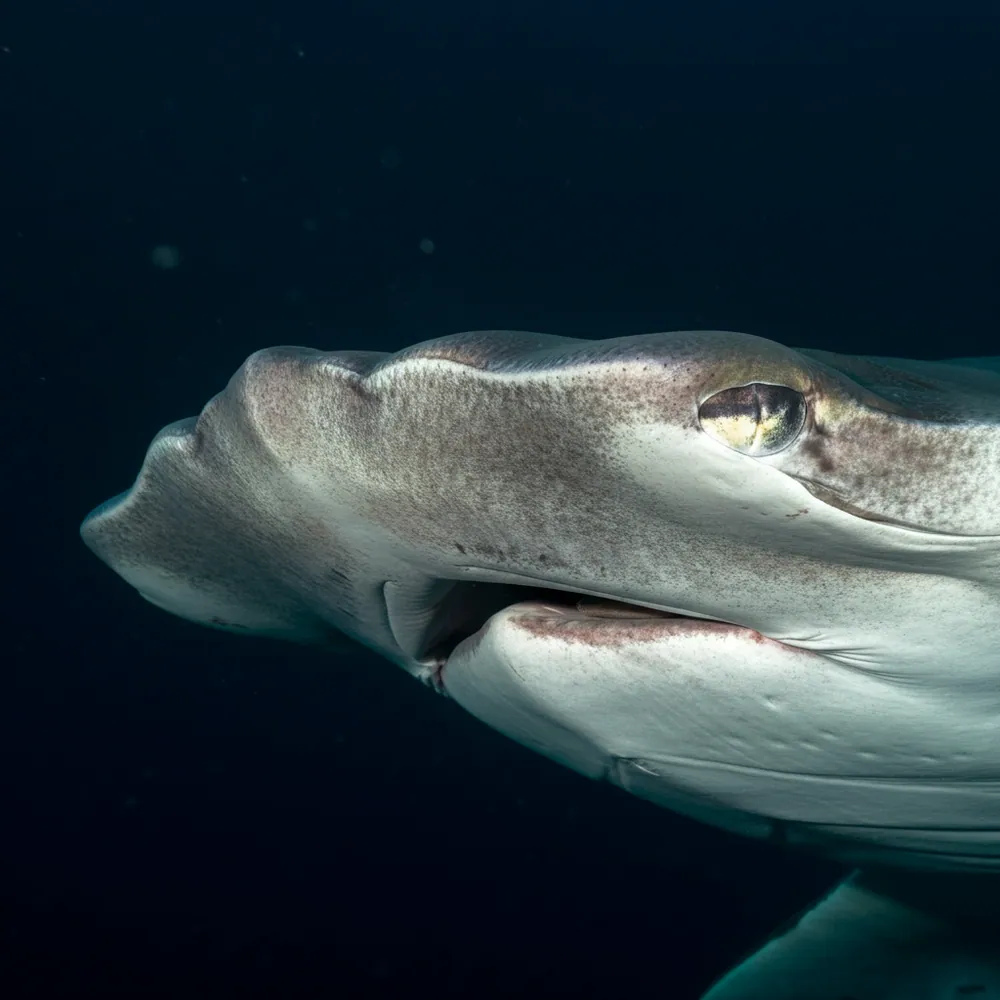
Imagine a shark that looks like a living, swimming boomerang! Meet the Scalloped Hammerhead, one of the ocean's most amazing super-sharks. Its super-flat head, called a 'cephalofoil,' isn't just for show – it's covered in wavy, scalloped edges, just like a fancy ruler! And guess what? Its super-sensitive nose and super-wide eyes are right there on those scallops. This gives it an incredible panoramic view and lets it sniff out dinner like a living metal detector, even tiny electrical signals from buried prey!
These incredible sharks, which can grow as long as a small car, are masters of disguise with their bronze-grey backs and white bellies, helping them blend into the dappled sunlight. But here's where it gets even cooler: sometimes, thousands of them swim together in giant, synchronized schools! It's like an underwater dance party, especially for the younger sharks who feel much safer in a big group. When night falls, these amazing hunters use their special heads to pin down tricky stingrays or scan the seafloor for a tasty meal. They're like the ocean's secret agents!
Scalloped Hammerheads aren't just cool; they're super important for keeping our oceans healthy, like the sea's very own quality control team! By hunting the weaker fish, they make sure everyone else stays strong and healthy. If you see lots of these hammerheads, it means their ocean home is thriving. Sadly, these magnificent creatures are critically endangered, which means they need our help. We have a big job to protect their watery world so future generations can marvel at these incredible living boomerangs too!
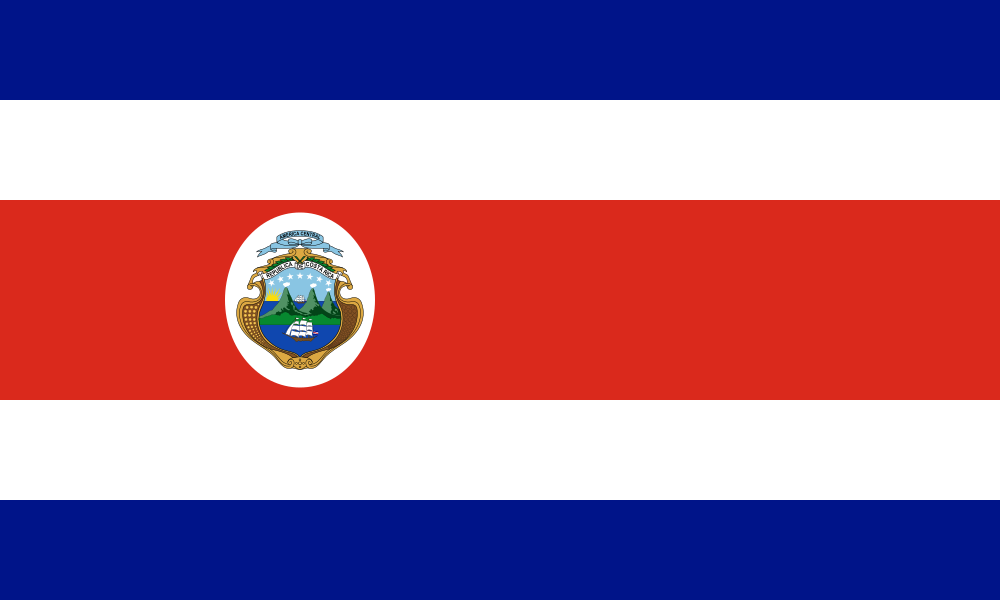
Where the scalloped hammerhead still lives — Costa Rica
Young Scalloped Hammerheads love to grow up in shallow, warm waters near the coast, like bays and estuaries, which are like their special nurseries. When people build too much or pollute these important areas, it becomes hard for baby hammerheads to find food and stay safe.
Being done about itScientists and park rangers are working to protect these special coastal nurseries where young hammerheads live. They create marine protected areas where building is limited and pollution is cleaned up, giving the baby sharks safe places to grow.
Bycatch / Overfishing
Scalloped Hammerheads are often caught by accident in big fishing nets meant for other fish, which is called bycatch. Sadly, some people also hunt them specifically for their fins, meaning too many sharks are being taken from the ocean.
Being done about itFishermen are learning to use special gear that helps hammerheads escape nets, and many countries are making rules to limit how many sharks can be caught. People around the world are also working to stop the illegal trade of shark fins and teach everyone why sharks are important for a healthy ocean.
But don't worry, lots of heroes are working hard to save them! Scientists are using special tags to track where these sharks swim, helping create 'safe zones' in the ocean where fishing is not allowed, giving these unique sharks a chance to grow and thrive.