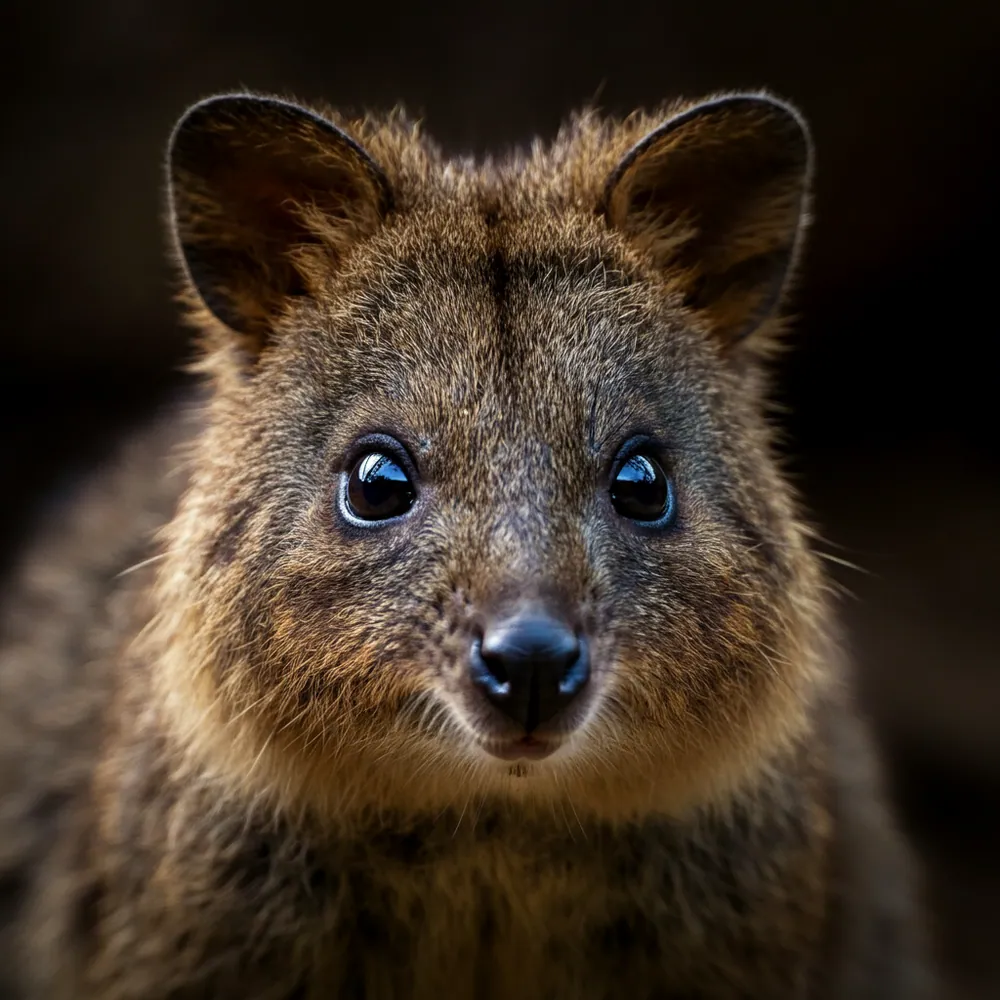
Get ready to meet the most cheerful creature on Earth – the quokka! Imagine a fluffy, cat-sized animal with a permanent, adorable smile plastered on its face. That's right, the quokka (say 'KWOK-uh') is often called 'the world's happiest animal,' and once you see its bright eyes and naturally curved muzzle, you'll totally understand why! These super-cute marsupials are covered in soft, brown fur, making them look like tiny, cuddly teddy bears hopping around Australia.
But there's more to these amazing Aussies than just their famous grin! Quokkas are mostly night owls, which means they spend their days catching Zzzs in cozy bushes, then wake up at dusk ready for an adventure. They're expert leaf-eaters, munching on all sorts of yummy plants and grasses. And here's a cool secret: even though they look a bit chunky, quokkas are surprisingly good climbers! They use their strong claws to scramble up small trees to find the freshest leaves or even to escape if they need to.
You'll mostly find these happy hoppers on a special place called Rottnest Island, off the coast of Western Australia. They're not just cute faces; quokkas play an important job in their home, helping plants grow by spreading seeds. Protecting these smiling superstars helps keep their unique island world healthy and happy, just like them! How cool is that?
Quokkas need special bushy places with fresh water to live, but sometimes these areas are cleared away for buildings or farms. When their homes disappear, quokkas lose their food, water, and safe places to hide.
Being done about itPeople are working hard to protect the quokka's remaining homes and even plant new trees and bushes to create more safe spaces for them to live and play.
Invasive species
On the mainland, quokkas are in danger from animals like foxes and cats that don't naturally live in Australia and hunt quokkas. These new predators make it very hard for quokkas to survive and raise their young.
Being done about itRangers are helping by carefully removing these dangerous animals from quokka habitats and sometimes building special fences to keep quokkas safe from harm.
Brave scientists and park rangers are on an important mission to protect quokkas by keeping their island homes safe from wildfires and making sure tricky predators like foxes and cats don't bother them.
Also known asSetonix brachyurus
GroupAnimal
HabitatScrubland & forest
DietHerbivore that primarily eats grasses, leaves, seeds, and roots.
PredatorsFoxes, feral cats, dingoes, and birds of prey.