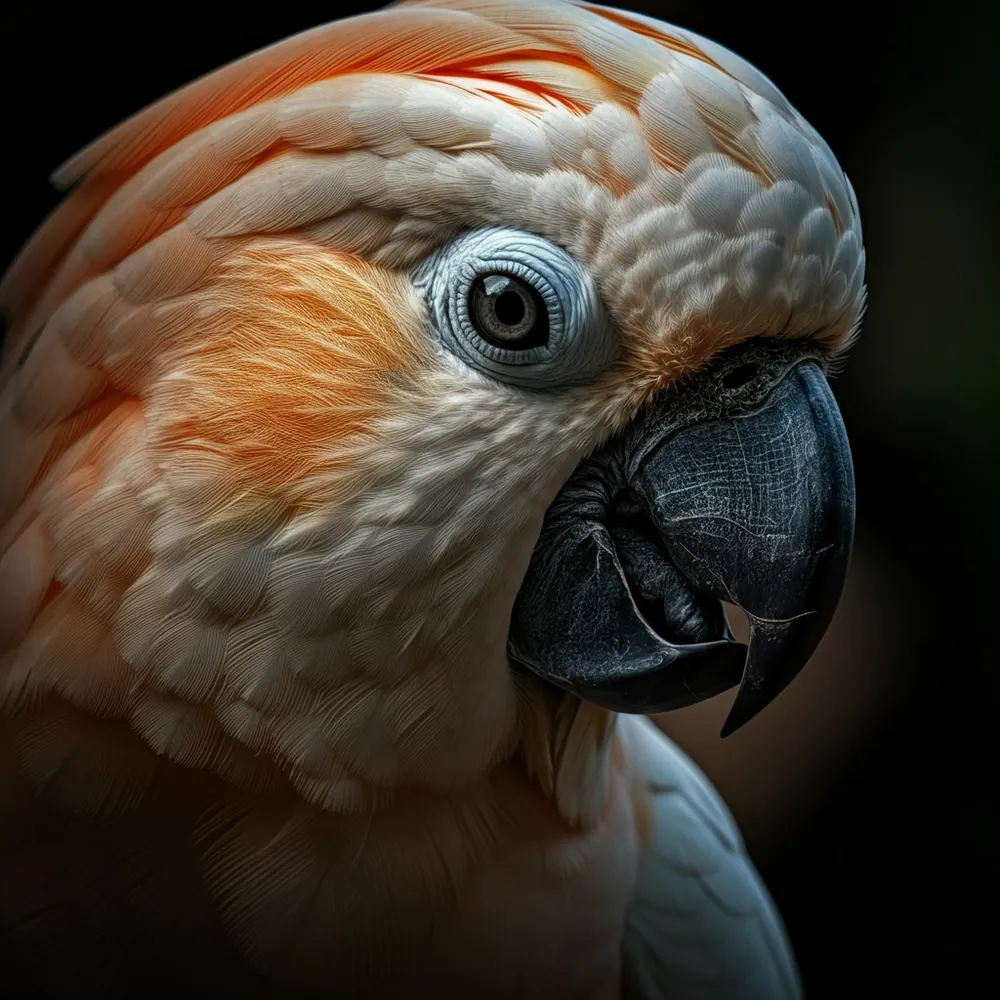
Get ready to meet a true superstar of the sky – the Philippine Cockatoo, also known as the Katala! Imagine a bird with feathers as bright and pure as fresh snow, and a super cool feathery crown, called a crest, that it can raise up high or flatten down. It's like having a mood ring on its head! These medium-sized parrots are mostly gleaming white, but wait until they fly! You'll spot a secret splash of pale yellow under their wings and tail, like a hidden burst of sunshine. With their strong, dark beak, they're like nature's nutcrackers, and their super-smart eyes watch everything from the tippy-top of the trees.
But these birds aren't just pretty faces! In the wild, they're super social and incredibly intelligent. You'll often spot them hanging out with their friends in noisy, chattering flocks, soaring through the trees. They're like the acrobats of the forest, using their strong feet and beaks to climb, swing, and find yummy snacks with amazing skill. Listen closely, and you'll hear their squawks, screeches, and chirps – it's how they tell each other about the best juicy fruits or warn everyone if there's danger nearby. They spend their days munching on fruits, seeds, and even sweet nectar, making them busy bees of their tropical island homes!
Here's the coolest part: Philippine Cockatoos are like the secret gardeners of their forests! When they eat fruits and nuts, they accidentally drop seeds all over the forest floor. These seeds then grow into new plants and trees, helping the forest stay healthy and full of life. So, these amazing birds are super important for keeping their homes vibrant! Sadly, there aren't many of these beautiful birds left in the world, which means their survival is a big clue about how healthy the whole Philippine forest is. Protecting them means protecting an entire wonderful world of nature!
Where the philippine cockatoo still lives — Philippines
Sadly, some people catch Philippine Cockatoos from their forest homes to sell them as pets. These beautiful birds are wanted because of their bright colors and ability to mimic sounds, which makes them very valuable on the black market.
Being done about itBrave park rangers and conservation groups work hard to protect the cockatoos from poachers, and they also teach people why it's wrong to buy wild animals as pets. Sometimes, rescued cockatoos are even cared for and released back into the wild.
Habitat loss
The forests where Philippine Cockatoos live are disappearing because people cut down trees to make space for farms, towns, or to use the wood. This means the cockatoos lose their homes, nesting spots, and places to find food.
Being done about itScientists and local communities are working together to protect and replant the forests where these cockatoos live, making sure they have safe places to grow up and raise their families. They also help people find other jobs so they don't have to cut down the trees.
But don't worry, brave heroes are on a mission to save them! Groups like the Katala Foundation are working super hard to protect their forest homes, rescue cockatoos that need help, and even help them have healthy baby cockatoos so their numbers can grow again. It's a race against time to bring these beautiful birds back from the brink!