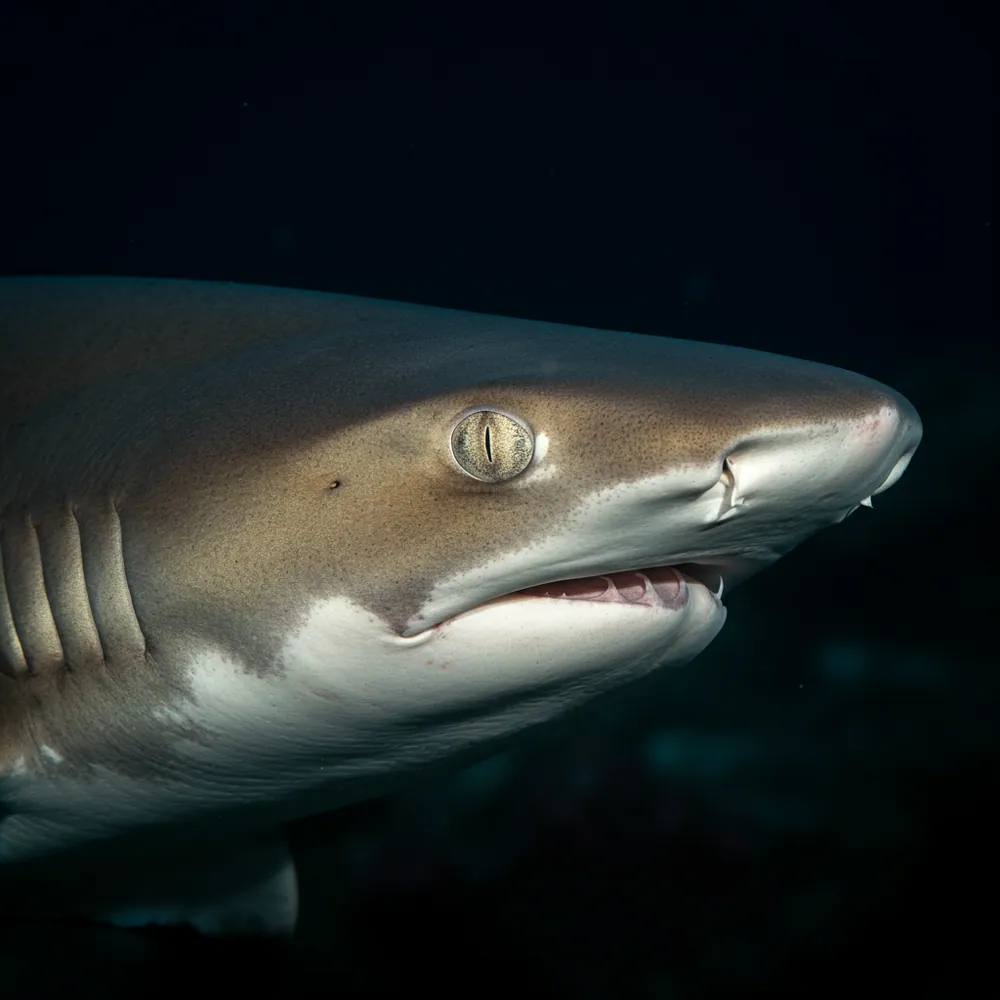
Hey ocean explorers! Get ready to meet one of the coolest creatures cruising the deep blue: the magnificent Oceanic Whitetip Shark! Imagine a powerful, torpedo-shaped swimmer, gliding smoothly through the water with super long, rounded fins like wings. It's easy to spot with its shiny bronze-gray back, bright white belly, and especially those awesome, snowy-white tips on its fins – it's like someone dipped them in white paint! This incredible shark can grow as long as a small car, making it a true giant of the open ocean.
This amazing shark is a true wanderer, spending its whole life far from land, exploring the vast, open ocean. It's like a curious detective, always on the lookout for something new! While it usually glides along calmly, don't let that fool you – it can zoom with incredible speed when it spots a tasty meal. And what does it eat? Almost anything! From speedy fish and squishy squid to slow-poking sea turtles and even big animal snacks floating by. It's like the ocean's very own clean-up crew, making sure nothing goes to waste!
But the Oceanic Whitetip isn't just a super cool hunter; it's also a superhero for the ocean! As a top predator, it helps keep the ocean healthy by eating weak or sick animals, which makes sure all the fish populations stay strong. It's like the ocean's health monitor! Sadly, these incredible sharks need our help because too many have been caught by people. Protecting the Oceanic Whitetip means we're protecting the health of our entire ocean. So let's learn about them and help keep these white-tipped wonders swimming freely!
Where the oceanic whitetip shark still lives — Egypt
Even though Oceanic Whitetip Sharks live in the big, wide-open ocean, their home can still get sick. Pollution, plastic trash, and changes in ocean temperature can make their hunting grounds unhealthy and harder for them to find enough food.
Being done about itScientists are working hard to understand how to keep the ocean clean and healthy for sharks. Many people are also helping by reducing plastic waste and protecting important ocean areas, like nurseries where baby sharks grow up.
Bycatch / Overfishing
Many Oceanic Whitetip Sharks get caught by accident in big fishing nets or on long lines meant for other fish, which is called 'bycatch.' Sadly, too many sharks are also being caught on purpose for their fins, making it very hard for them to have enough babies to keep their numbers strong.
Being done about itFishermen are learning to use special hooks and nets that help sharks escape safely, and scientists are teaching them better ways to fish without harming these important creatures. Countries are also making rules to limit how many sharks can be caught and to protect them from unfair hunting.
Brave ocean heroes are working hard to protect these sharks by creating special safe zones in the ocean and making sure fishing rules help them grow their families again.
Also known asCarcharhinus longimanus
GroupAnimal
DietCarnivore
SizeTypically 20-170 kg (44-375 lbs), with larger individuals exceeding 200 kg (440 lbs).