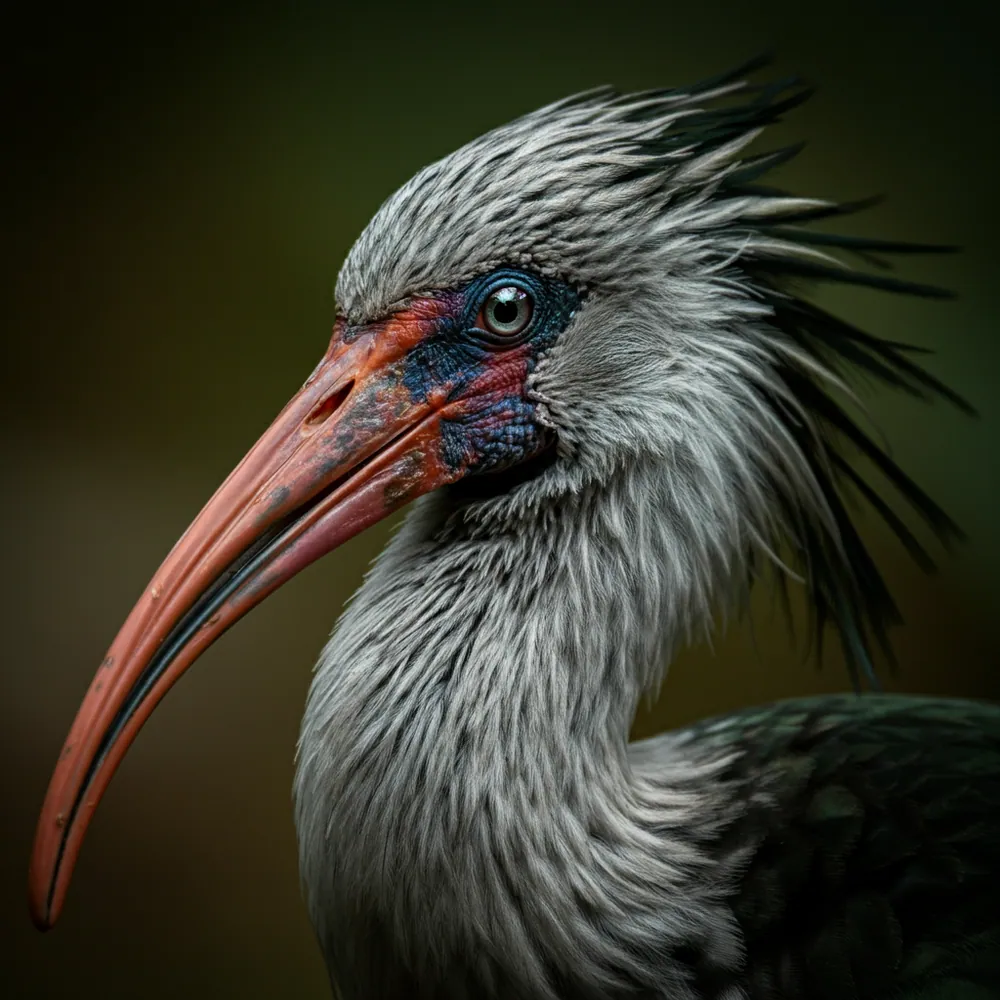
Hey there, future wildlife explorers! Get ready to meet a bird that looks like it just flew straight out of a dinosaur movie – it's the amazing Northern Bald Ibis, also known as the Waldrapp! Imagine a bird with a super cool, reddish-pink head that's totally bald and wrinkly, like it's seen a million sunsets. It even has a spiky, shaggy crest of dark feathers, giving it a real 'punk rock' vibe! And its body? Oh, it's covered in glossy black feathers that shimmer with hints of green and purple when the sun hits them just right. Plus, check out that long, bright red, curved beak – it's like a special ancient tool, perfectly designed for its job!
These incredible birds aren't just pretty faces; they're super social, living together in noisy colonies high up on dramatic cliff ledges. Think of them as nature's ultimate treasure hunters! With those awesome curved beaks, they're like little detectives, carefully poking and probing soft soil to sniff out yummy insects, beetle larvae, and even tiny reptiles. They're like superheroes for farmers, keeping pesky bugs in check and helping plants grow. When you see them walking, you'll notice their unique strut as they focus intensely on their important job. And listen closely – their funny croaking calls echo around their cliff homes, making a truly wild sound! These magnificent "living fossils" are super special, reminding us of ancient times and showing us how important it is to protect our amazing planet.
Where the northern bald ibis still lives — Morocco, Turkey, Syria
Northern Bald Ibises need special places to live, like cliffs for their nests and open, grassy areas to find tasty insects to eat. When people build more houses, farms, or roads, these important homes and feeding spots disappear, making it tough for the ibises to find a safe place to live and enough food.
Being done about itScientists and conservationists are working hard to protect the special cliffs where ibises nest and the fields where they find food. They are also creating new safe places for the birds to live and are teaching people how important it is to keep these natural areas healthy for the ibises and other animals.
Poaching / Illegal hunting
Even though it's against the law, some people sadly still hunt these rare and beautiful birds. When ibises are hunted illegally, fewer of them are left to have babies, which makes it harder for their population to grow.
Being done about itPark rangers and special wildlife teams are working hard to stop illegal hunting by watching over the ibis's homes and teaching people why these birds are so important to protect. They also help rescue and care for ibises that might get hurt, so they can be healthy and fly free again.
Brave scientists are on a super important mission, helping baby ibises learn to fly and migrate using special planes, almost like their foster parents! They also work hard to protect the wild places where these amazing birds live, ensuring they have safe homes and can grow their families.