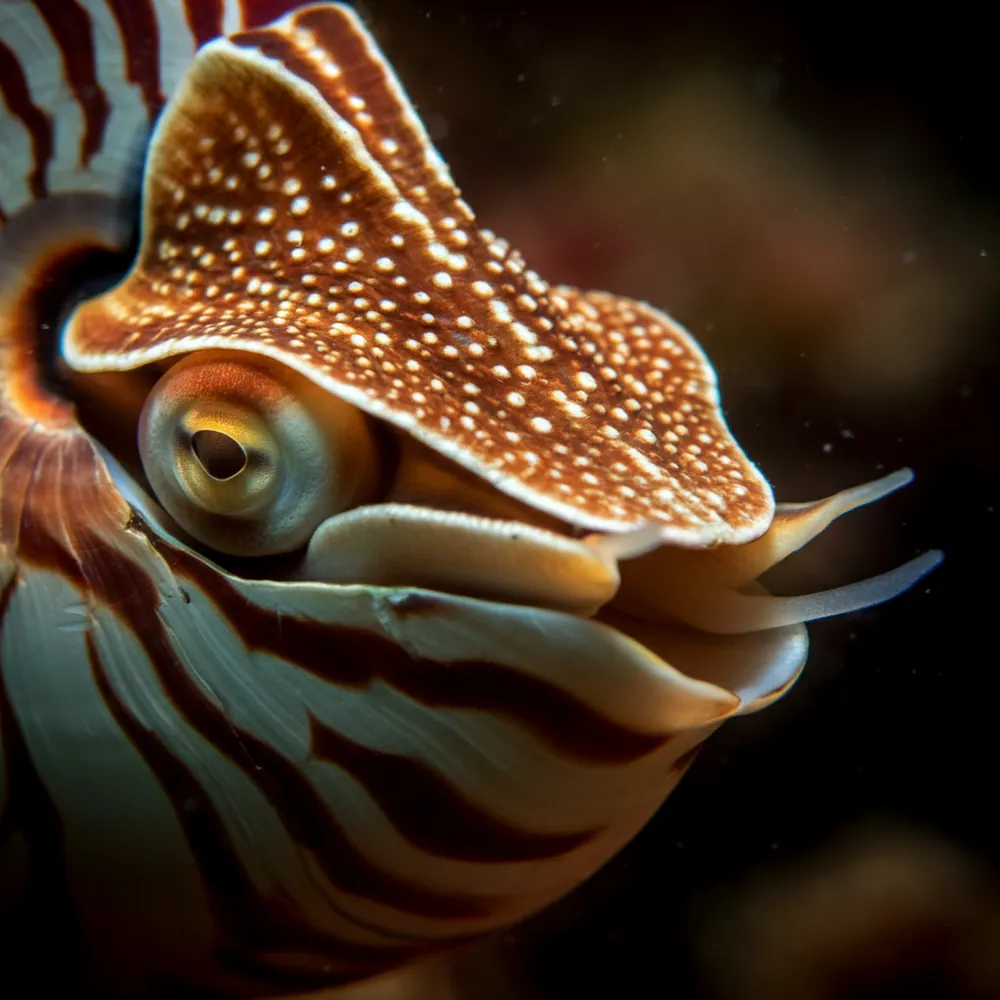
Hey, ocean explorers! Get ready to meet a true superstar from the deep, deep sea – the amazing Nautilus! Imagine a creature that's like a living, breathing time machine, carrying a perfectly swirly, pearly shell on its back. This incredible shell isn't just pretty; it's like a secret submarine! The nautilus can fill different parts of its shell with gas to float up or down, exploring the ocean with amazing control. It's been swimming the seas for over 500 million years – that's even before the dinosaurs!
This ancient mariner lives way down deep where the sun never shines, sometimes as far as 700 meters below the surface! But don't worry, its up to 90 busy tentacles help it feel its way around. It's a slow and steady hunter, jetting through the water by squirting out water, looking for yummy snacks like tiny crabs or leftover scraps. And guess what? This incredible invertebrate can live for up to 20 years, making it one of the longest-living creatures without a backbone!
So, the Nautilus is not just an animal; it's a living fossil, a link to Earth's very first ocean creatures! It reminds us how amazing and persistent life can be. With its beautiful shell and incredible journey through time, the nautilus is a true marvel of the ocean. It's a special deep-sea friend that needs our help to keep swimming for millions more years!
Where the nautilus pompilius still lives — Indo-Pacific
Nautilus live in special deep-sea homes near coral reefs, but pollution and a warming ocean are changing these important places. This makes it harder for them to find food and safe spots to live.
Being done about itScientists are exploring the deep ocean to understand exactly what the Nautilus needs in its home, and people are working hard to reduce pollution and fight climate change to protect these amazing habitats.
Bycatch / Overfishing
Many Nautilus get accidentally caught in fishing nets meant for other sea creatures, which is called bycatch. They are also sometimes hunted directly by people who want their beautiful, spiral shells.
Being done about itScientists are working with fishers to design special nets that allow Nautilus to swim free, and people around the world are learning not to buy Nautilus shells so that fewer of these ancient animals are caught.