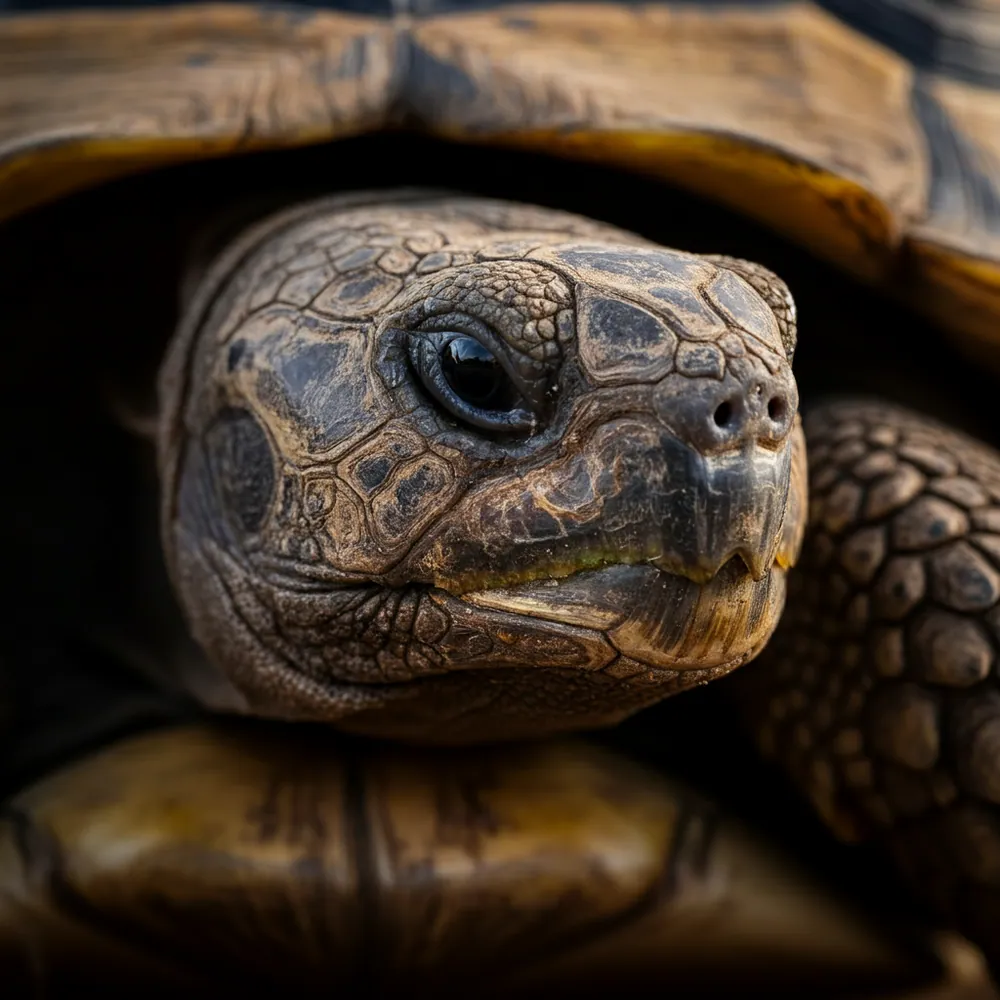
Hey there, animal explorers! Get ready to meet one of the coolest, most secretive creatures from sunny Africa: the Natal hinged tortoise! Imagine a tiny, ancient-looking reptile, no bigger than your hand, scurrying through grassy lands. Its shell is a masterpiece of camouflage, blending perfectly with rocks and dry plants in shades of olive, brown, and sandy yellow. But here's the super-duper secret: this tortoise has a special, flexible hinge on the *back* of its shell! When danger is near, it can pull its tail and back legs inside, then snap that hinge shut like a secret door, turning its shell into an almost unbreakable fortress! How cool is that?
These little living tanks are expert survivors. During the day, they're busy munching on tasty leaves, juicy fruits, and even tiny insects and snails – they're omnivores, which means they eat both plants and critters! They’re super good at playing hide-and-seek, often staying tucked away among rocks or thick plants to avoid being spotted. If the sun gets too hot or a hungry animal comes sniffing around, they just retreat into their amazing hinged shell or dig a shallow hideout until it's safe and cool again.
Even though they're small, Natal hinged tortoises are true superheroes of their African home. As they wander and snack, they help spread seeds for new plants to grow. By eating bugs, they help keep nature's balance, and even their little digging projects help the soil! So next time you think of a tortoise, remember this little hinged wonder – small in size, but mighty in cool features and contributions to its wild world!
Where the natal hinged tortoise still lives — South Africa, Mozambique, Eswatini
Imagine your house disappearing! That's what happens to Natal hinged tortoises when their grassy homes and rocky hideouts are cleared away for new buildings, farms, or roads. They lose their safe places to live, find yummy food, and hide from danger.
Being done about itLots of grown-ups are working hard to protect these tortoise homes! They help set aside special nature parks where tortoises can live safely, and they teach everyone how important it is to keep these wild places just as they are.