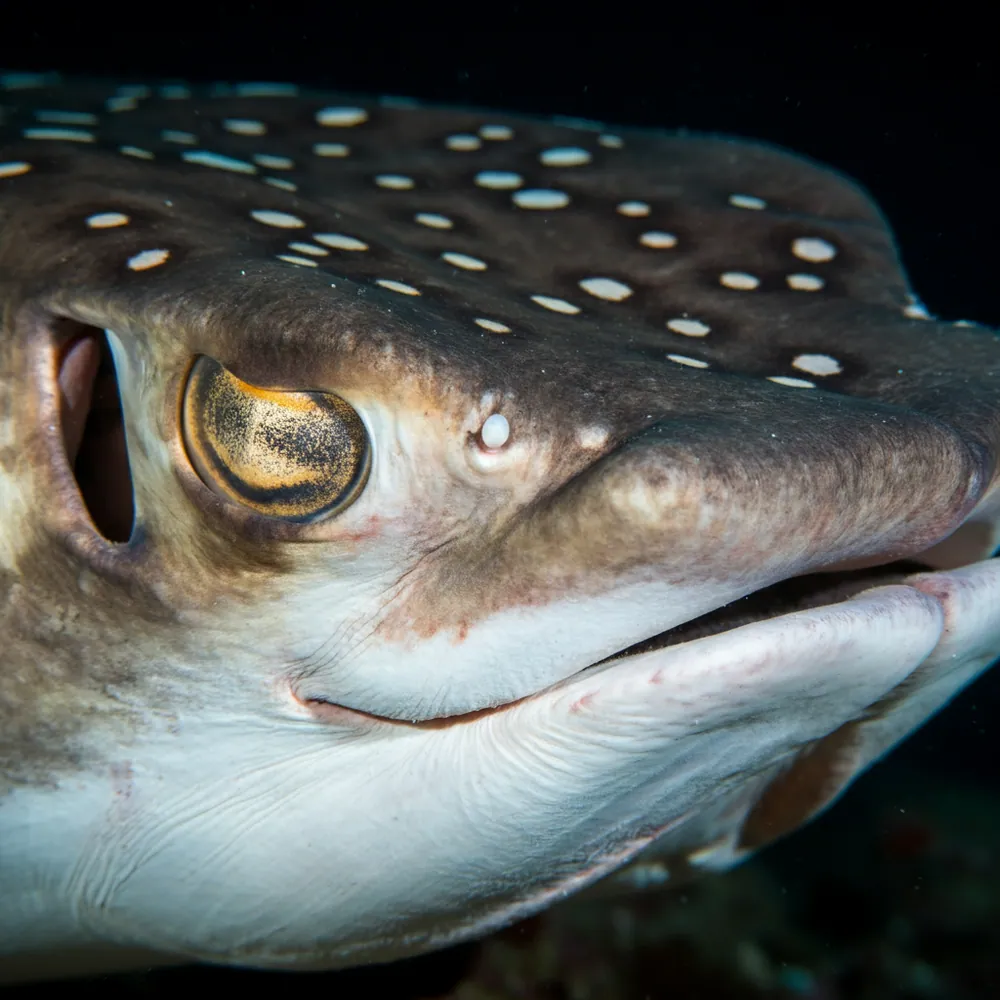
Hey ocean explorers! Get ready to meet one of the coolest creatures soaring through the sea: the Mottled Eagle Ray! Imagine a magnificent bird, but underwater, with huge, powerful "wings" that help it glide like magic. This ray has a super cool diamond-shaped body, often as wide as a car, and its back is covered in amazing spots and patterns of browns, greens, and grays. It's like nature's camouflage artist, blending perfectly with the ocean floor! And check out its long, whip-like tail – it has a tiny, sharp barb at the end, but don't worry, it's only used for defense if it feels super threatened, like a secret superpower!
Watching a Mottled Eagle Ray move is like seeing an underwater ballet! They don't just swim; they gracefully flap their wing-like fins, making it look like they're flying through the warm, tropical waters. These elegant wanderers love to explore, gliding over colorful coral reefs, sandy bottoms, and even the wide-open ocean. With their special pointy snout, they're like underwater detectives, digging into the sand to sniff out delicious snacks like clams, oysters, and crabs! This digging isn't just for food; it also helps stir up the ocean floor, like a natural gardener, keeping the habitat healthy for other creatures. Sometimes you'll see them all by themselves, but other times, you might spot an enormous school, gliding together in a truly breathtaking ocean parade!
It is about as long as you are tall.
Where the mottled eagle ray still lives — Indo-Pacific
Mottled Eagle Rays are losing their ocean homes, like coral reefs and seagrass beds, because people are building more along the coast and polluting the water. This leaves them with fewer safe places to live and find food.
Being done about itPeople are helping by creating special ocean parks where rays are safe, and by cleaning up pollution to make their homes healthy again. They are also working to replant important seagrass beds and coral reefs.
Bycatch / Overfishing
Mottled Eagle Rays often get caught by accident in big fishing nets meant for other ocean animals, which is called "bycatch." This can hurt them or even cause them to die, even though fishers weren't trying to catch them.
Being done about itScientists are helping fishers use special nets that let rays swim out easily, and governments are making rules about where and how much fishing can happen. This helps keep rays safe from accidental catches.
Brave ocean heroes are on an important mission to protect these rays by creating safe ocean parks where they can live without danger, and by teaching fishermen special ways to cast their nets so these magnificent swimmers don't get accidentally caught.
Also known asAetomylaeus maculatus
GroupAnimal
DietCarnivore, primarily feeding on benthic invertebrates such as crustaceans, mollusks (bivalves, gastropods), and small fish
SizeUp to 20 kg (44 lbs), with a disc width reaching 78 cm (31 inches)