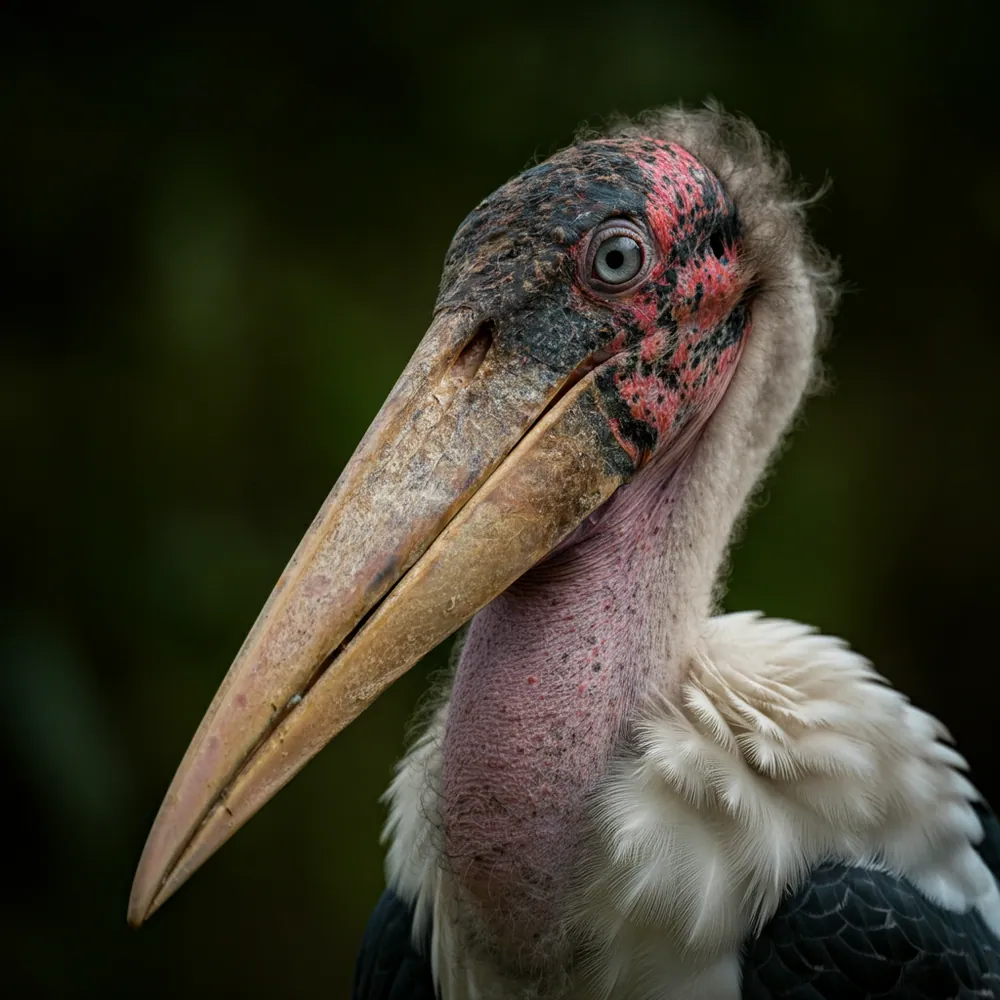
Hey there, wildlife adventurers! Get ready to meet one of Africa's most amazing and unique birds: the Marabou Stork! This incredible creature stands super tall, over four feet, and has a wingspan almost as wide as a small car – nearly ten feet! With its dark grey back, white tummy, and a head that looks like it forgot its feathers, it's definitely a bird you won't forget. Some people even call it the 'undertaker bird' because of its serious, cool look, but trust me, it's a superstar!
Look closely and you'll see its giant, wedge-shaped beak, perfect for gobbling up all sorts of tasty snacks. And guess what? It has a big, pink, floppy pouch under its chin that can puff up like a balloon! This amazing bird loves to soar high in the sky, riding warm air currents like a pro, sometimes hanging out with vultures. But don't let its serious face fool you; it's a super smart hunter and scavenger, always on the lookout for its next meal, whether it's fish, frogs, or even small mammals.
But here's the coolest part: the Marabou Stork is Africa's ultimate clean-up crew! With its powerful beak, it helps keep the environment tidy by eating decaying stuff that other animals leave behind. This helps stop germs from spreading and keeps the African plains healthy and sparkling. So, next time you think about nature's heroes, remember the Marabou Stork – a giant, quirky, and super important bird that truly makes the world a better place!
Marabou Storks often live near wetlands, rivers, and open grasslands, but these important places are shrinking because people are building more towns, farms, and roads. This means the storks have fewer safe spots to find tasty snacks like fish and build their giant nests.
Being done about itScientists and conservationists are working to protect key wetland areas and open spaces by turning them into national parks or wildlife reserves, making sure the storks always have a safe home. They also help local communities find ways to live and grow without harming the storks' natural habitats.
Poaching / Illegal hunting
Sadly, Marabou Storks are sometimes hunted unfairly, even though it's against the law, often for their feathers or for food. This illegal hunting makes it very difficult for young storks to grow up and for the stork families to get bigger.
Being done about itBrave park rangers and wildlife protectors are working hard to stop illegal hunting by patrolling areas where storks live and catching people who break the law. They also teach everyone why these unique birds are important and should be protected, not hunted.
While Marabou Storks are doing okay, people are still working hard to protect the wild places they call home, especially wetlands and grasslands. It's an important mission to keep their habitats safe and make sure these amazing 'nature's clean-up crew' birds have plenty of space to live and find food!