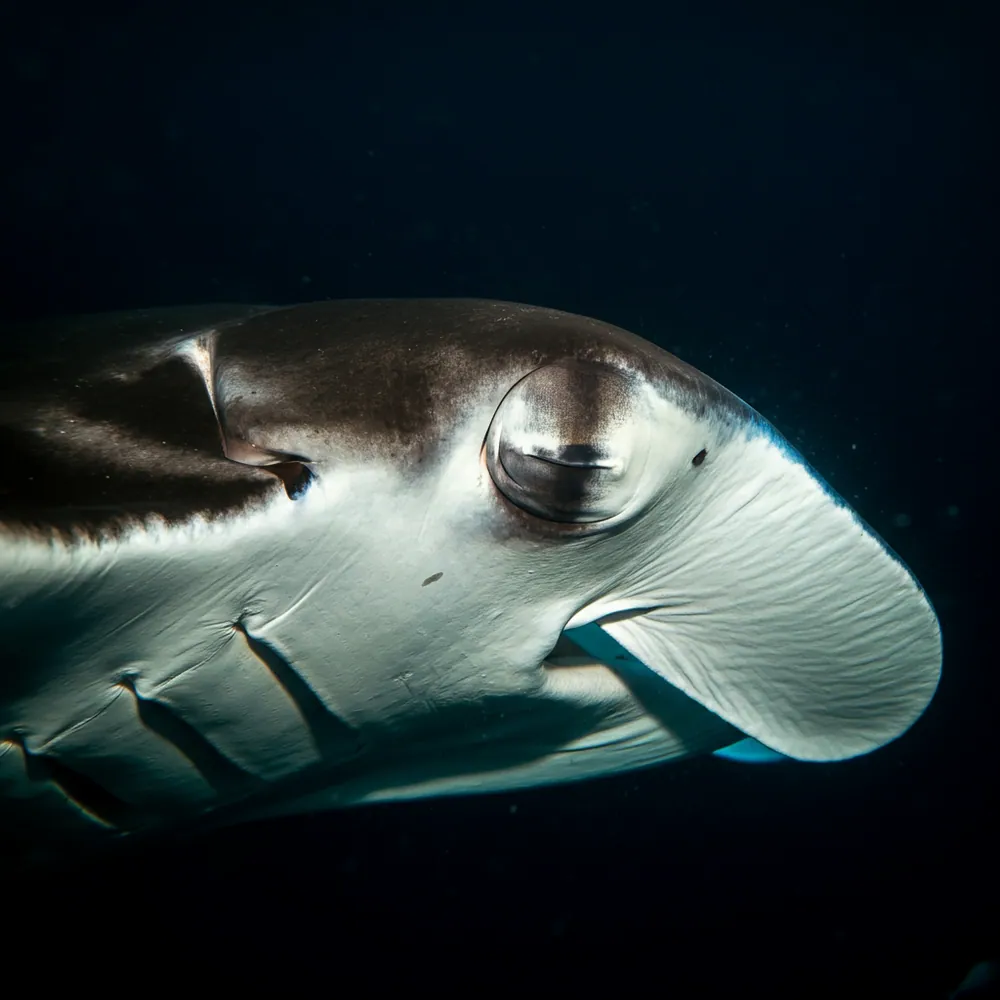
Hey ocean explorers! Get ready to meet one of the most incredible creatures swimming the seas: the magnificent Manta Ray! Imagine a gigantic, flat diamond, as wide as a whole car, soaring through the water like a super-graceful bird. That's a Manta Ray! They have huge 'wings' that help them glide, and two funny horn-like fins near their super-wide mouth. Their backs are usually dark, but flip them over, and you'll see a white belly with unique spot patterns – like their very own secret fingerprint!
Watching a Manta Ray is like magic! They don't just swim, they *fly* through the ocean, flapping their giant fins with amazing grace. And guess what they eat? Not big fish, but super tiny little critters called zooplankton! They open their enormous mouths wide, unfurl those horn-like fins like scoops, and gulp down tons of these microscopic snacks. Sometimes they even gather for a 'spa day' at special cleaning stations, where tiny fish give them a scrub, munching on any pesky parasites!
But Manta Rays aren't just beautiful; they're super important for our ocean! Think of them as the ocean's giant vacuum cleaners. By eating all that plankton, they help keep the water clean and balanced. If you see Manta Rays, it's usually a sign that the ocean around them is healthy and full of life. They remind us that every creature, no matter how tiny or huge, plays a special part in keeping our blue planet amazing!
Manta rays need clean, healthy oceans, especially around coral reefs, to find their tiny food and raise their babies. But pollution from trash and chemicals, and buildings being built along the coast, are making these special places disappear or become unhealthy for them.
Being done about itMany people are working hard to clean up our oceans and stop pollution from reaching manta ray homes. They are also creating special protected areas where manta rays can live safely without their homes being destroyed.
Bycatch / Overfishing
Manta rays sometimes get tangled by accident in big fishing nets meant for other fish, which can hurt them or even stop them from swimming. Sadly, some people also hunt manta rays for their gill plates, which are like filters they use to eat tiny ocean creatures.
Being done about itScientists are inventing smarter fishing nets that let manta rays swim free, and governments are making rules to protect them from being hunted. This helps make sure these gentle giants can swim safely through the ocean without being accidentally caught or targeted.
Brave scientists and ocean heroes are working hard to save manta rays! Groups like The Manta Trust are tagging and studying them to learn their secrets, while many countries are creating special 'no-fishing zones' in the ocean to protect their homes and keep them safe from harm.