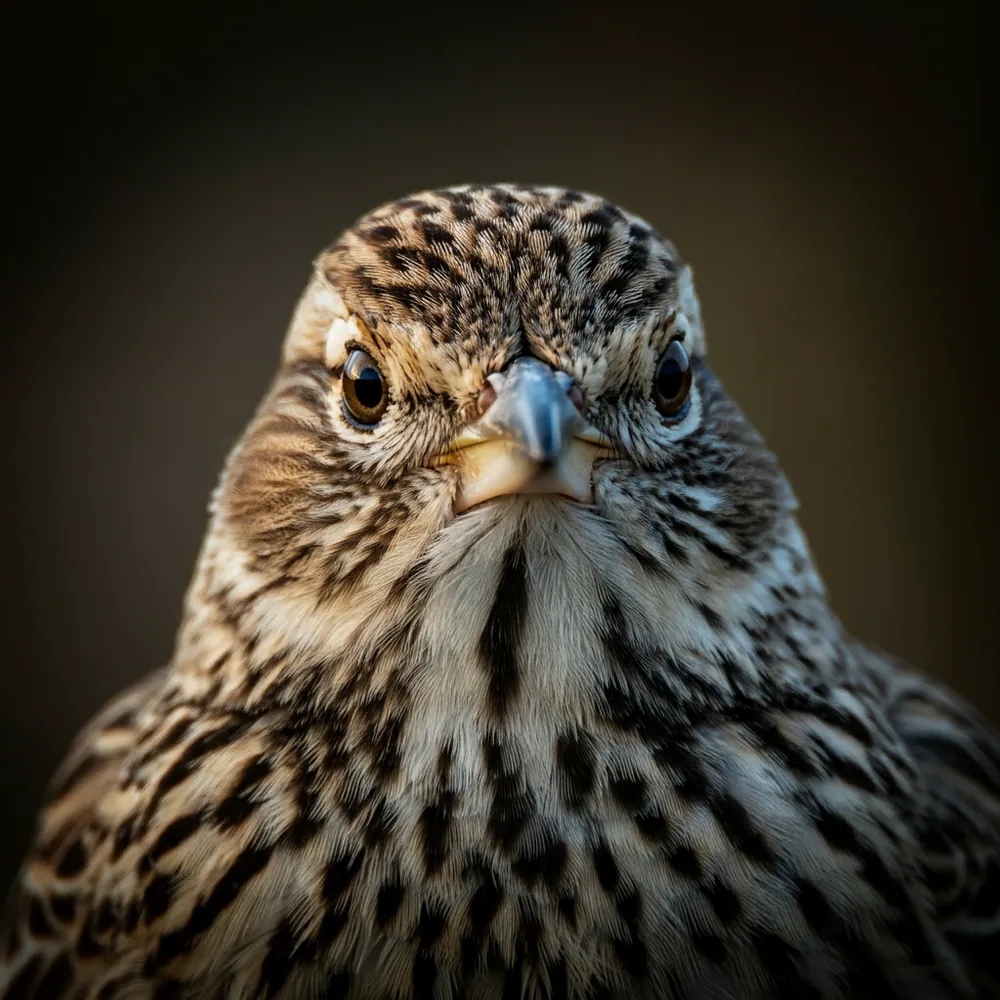
Get ready to meet a true feathered superstar from the sunny grasslands of Ethiopia: the incredible Liben Lark! Imagine a tiny explorer, no bigger than your hand, wearing the most amazing camouflage outfit you've ever seen. Its feathers are a beautiful mix of streaky browns, soft buffs, and gentle greys, helping it disappear perfectly into the tall, sun-baked grass. It's like a real-life master of disguise, making it super tricky – and super cool – to spot!
This little lark is shy, but don't let that fool you – it's always busy! If you listen very, very carefully, you might hear its special 'buzzing' song, which it sings from a low branch or even while walking on the ground. It spends its days scuttling through the dense grass, using its fine, pointed beak like a tiny detective tool to find delicious seeds and crunchy insects for lunch. Watching a Liben Lark is like getting a secret peek into its busy, hidden world!
But here's what makes the Liben Lark extra special: it's a true superhero for its home! This tiny bird is critically endangered, meaning it's super rare and needs our help. It's like a feathered alarm bell, telling us that its unique grassland home, and all the other amazing animals that live there, are in danger. By protecting the Liben Lark, we're helping to save an entire ecosystem. Isn't that an amazing job for such a small bird?
The Liben Lark needs very specific grassy areas to live, build nests, and find food. Sadly, these important grasslands are shrinking because people are turning them into farms or allowing too many animals to graze there.
Being done about itPeople are working hard to protect the remaining special grasslands where the Liben Lark lives. They are also teaching local communities how to manage the land so both people and larks can thrive.
Brave scientists and conservation heroes are on a very important mission to save the Liben Lark! They are working with local communities to protect the special grassy plains where these birds live, making sure their home stays safe from harm and helping these little larks survive.
Also known asHeteromirafra archeri
GroupAnimal
DietOmnivore (primarily insectivorous, also granivorous)