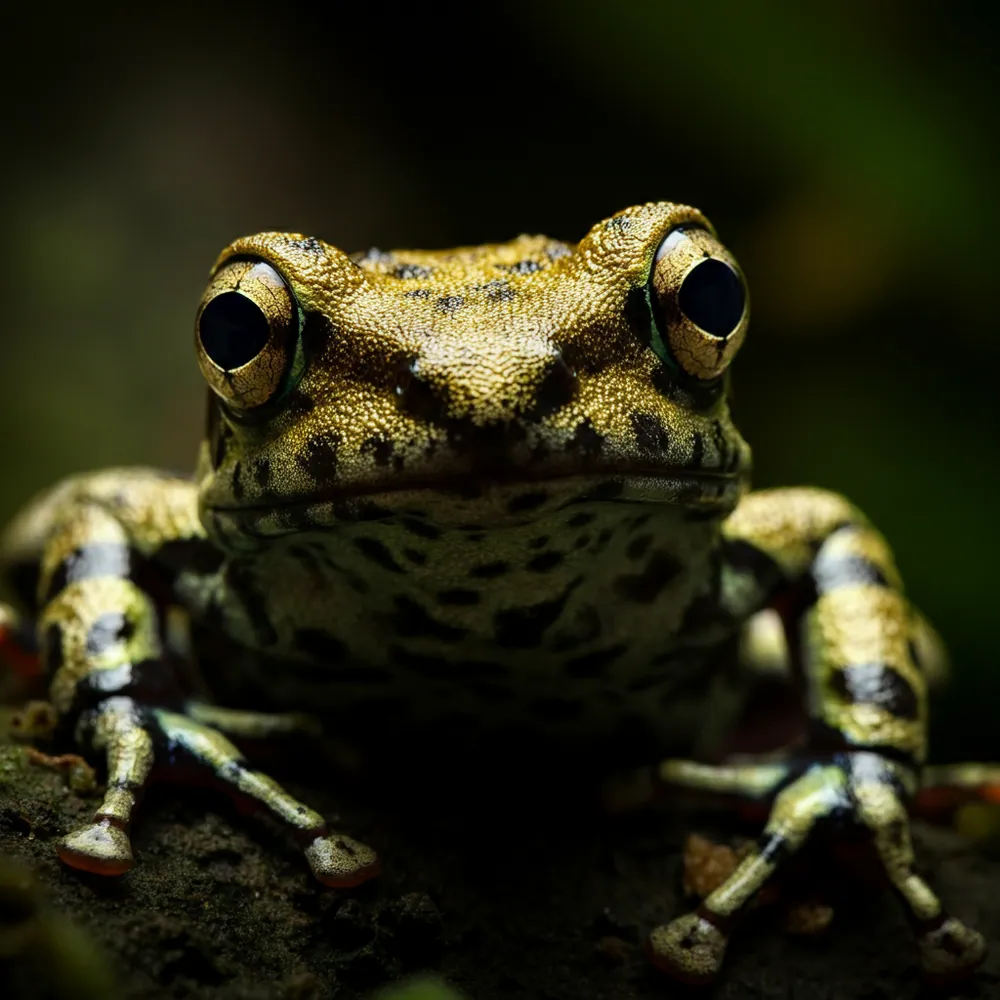
Hey junior explorers! Get ready to meet a tiny creature that looks like a living jewel, but packs a super-powered punch! Imagine a frog so bright it looks like it just swallowed the sun – glowing lemon-yellow, fiery orange, or even cool mint green! This isn't just a fashion statement; it's a super important warning sign, basically telling everyone, "Look, but definitely don't touch!" Meet the amazing Golden Poison Frog!
This dazzling little amphibian lives deep in the steamy, green rainforests of Colombia, South America. Unlike most frogs that hide at night, our golden friend is a day-walker! You might spot it hopping carefully among fallen leaves and tangled roots, hunting for its favorite snacks: tiny ants, termites, and beetles. It usually likes to hang out by itself or with a very small frog family, enjoying its quiet corner of the jungle.
Now for the super cool part: this frog is considered one of the most toxic animals on Earth! But here's the amazing secret – it doesn't *make* its own poison! Instead, it gets its super-strong defense from the special bugs it eats in the wild. It's like eating a superhero snack that gives *you* superpowers! This makes the Golden Poison Frog a truly unique rainforest guardian, showing us how all living things are connected in its incredible jungle home. Pretty awesome, right?
Where the golden poison frog still lives — Colombia
Sadly, some people illegally catch Golden Poison Frogs because their bright colors make them look like cool pets. This removes them from their wild homes and puts them in great danger.
Being done about itBrave wildlife rangers and special police try to stop people from illegally catching and selling these frogs. They also teach everyone why wild animals should always stay in their natural homes, not in cages.
Habitat loss
The beautiful rainforests where Golden Poison Frogs live are being cut down to make space for farms or new buildings. When their forest homes disappear, these tiny frogs have nowhere safe to live or find food.
Being done about itScientists and conservationists are working hard to protect parts of the rainforest where the frogs live, turning them into safe parks. They also help plant new trees and teach people how important these forests are for all animals, including our golden friends.
Scientists and conservation heroes are on a mission to save these frogs! They're working hard to protect their rainforest homes and have even started special breeding programs at zoos to help more baby frogs hatch safely.