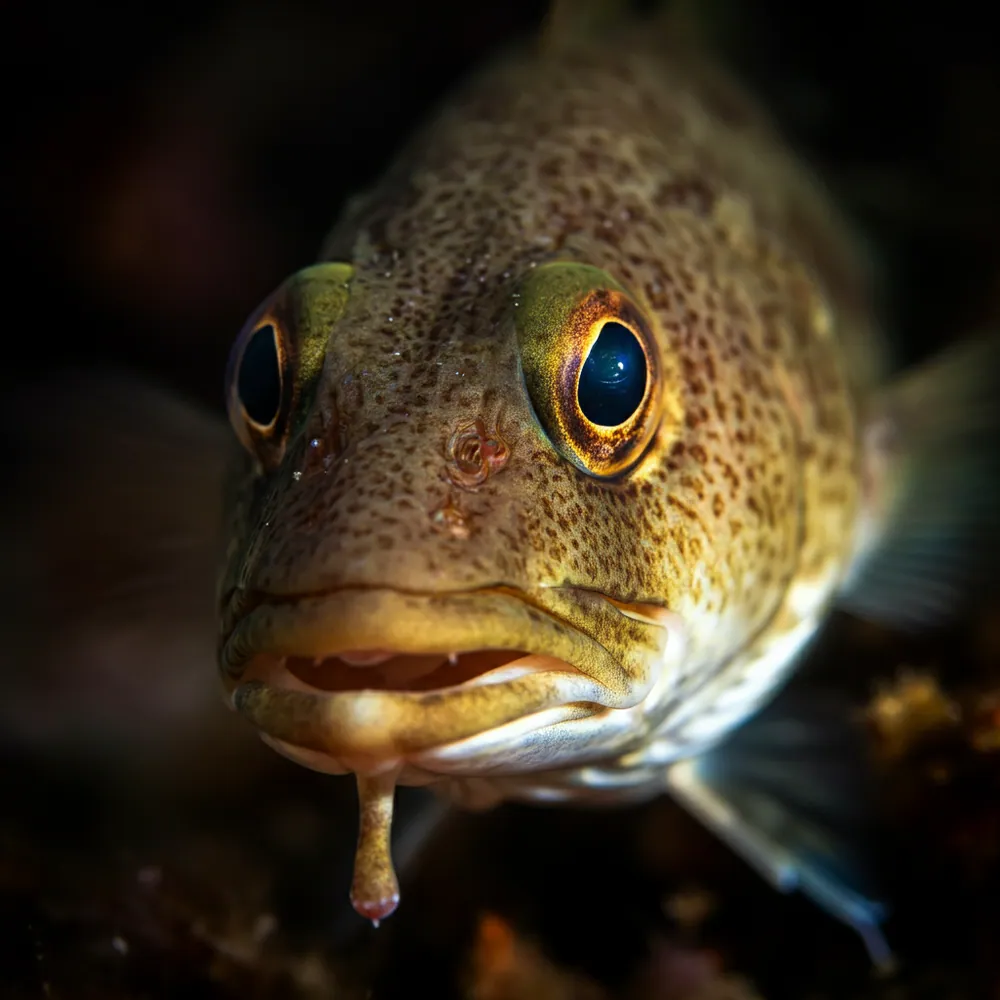
Hey ocean explorers! Get ready to dive deep and meet the Atlantic Cod, a true heavyweight of the northern seas! Imagine a fish with a built-in snack-detector called a barbel – that's a fleshy "chin whisker" that helps it sniff out yummy treats and feel for food even in the darkest, murkiest parts of the ocean. Its body is like a master of disguise, painted with greens, browns, and greys so it can perfectly blend in with the rocky or sandy ocean floor. And check out its three cool fins on its back and a super-strong tail – perfect for zooming through the water with powerful bursts of speed!
This awesome fish loves to hang out near the bottom of the ocean, and it's famously hungry, always ready for a feast! From tiny plankton when it's a baby, to crunchy crabs, slithery worms, and even other fish when it grows up – the Atlantic Cod eats it all! Sometimes, thousands of Cod gather together in giant schools and swim super long distances, like an underwater parade, to lay their eggs and make sure there are plenty more cod to come.
But the Atlantic Cod isn't just a hungry fish; it's a superhero of the sea! It helps keep the ocean healthy by munching on smaller creatures, making sure no one animal takes over. And guess what? Seals and even some whales think Cod are delicious, too! So, whether it's hunting for dinner or becoming dinner for someone else, the Atlantic Cod is super important for keeping the ocean world spinning. It's truly a magnificent fish with a big job!
Where the atlantic cod still lives — North Atlantic
The ocean is getting warmer because of climate change, and Atlantic Cod really love cold water, so this makes it tough for them to find comfy homes and enough food. Warmer water also changes where their favorite food lives, making it harder for cod to thrive.
Being done about itScientists are studying how to help cod adapt to these changes and find new places to live. Many people are also working to reduce pollution from cars and factories that makes the ocean warmer in the first place.
Bycatch / Overfishing
Too many Atlantic Cod are sometimes caught by big fishing boats, which means there aren't enough left to have babies and keep their numbers strong. Sometimes, other ocean animals are also accidentally caught in nets meant for cod, which is called bycatch.
Being done about itGovernments set rules about how many cod can be caught each year to make sure enough are left to reproduce. Scientists and fishermen are also working together to use special nets that let young cod and other animals escape safely.
Brave scientists and ocean heroes are on a mission to save the Atlantic Cod! They are setting special rules for fishing boats to make sure only a healthy number are caught, and creating safe zones in the ocean where cod can grow big and have lots of babies.
Also known asGadus morhua
GroupAnimal
DietCarnivore
SizeTypically 5-12 kg (11-26 lbs), though historically much larger specimens up to 96 kg (212 lbs) have been recorded.