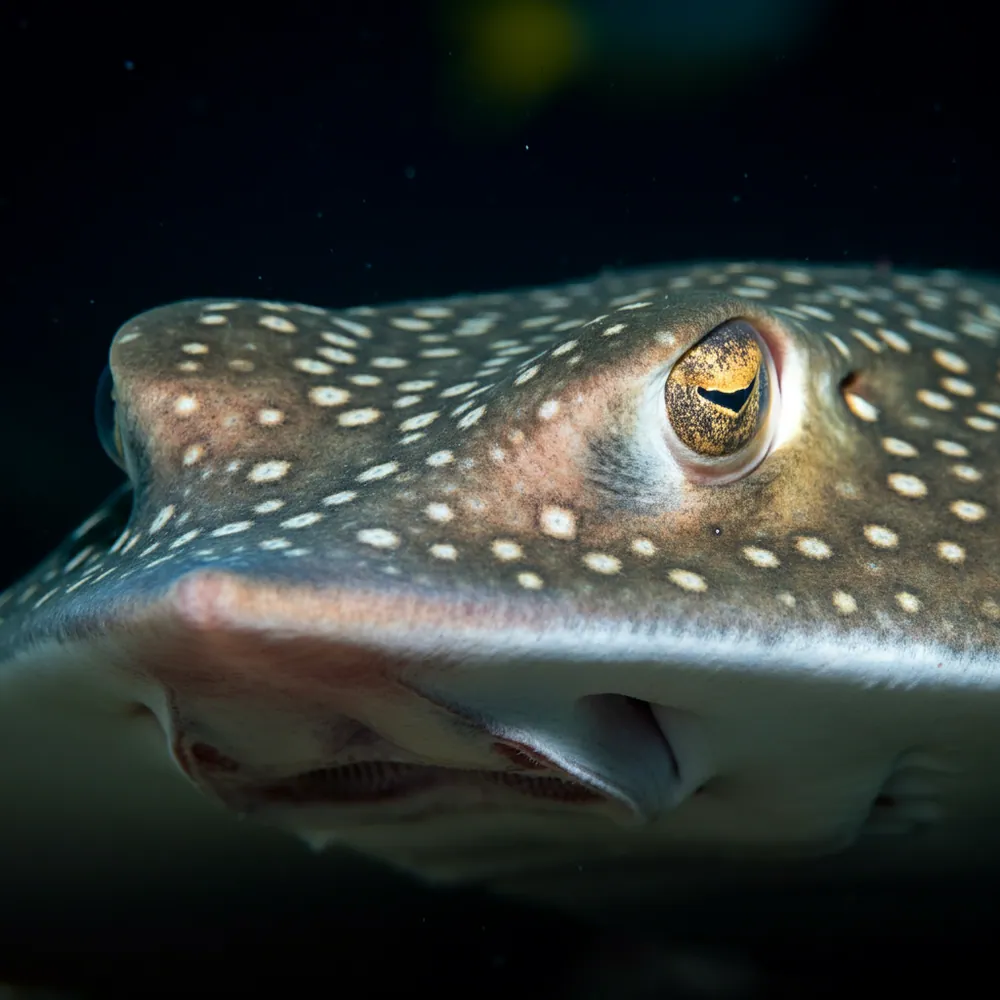
Get ready to meet one of the ocean's coolest superheroes: the Common Cownose Ray! Imagine a creature that looks like a diamond flying gracefully through the water, with wings as wide as your arm span! What makes them super special? Just look at their awesome nose! It's split right down the middle, a bit like a cow's nose, and they use it like a super-powered shovel to explore the ocean floor.
But these rays aren't just great diggers; they're also super social! Picture thousands of these amazing creatures swimming together in one giant, synchronized ballet – it's like an underwater airshow! They glide along, using their special 'cow nose' to sniff out and dig up their favorite snacks, like yummy clams and oysters. Their super strong, flat teeth are perfect for crunching through those tough shells, making them expert ocean treasure hunters!
And guess what? These incredible rays are also known as 'ocean gardeners'! By digging and stirring up the sand while they hunt for food, they help keep the ocean floor healthy. It's like they're tilling the soil, helping tiny creatures find homes and making sure the whole ocean family stays happy and thriving. How cool is that? The Cownose Ray truly is a wondrous wonder of the sea!
Where the common cownose ray still lives — Western Atlantic
Sometimes, Cownose Rays get accidentally tangled in big fishing nets meant for other fish, which is called 'bycatch.' Other times, too many rays are caught on purpose by fishermen, which is called 'overfishing,' and this makes it hard for their populations to grow back.
Being done about itScientists are helping by creating special nets that let rays escape while still catching the target fish, and governments are making rules about how many rays can be caught. We can also help by choosing seafood caught in ways that are safe for rays and other ocean creatures.
Lots of amazing people are working hard to protect cownose rays by making sure their ocean homes, like special seagrass beds, stay healthy and clean. They're also teaching fishermen how to catch fish in ways that don't accidentally scoop up these gentle rays, giving them a better chance to swim free and grow their families!
Also known asRhinoptera bonasus
GroupAnimal
DietCarnivore (Molluscivore/Crustaceanivore)
SizeTypically 10-23 kg (22-50 lbs), with some individuals reaching up to 45 kg (100 lbs)