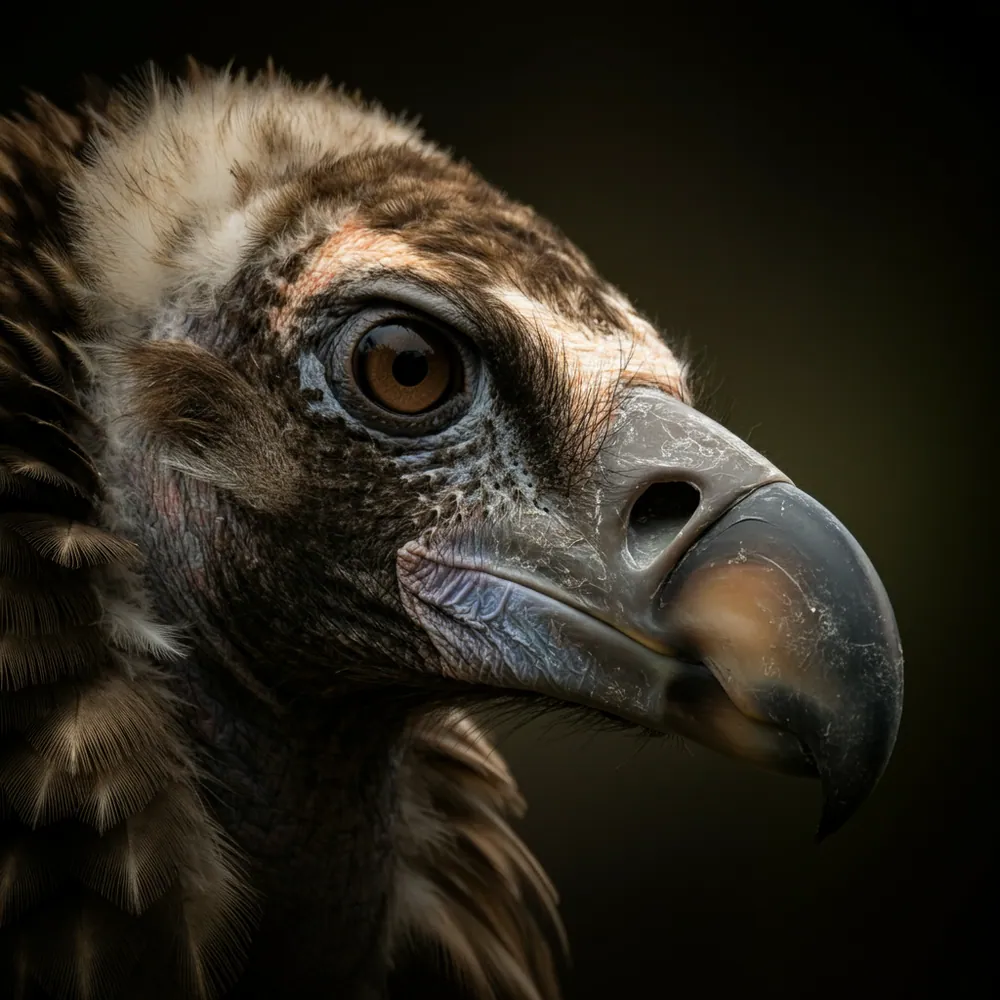
Hey there, future wildlife explorer! Get ready to meet a true superstar of the skies, the incredible Cinereous Vulture! Imagine a bird so HUGE, its wings stretch out wider than two grown-ups standing arm-to-arm – that's a whopping ten feet! This magnificent giant, sometimes called the Black Vulture, has a name that means "ash-colored," which perfectly describes its cool, dark feathers. And get this: its head and neck are bare, like a superhero wearing a special mask, which helps it stay super clean while doing its important job. With powerful eyes and a super-strong, hooked beak, this bird is like a graceful flying tank!
But this amazing bird isn't just big and beautiful; it's also nature's ultimate clean-up crew! Picture it soaring high above mountains, circling effortlessly, using its super sight to spot anything on the ground. When it finds a meal, its massive size helps it take charge, making sure tough hides are no match for its mighty beak. The Cinereous Vulture is like a recycling superhero, gobbling up animal leftovers and stopping yucky diseases from spreading.
That's right, by being a fantastic natural recycler, the Cinereous Vulture keeps our wild places healthy and sparkling clean for everyone. Without these feathered heroes, ecosystems would get pretty messy and unhealthy! So next time you look up at the sky, remember this awesome bird, soaring high and keeping our planet safe and sound. How cool is that?!
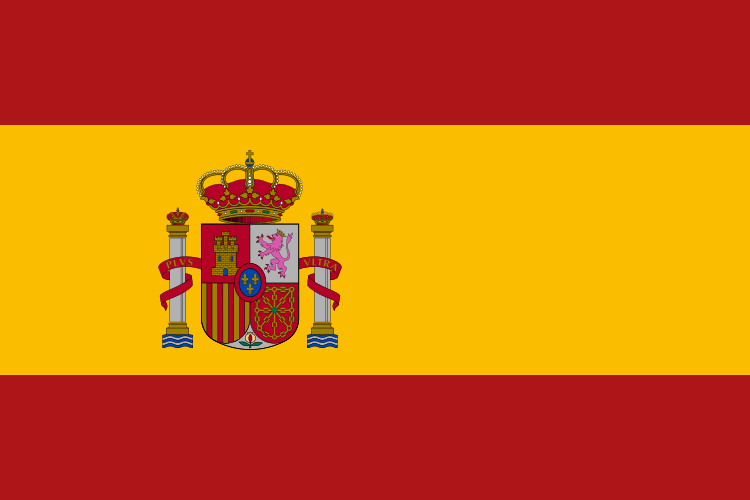
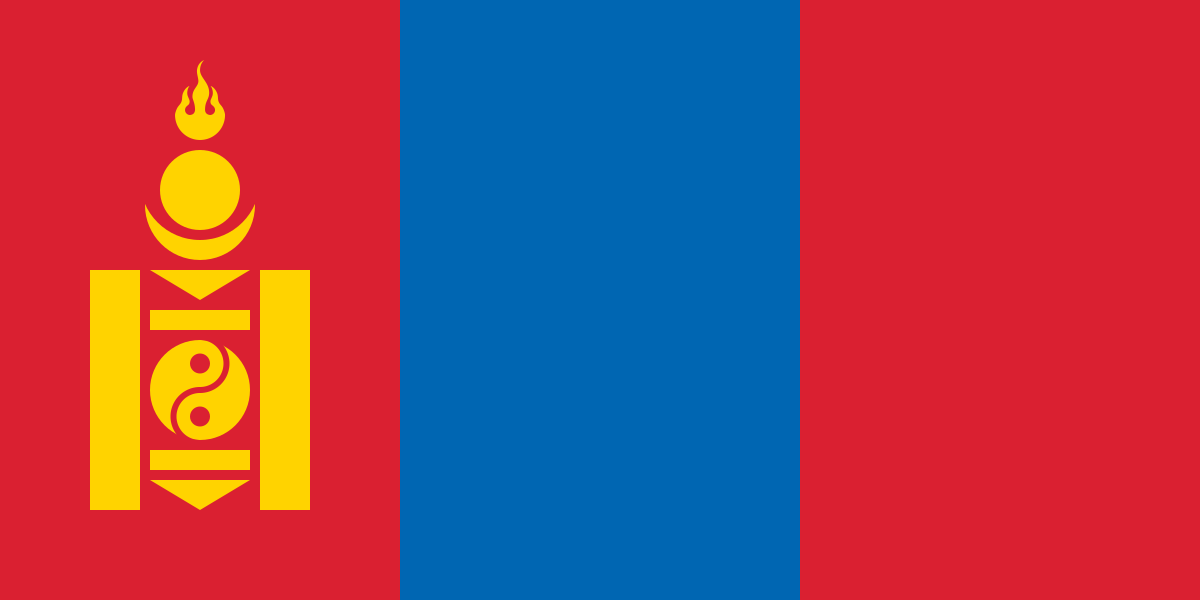
Where the cinereous vulture still lives — Spain, Mongolia, China, Turkey
Cinereous Vultures sometimes eat dead animals that have been poisoned by bad chemicals, or that have tiny bits of lead inside from hunters' bullets, which makes the vultures very sick.
Being done about itPeople are working hard to stop illegal poisons and encourage hunters to use safer bullets so vultures don't get sick; they also create safe feeding spots where vultures can find clean food.
Habitat loss
Cinereous Vultures need big, old trees in quiet forests to build their giant nests, but when these forests are cut down for farms or buildings, they lose their homes and safe places to raise their babies.
Being done about itPeople are working to protect the forests where vultures live and even planting new trees to give them more homes, helping communities understand why these special places are so important.
Brave scientists and wildlife heroes are working hard to protect these magnificent birds by creating safe places for them to live, and even raising baby vultures in special care centers to release back into the wild!