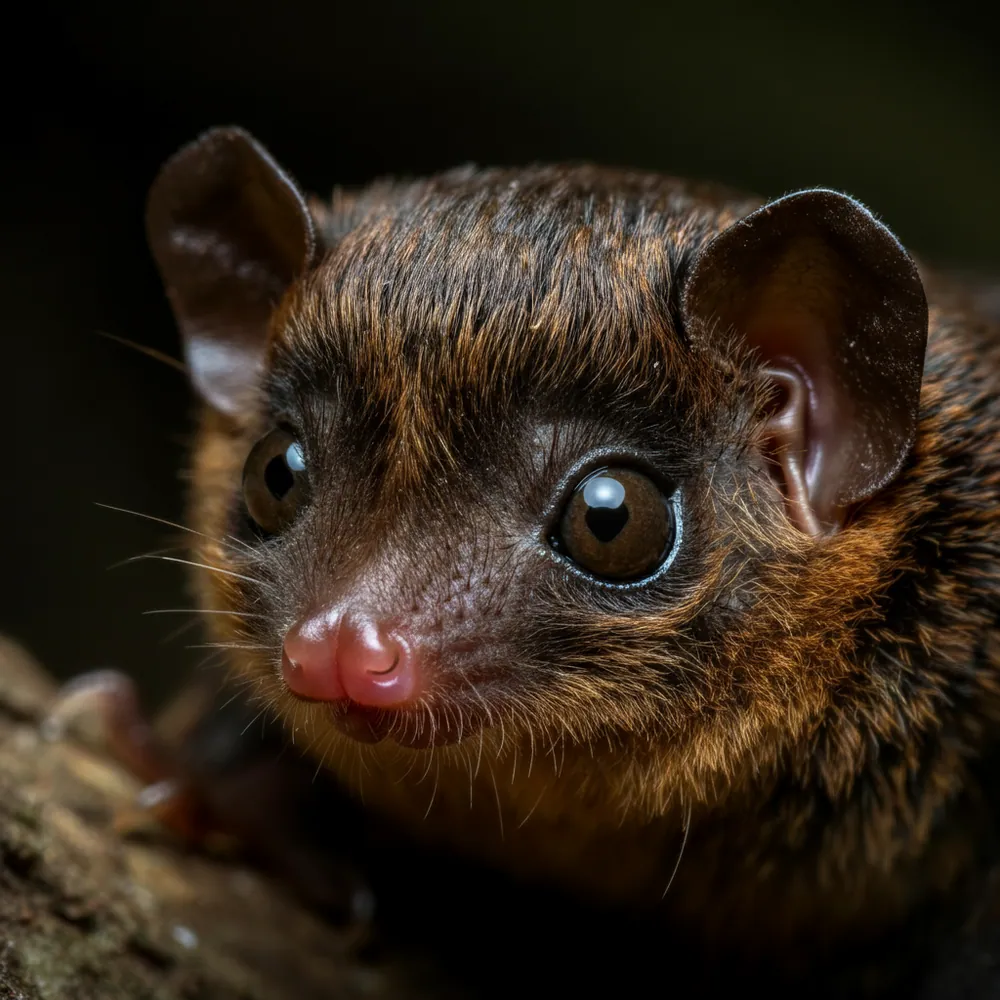
Imagine a tiny superhero of the night, no bigger than your thumb, zipping through the air like a furry, winged ninja! Meet the Christmas Island Pipistrelle! This little microbat had super soft, dark brown fur and amazing see-through wings that helped it twist and turn with incredible speed. But its coolest superpower? It could "see" with sound! Using its upturned nose and big ears, it sent out special clicks and listened for the echoes, creating a perfect sound-map of everything around it, even in the darkest night. How cool is that?!
When the sun dipped below the horizon, painting the sky with fiery colors, the pipistrelle would wake up from its secret hideaway in a cozy tree hollow or a rocky cave. Then, *zoom!* It would burst out, flapping its wings super fast, darting and dancing through the forest. Its mission? To snack on tiny flying insects like moths and beetles, catching them right out of the air with its amazing sonar. It was like watching a tiny, aerial ballet performed just for the stars!
This little bat wasn't just a dazzling flyer; it was also a super important helper for Christmas Island! By munching on all those insects, it kept the island's beautiful plants healthy and happy, like a natural pest controller. Sadly, we don't see these incredible pipistrelles flying anymore. But their story reminds us how every single creature, no matter how small, plays a giant role in keeping our world healthy and amazing. It shows us why we need to be extra kind to all our animal friends and their homes!
Where the christmas island pipistrelle still lives — Australia (Christmas Island)
Christmas Island Pipistrelles lived in the beautiful forests of Christmas Island. When parts of these forests were cleared for mining or other uses, the bats lost their homes and important places to find their insect food.
Being done about itPeople are working to protect the remaining forest areas where the bats used to live, making sure no more trees are cut down. They are also trying to replant trees to grow new homes and hunting grounds for future bats.
Disease
Just like people, bats can get sick, and a new disease might have spread quickly through the small group of pipistrelles. This made them very weak and unable to hunt for food or fly properly.
Being done about itScientists are studying bat diseases to understand what made the pipistrelles sick and how to keep other bats healthy. This helps them learn how to protect other bat species from similar problems.
Invasive species
New animals like cats or certain types of ants, which were accidentally brought to Christmas Island, became a big problem for the pipistrelles. These new animals might have hunted the bats or eaten the insects that the bats needed for food.
Being done about itPark rangers are working hard to control these unwanted animals, like removing dangerous cats and ants, to make the island safe again for its native creatures. They are also very careful to stop new invasive species from arriving on the island.
Because the Christmas Island Pipistrelle is extinct, there are no programs to save *them* anymore. Instead, scientists are on a very important mission to learn why they disappeared, so we can protect other amazing animals on Christmas Island and everywhere else from vanishing forever!