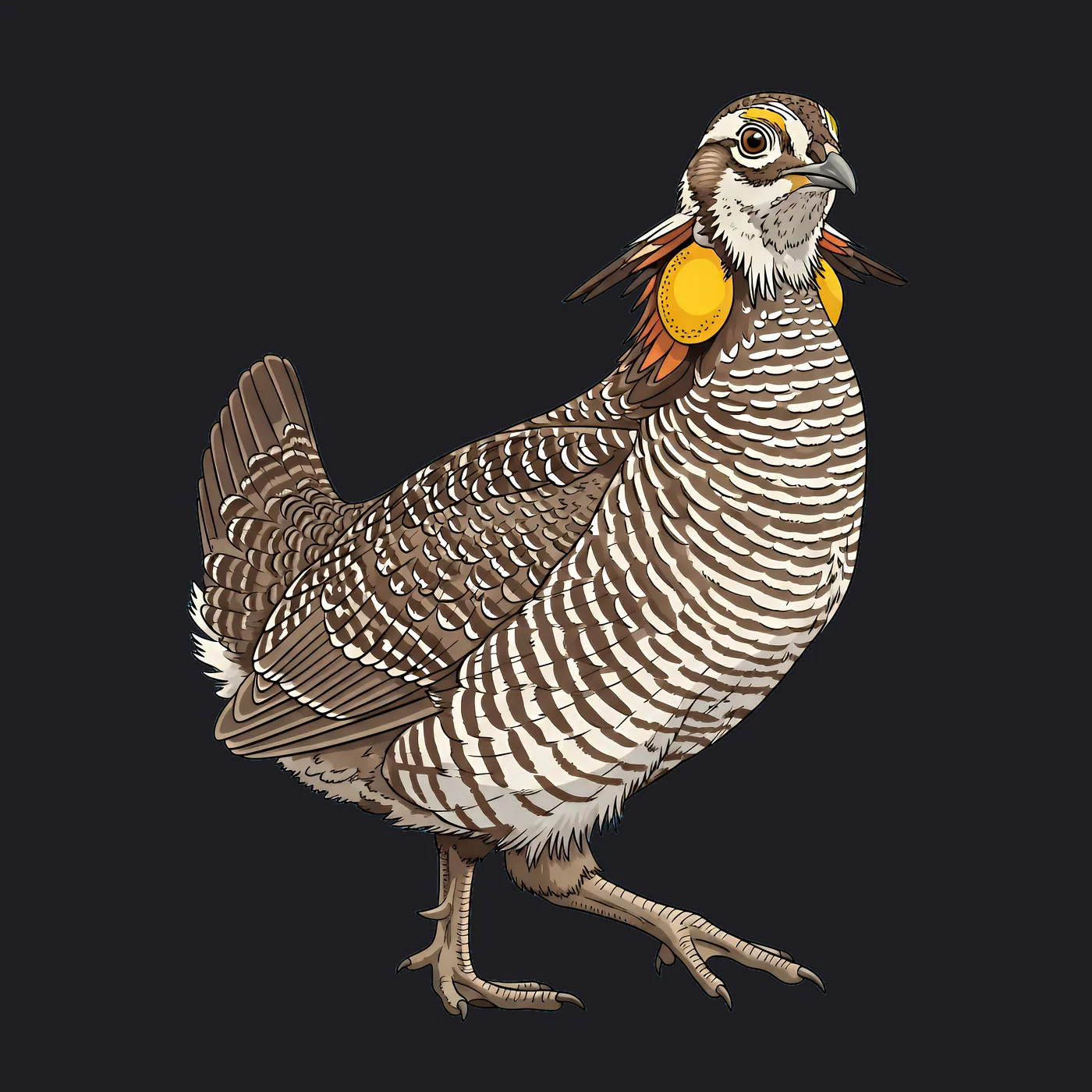
Get ready to meet a super cool bird with some seriously awesome moves! Imagine a chicken, but way wilder and with a secret talent for dancing. This is the Attwater's Prairie Chicken, a special bird that lives in the sunny grasslands of Texas. Both boys and girls wear beautiful mottled brown and tan feathers – perfect for playing hide-and-seek in the tall grass. But the boys, oh boy, they really know how to put on a show! When it's time to impress, they inflate two bright orange-yellow balloons on their neck (yes, really!) and raise two long, black feather 'horns' on their head. Talk about a fancy outfit!
And that's just the beginning! Every spring, these amazing birds turn the prairie into their very own dance floor. All the boy prairie chickens gather at a special spot called a 'lek' (say 'leck') for the most incredible dance-off you've ever seen! With their orange neck-balloons puffed up and their feather-horns high, they stomp their feet super fast, bob their heads, and make a low, rumbling 'BOOMING' sound that echoes across the whole field. It's like they're saying, "Look at me! I'm the best dancer!" This booming sound is made by air rushing out of those amazing neck sacs – how cool is that?
But these prairie chickens aren't just fantastic dancers; they're also super important superheroes of the prairie! They're like nature's thermometers, telling us if the grassland is healthy. If the prairie chickens are doing well, it means the whole ecosystem, with all its other animals and plants, is doing well too. Sadly, these incredible birds are critically endangered, which means there aren't many left in the wild. That's why protecting their home is so important – it helps not only them, but countless other creatures too! Isn't it amazing how one bird can be so special?
Field notes
Habitat loss
Attwater's Prairie Chickens need large, open grassy areas called prairies to find food, build nests, and raise their chicks. Sadly, many of these prairies are being turned into farms, towns, or roads, leaving the chickens with fewer safe places to live.
Being done about itScientists and conservationists are working hard to protect and restore the remaining prairie lands, making sure these special birds have enough space to survive and thrive. They are also creating new safe habitats for them to live in.
Invasive species
Some plants and animals that don't naturally belong in the prairie, like certain types of woody plants or aggressive fire ants, move in and cause problems. These invaders can make it harder for the prairie chickens to find food or even harm their tiny chicks.
Being done about itRangers and volunteers carefully remove these unwanted plants and animals from the prairie, helping the native grasses grow strong again and making it a much safer home for the prairie chickens. They also help manage other predators to give the chickens a better chance.
Brave scientists and conservationists are working super hard in special breeding programs, like the one at the Houston Zoo, to help these amazing birds have babies and grow their numbers, giving them a second chance at life in the wild!
Also known asTympanuchus cupido attwateri
GroupAnimal
DietOmnivore
SizeMales typically 1.7-2.2 lbs (0.77-1 kg), females 1.5-1.9 lbs (0.68-0.86 kg)