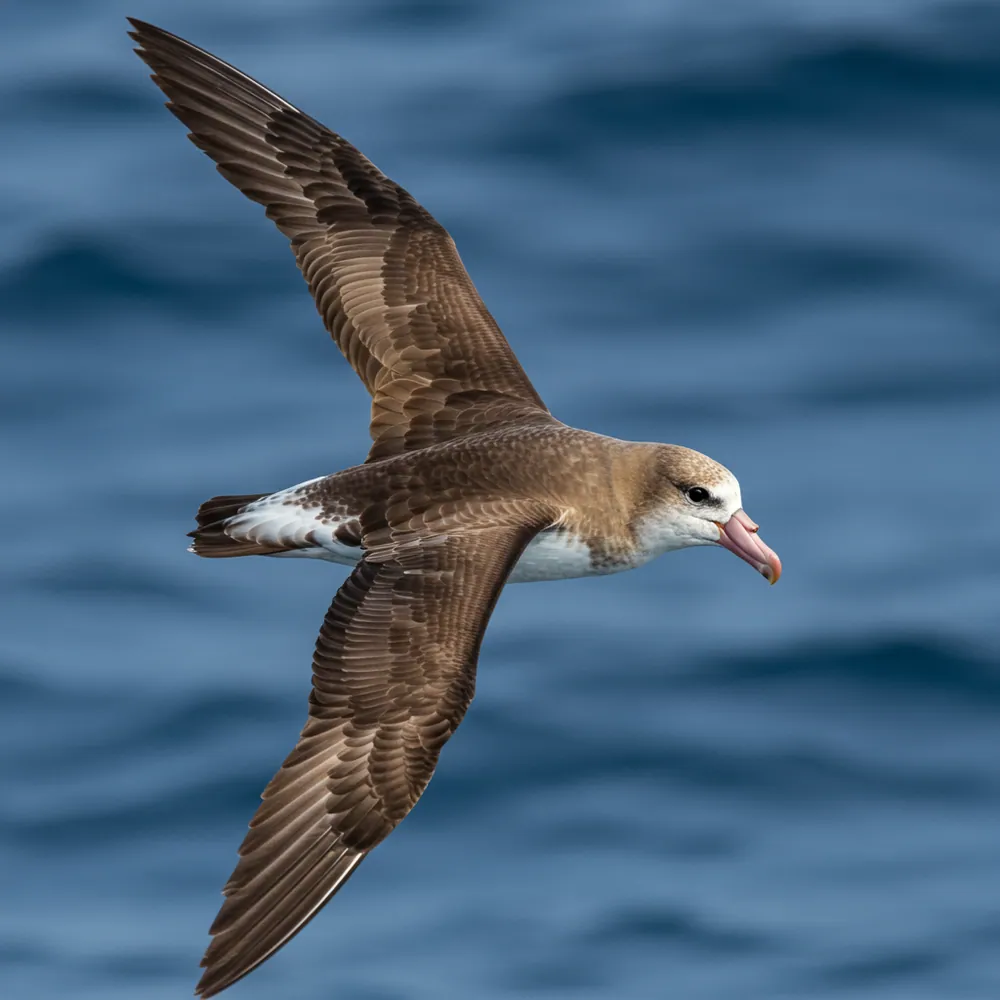
Hey ocean explorers! Get ready to meet one of the coolest birds of the South Atlantic: the Atlantic Petrel! Its super cool scientific name is *Pterodroma incerta* – try saying that five times fast! These amazing birds aren't just any feathered friends; they're a special type of petrel, sometimes called a 'gadfly petrel' because they zip around the waves like busy little flies. They live in GIANT, noisy cities of birds on faraway islands called Tristan da Cunha and Gough Island. Imagine thousands of birds all living together!
What do they look like? Well, picture a strong, stocky bird, about 43 centimeters long – that's like a big ruler! They wear a dark, mysterious coat on top, with a bright white belly underneath, perfect for blending in with the waves. Sometimes their heads look a little grey, especially if they've been flying a lot! But the most amazing thing? These powerful fliers don't stay put. They soar across the open ocean, all the way from the sunny coasts of Brazil to the distant shores of Namibia, spending almost their entire lives far from land.
These incredible birds are true adventurers, living for about 15 years, constantly exploring the huge, blue ocean. They're masters of the wind and waves, rarely touching solid ground except when it's time to raise their chicks. So next time you think about amazing journeys, remember the Atlantic Petrel – a dark, dashing bird that proves you don't need land to be a true champion of the sky and sea!
Where the atlantic petrel still lives — Brazil, Tristan da Cunha (to UK)
Sneaky rats and mice sometimes hitch rides on ships to the remote islands where Atlantic Petrels build their nests. Once there, these invaders munch on petrel eggs and tiny fluffy chicks, stopping new petrels from being born and growing up.
Being done about itBrave scientists and park rangers are working hard to remove these pesky rats and mice from the islands using clever traps and methods. This helps make the petrels' nesting grounds safe again so their families can thrive.
Bycatch / Overfishing
When Atlantic Petrels dive into the big ocean to catch fish and squid, they sometimes accidentally get tangled in fishing nets or hooked on lines meant for other sea creatures. This accidental trapping, called "bycatch," can sadly hurt them or stop them from flying free.
Being done about itFishermen and scientists are teaming up to invent special tools and tricks for fishing that keep petrels safe from harm. They might use heavier fishing lines that sink quickly or colorful ribbons to warn the birds away from dangerous areas.
Brave scientists and conservation heroes are on a mission to protect these special birds! They work hard to keep nesting islands safe from sneaky predators like rats and cats, and they're learning more about where these petrels travel to make sure their ocean homes are protected too.