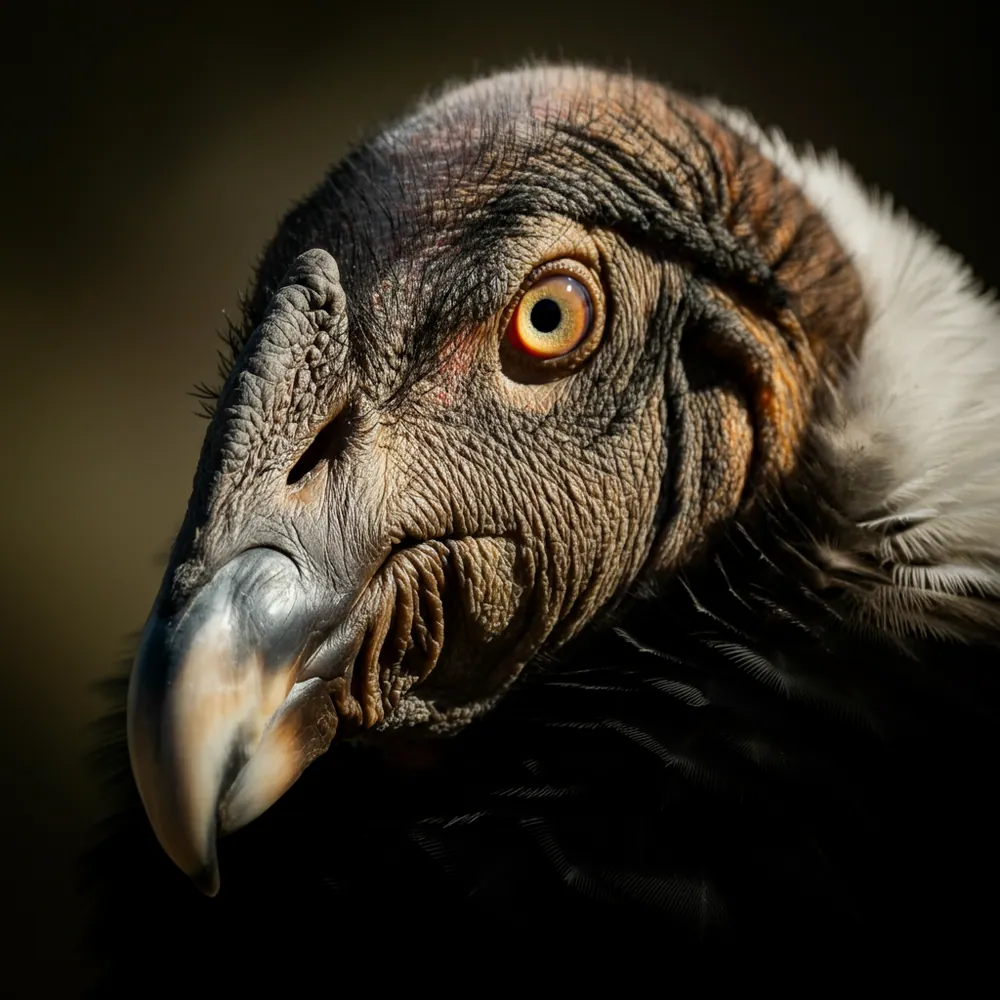
Prepare to be amazed, adventurers! High above the mighty Andes mountains, where the air is thin and the peaks touch the clouds, lives a true monarch of the sky: the Andean Condor! Imagine a bird with wings that can stretch out wider than a small car – up to 10 feet! That's like two grown-ups standing with their arms stretched wide, wingtip to wingtip! These magnificent giants wear glossy black feathers with a fluffy white collar, and a special reddish-pink head that helps them stay super clean while they do their important job. Male condors even sport a cool fleshy comb on their heads, making them look extra powerful!
But it's not just their size that's incredible! These condors are champion flyers. They spend hours gliding without flapping their huge wings even once! How? They hitch rides on invisible "air elevators" called thermals – pockets of warm air rising from the ground. This helps them save energy as they soar gracefully, using their super-sharp eyesight to spot their next meal far below. They're nature's ultimate clean-up crew! By gobbling up leftover meals from other animals, they help keep the mountains tidy and healthy, like a superhero preventing messes!
The Andean Condor isn't just a big bird; it's a super important one! By eating carrion, they stop diseases from spreading, making them a crucial guardian of their mountain home. For thousands of years, people in the Andes have looked up to these birds as symbols of power, health, and freedom. They are truly special, not just for their amazing size and flight, but for the vital role they play in nature and in the hearts of people. Protecting these incredible birds means protecting the whole mountain world!
Where the andean condor still lives — South America
Andean Condors eat dead animals, but sometimes these animals have eaten poison, like lead from bullets used by hunters or pesticides. When the condor eats the poisoned animal, it gets very sick and can even die.
Being done about itScientists and rangers are teaching people to use special non-toxic bullets and to be careful with poisons. Vets also help condors that get sick by giving them medicine to remove the harmful chemicals.
Habitat loss
Condors need vast, open mountain areas to fly and find their food. When people build more towns, farms, or mines in these places, the condors lose their homes and the wide-open spaces they need to survive.
Being done about itConservationists are working hard to protect large areas in the Andes mountains where condors live. They help create national parks and special reserves where these giant birds can safely live and find food.
Poaching / Illegal hunting
Sadly, some people illegally hunt condors, sometimes because they think the condors might harm their farm animals, or for their feathers and body parts. This direct hunting makes it even harder for condors to survive.
Being done about itPark rangers patrol condor habitats to stop illegal hunting and teach local communities why condors are important. Laws are also put in place to protect these amazing birds, and people are learning that condors are special and helpful.
Special teams are working hard to protect these condors by creating safe places for them to live and even raising condor chicks in special centers before releasing them back into the wild. It's a super important mission to make sure these magnificent birds keep soaring!
Also known asVultur gryphus
GroupAnimal
DietScavenger (primarily carrion), occasionally preys on small animals or eggs