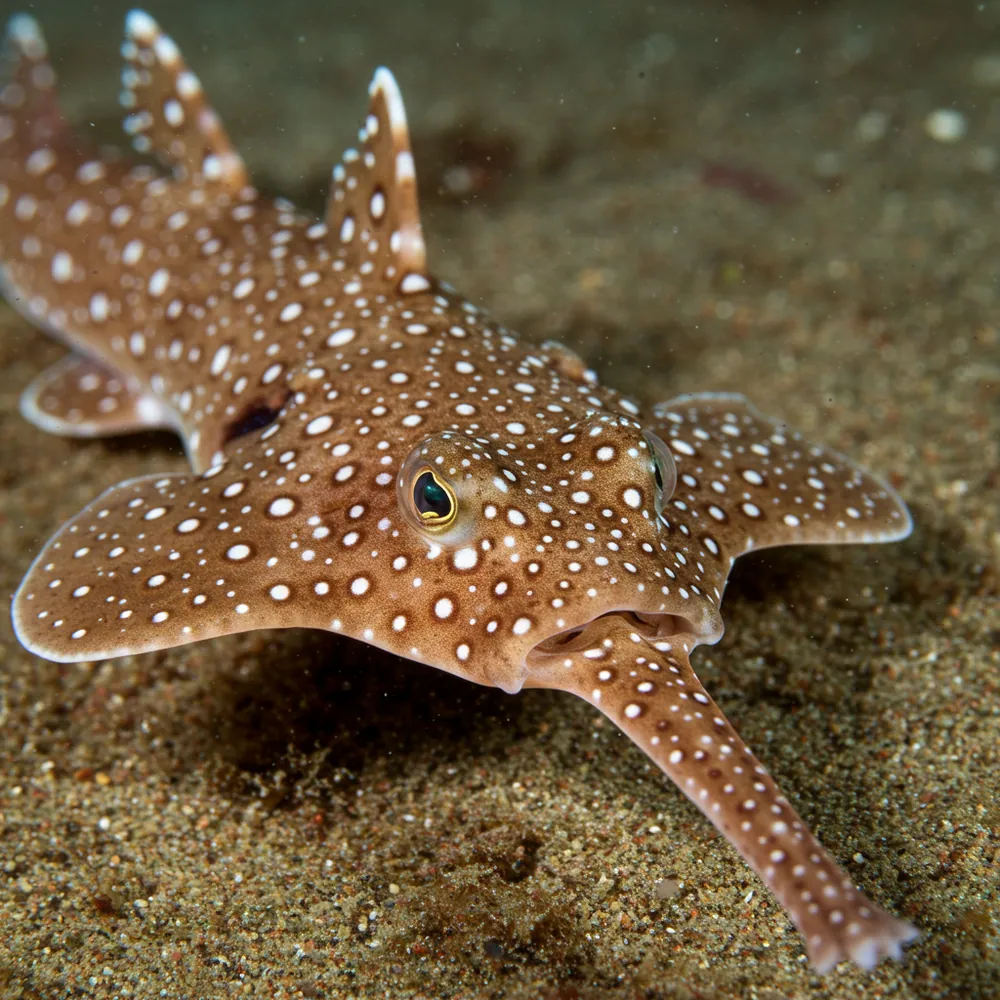
Hey ocean explorers! Get ready to meet one of the ocean's most amazing mash-ups – the African Wedgefish! Imagine a creature that couldn't decide if it wanted to be a powerful shark or a gliding ray, so it became BOTH! This super cool fish has the strong, speedy tail of a shark but the flat, broad body of a ray. It even has a special shovel-nose perfect for digging and big, beautiful fins that look like wings! It's like a secret agent of the sea, often blending in with its sandy home thanks to its earthy colors.
This incredible animal loves to hang out in the warm, shallow waters off the coast of Africa. It's a master of hide-and-seek, often burying itself in the sand or mud, waiting for a tasty snack like crabs or clams to swim by. Then, *whoosh!* It can burst into action with surprising speed to catch its meal! It uses its special snout to sniff out hidden treasures in the sand, making it a super-sleuth of the seabed.
But wait, there's more! The African Wedgefish isn't just a cool hunter; it's also a superhero for the ocean! As it digs around for food, it's actually mixing and cleaning the sand, helping other tiny creatures breathe and find food. Think of it as the ocean's very own "living tractor," making the seabed a healthier place for everyone. How awesome is that? This amazing fish keeps the underwater world balanced and bustling!
African Wedgefish love to live in shallow, sandy parts of the ocean near the coast, but people are building lots of things like hotels and ports in these same areas. When their homes get destroyed or changed, it becomes really hard for these fish to find food and raise their babies.
Being done about itMany people are working hard to protect these important ocean homes by creating special underwater parks where building isn't allowed. They also help clean up and restore damaged areas, making them safe for wedgefish again.
Bycatch / Overfishing
Sadly, African Wedgefish often get caught by accident in big fishing nets meant for other kinds of fish, which is called 'bycatch.' Sometimes, they are also caught on purpose because their fins are valuable, meaning too many are being taken from the ocean.
Being done about itScientists are helping fishermen use special nets that let wedgefish swim free, and rangers are making sure people follow rules about where and how much they can fish. This helps give the wedgefish a better chance to survive and have families.
Brave scientists and ocean heroes are on a mission to save these amazing fish! They are working to create special protected areas in the ocean where fishing is limited, and they're also teaching fishermen how to use smarter fishing gear to avoid accidentally catching these rare creatures.
Also known asRhynchobatus djiddensis
GroupAnimal
HabitatFound in tropical and subtropical coastal waters across the Indo-West Pacific, specifically ranging from the Red Sea and East Africa, across the Indian Ocean to Southeast Asia and Northern Australia. They typically inhabit sandy or muddy bottoms, often near coral reefs, rocky areas, or estuaries, ranging from shallow waters down to depths of approximately 100 meters (330 feet).
DietCarnivore
Size50-100 kg (110-220 lbs), can exceed 200 kg (440 lbs)