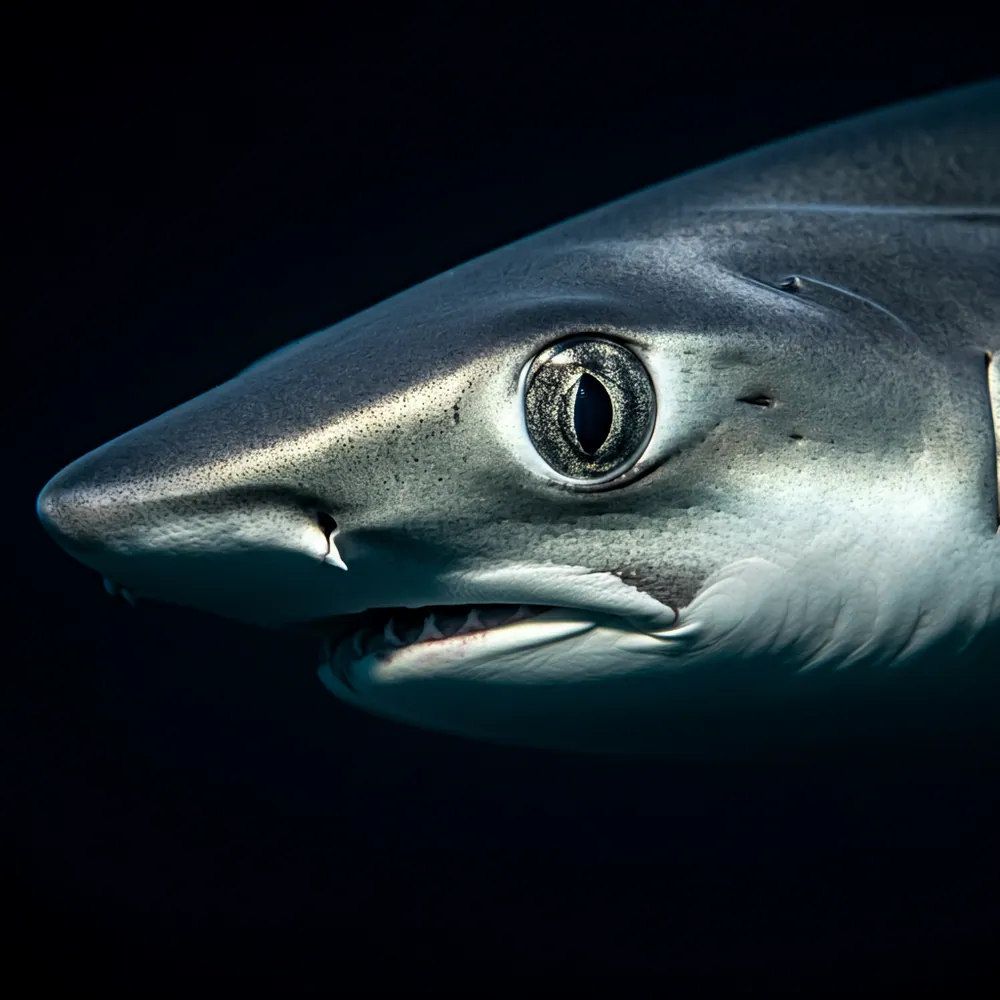
Get ready to meet one of the ocean's most incredible superstars – the Shortfin Mako Shark! Imagine a shimmering, blue-and-white rocket zooming through the water. This shark is built for speed, with a super sleek body and a powerful, crescent-shaped tail that propels it like a living torpedo. Look closely at its magnificent face, and you'll spot big, dark eyes and sharp, dagger-like teeth, perfect for catching its speedy dinner. This amazing creature isn't just fast; it's the *fastest* shark in the whole wide ocean!
How fast are we talking? Try a jaw-dropping 45 miles per hour – that's quicker than many cars! The Mako uses this incredible speed and agility to hunt down super-fast fish like tuna. And get this: they're famous for launching themselves high out of the water, sometimes doing amazing acrobatic leaps! It's like watching a super shark fly! But these magnificent hunters aren't just cool; they're super important for keeping our oceans healthy. By hunting, they help make sure other fish populations stay strong, acting like important ocean doctors. So, the Shortfin Mako is a true champion of the deep!
Shortfin mako sharks often get tangled in fishing nets or hooked on lines meant for other fish like tuna or swordfish. This accidental catch, called bycatch, means they can't swim freely and often get hurt or die before they can be released.
Being done about itScientists and fishermen are working together to design smarter fishing gear that allows sharks to escape easily, like special hooks or escape hatches in nets. When makos are accidentally caught, trained fishermen are learning how to safely release them back into the ocean.
Overfishing
Many shortfin mako sharks are caught on purpose by fishermen for their meat and fins, often faster than they can have babies and grow up. Because they grow slowly and don't have many pups, catching too many makos makes their populations shrink quickly.
Being done about itCountries around the world are setting limits on how many mako sharks can be caught each year to give them a chance to recover. Also, people are being encouraged to choose seafood that is caught in sustainable ways, so they aren't supporting fishing that harms makos.
Ocean heroes and scientists are working hard with fishing groups to make sure fewer Shortfin Makos get accidentally caught, and big international rules are being made to protect them from too much fishing. This important mission helps give these speedy sharks a better chance to survive and zoom around for years to come!
Also known asIsurus oxyrinchus
GroupAnimal
DietCarnivore
SizeTypically 60-150 kg (132-330 lbs), with large females exceeding 500 kg (1100 lbs)