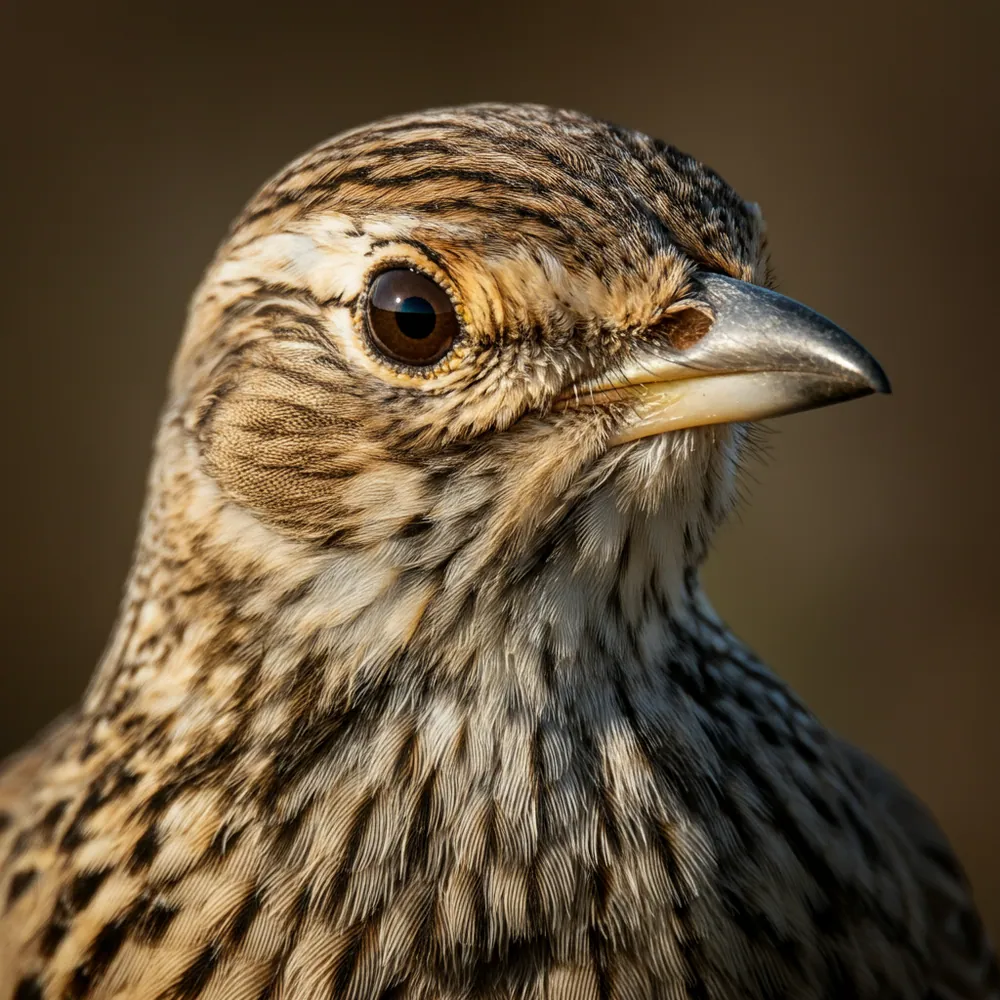
Hey there, future wildlife explorers! Get ready to meet a true superstar of disguise, the Razo Lark! Imagine a tiny bird, about the size of a grown-up's hand, that's so good at hiding, it almost vanishes into its rocky home. This little feathered friend wears a sandy brown outfit, covered in cool streaks and patterns, just like the volcanic rocks and dry plants where it lives. It’s like a secret agent of the desert, always blending in!
But this isn't just a pretty face! The Razo Lark is a busy little treasure hunter. With its super-special, slightly curved beak, it's like having a tiny, perfect tool for digging into cracks and under stones. It spends its whole day scurrying around on surprisingly long legs, zipping here and there to sniff out tasty insects, their squiggly larvae, and even tiny seeds. You won't often see it high up in a tree; this bird loves to keep its feet on the ground, always on the lookout for its next meal!
Now, here's the *really* amazing part that makes the Razo Lark one of a kind: it lives *nowhere else on Earth* except for one tiny, remote island called Razo! Think about that – this incredible bird is like a living, breathing treasure found only in one special spot. It helps keep its island home healthy by munching on insects, and it reminds us how important it is to protect every amazing creature, big or small. The Razo Lark might be tiny, but it's a giant symbol of how wonderfully unique our planet is!
The Razo Lark lives on a very tiny island called Raso, and sometimes big storms or natural changes make its small home even smaller. This leaves less space for them to find food and raise their baby larks safely.
Being done about itScientists and conservationists are carefully watching the island to protect the special places where Razo Larks live and nest. They work hard to make sure their existing habitat stays healthy and safe from further damage.
Climate change
Because the Razo Lark lives on a low-lying island, climate change can cause the ocean to rise and bring bigger, stronger storms. This can wash away parts of their island home and make it harder for them to find food or build nests.
Being done about itPeople around the world are trying to slow down climate change by using less energy and protecting natural places, which helps keep the Razo Lark's island safe from rising seas and strong storms. Scientists are also studying the birds closely to understand how best to help them adapt to these changes.
Brave scientists are on a super important mission to save the Razo Lark! They're working hard to protect their special island home by making sure there are no sneaky predators like cats or rats, and they're even thinking about moving some larks to another safe island to give them a second chance.
Also known asAlauda razae
GroupAnimal
DietInsectivore, primarily feeding on insects and other invertebrates, supplemented with seeds.