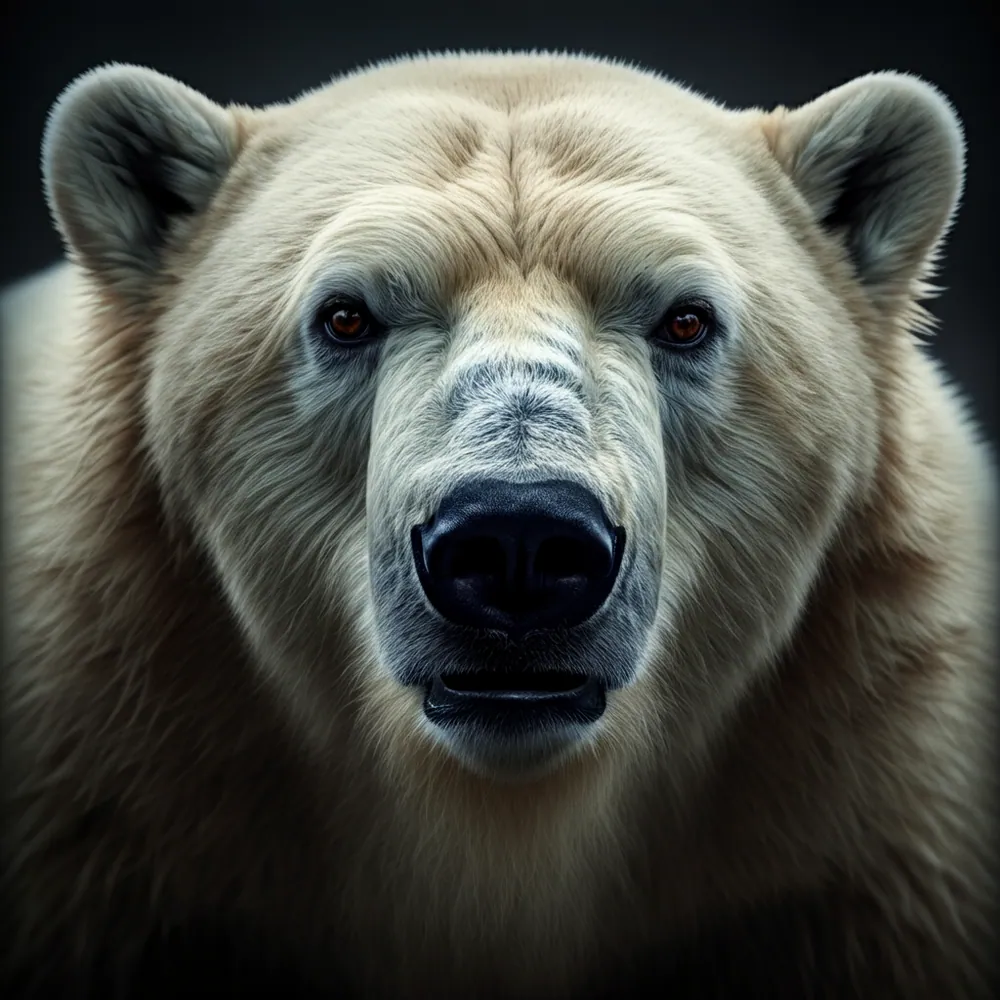
Hey adventurers! Get ready to meet one of the most incredible creatures on Earth – the mighty polar bear! Imagine a giant, fluffy ghost gliding across the snow. Its coat looks super white, right? Well, guess what – it's a clever trick! Each hair is actually clear and hollow, bouncing light around to make it blend perfectly with the snowy world. Underneath all that amazing fur is a secret super-suit: a thick layer of blubber, like a built-in winter jacket that keeps it toasty warm even when it's super-duper cold. And check out those paws! They're like giant paddles with special grippy pads, perfect for walking on slippery ice and swimming like an Olympic champion!
This amazing bear is the king of the Arctic, a super-stealthy hunter that spends most of its life on the sea ice. Why the ice? Because that's where it finds its favorite snack: seals! With a nose so powerful it can sniff out a seal from miles away, polar bears are patient hunters, waiting by breathing holes or sneaking up on seals taking a nap. Even though they're huge, they can run surprisingly fast on land and are incredible swimmers, diving deep and traveling huge distances in the icy water. Most of the time, these magnificent bears like to explore their frozen home all by themselves, true masters of independence!
But polar bears are more than just super cool animals; they're like the Arctic's special health bar! As the top predator, they help keep everything balanced in their frosty home. The amount of sea ice tells us how well they're doing, and right now, that ice is shrinking because our planet is getting warmer. So, protecting these magnificent ice giants means protecting the whole amazing Arctic, reminding us how connected we all are to this wild, beautiful, frozen world!
How many are left?
Have a guess first — how many do you think are still alive?
about 22,000
each dot ≈ 100 individuals
Imagine trying to count all the snowflakes in a blizzard! There are only about 22,000 to 31,000 polar bears left in the whole wide world, which means they're considered 'Vulnerable' and need our help because they're so hard to count in their huge, icy homes.
Climate change is making the Earth warmer, which melts the sea ice polar bears need to live and hunt. They use this ice to catch their favorite food, seals, and without it, they struggle to find enough to eat or raise their cubs.
Being done about itScientists are studying polar bears to understand how to best protect them, and many people are working to reduce pollution that causes warming. We can all help by using less energy at home and choosing to walk or bike more often, which slows down the melting of their icy homes.
Brave scientists and conservationists are on an important mission to save these magnificent bears by studying them closely and working to protect their melting icy habitats, ensuring they have safe places to live and hunt for generations to come.
Also known asUrsus maritimus
GroupAnimal
HabitatArctic sea ice
DietPrimarily eats fat-rich seals, such as ringed and bearded seals.
PredatorsAdults have no natural predators, though cubs may be preyed upon by wolves or other bears.
Lifespan15 - 30 years
SizeUp to 700 kg (1, 540 lbs) and 3 meters (9.8 ft) long.