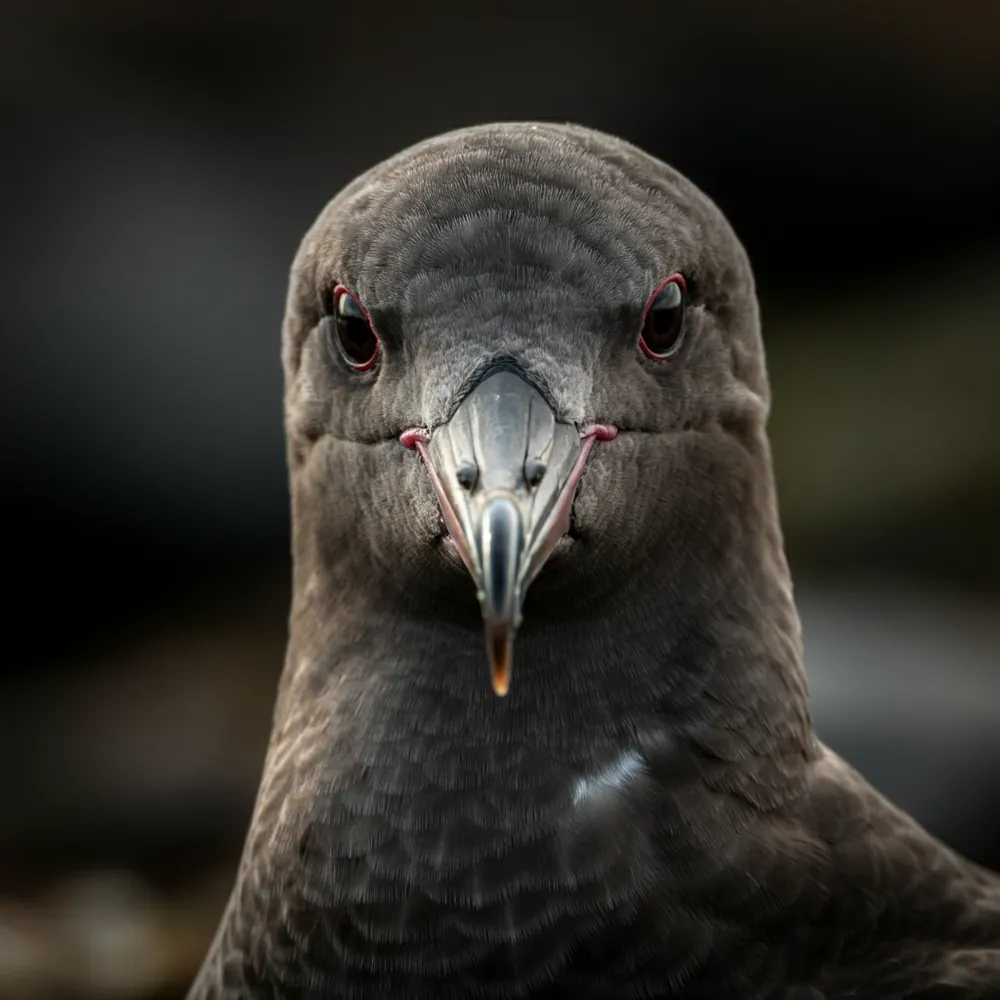
Imagine a super-flier that spends almost its whole life soaring over the ocean, with a name as charming as its looks! Meet the Pink-footed Shearwater! This amazing bird isn't just a pretty face; it's a champion glider, built like a sleek airplane. Its back is a soft, smoky brown, and its belly is pure white, but the coolest part? Its feet are a delicate pale pink, and its strong beak is also pink with a little dark tip – how awesome is that? It's like it's wearing fancy pink shoes and a matching hat!
But wait, there's more! These birds are like feathered superheroes when it comes to travel. Every year, they zoom thousands of miles from warm South American islands all the way to the coast of North America, just for a yummy seafood feast! They're masters of the wind, 'shearing' (that means gliding super close) over the waves without hardly flapping their long wings. When they're hungry, *splash!* They dive right into the water, sometimes several meters deep, to catch tasty fish and squid. And when it's time to rest and raise their baby chick, they sneak back to their underground burrows at night, staying safe from daytime peekers.
So, why is this Pink-footed Shearwater so super cool? It's not just a brilliant traveler; it's also like a secret messenger for our planet! Because they travel so far and eat so much from the ocean, they're like a 'silent sentinel' – a quiet guardian that tells us if the ocean is healthy. If they're having trouble, it's a big warning sign that something might be wrong with our seas. By helping to protect these incredible birds, we're also helping to protect our amazing oceans and all the creatures that call them home. Isn't that something to squawk about?
Where the pink-footed shearwater still lives — Chile, Peru, United States, Canada
Imagine hungry rats or cats arriving on the shearwaters' nesting islands! These animals eat the shearwater eggs and fluffy chicks, meaning fewer baby birds grow up and survive.
Being done about itScientists and park rangers work hard to remove these unwanted animals from the islands, making the nesting grounds safe again for the shearwaters to raise their families.
Bycatch / Overfishing
When Pink-footed Shearwaters dive for tasty fish, they sometimes get tangled in big fishing nets or hooks meant for other fish. This accidental capture means they can't swim free and breathe.
Being done about itFishermen and scientists are working together to use special fishing gear that helps keep shearwaters safe, like lines that sink faster or bright streamers that scare birds away from danger.
Brave scientists and conservation heroes are on a mission to save them by carefully removing sneaky predators like rats and cats from their nesting islands and working with fishermen to use special nets that don't accidentally catch these ocean explorers.