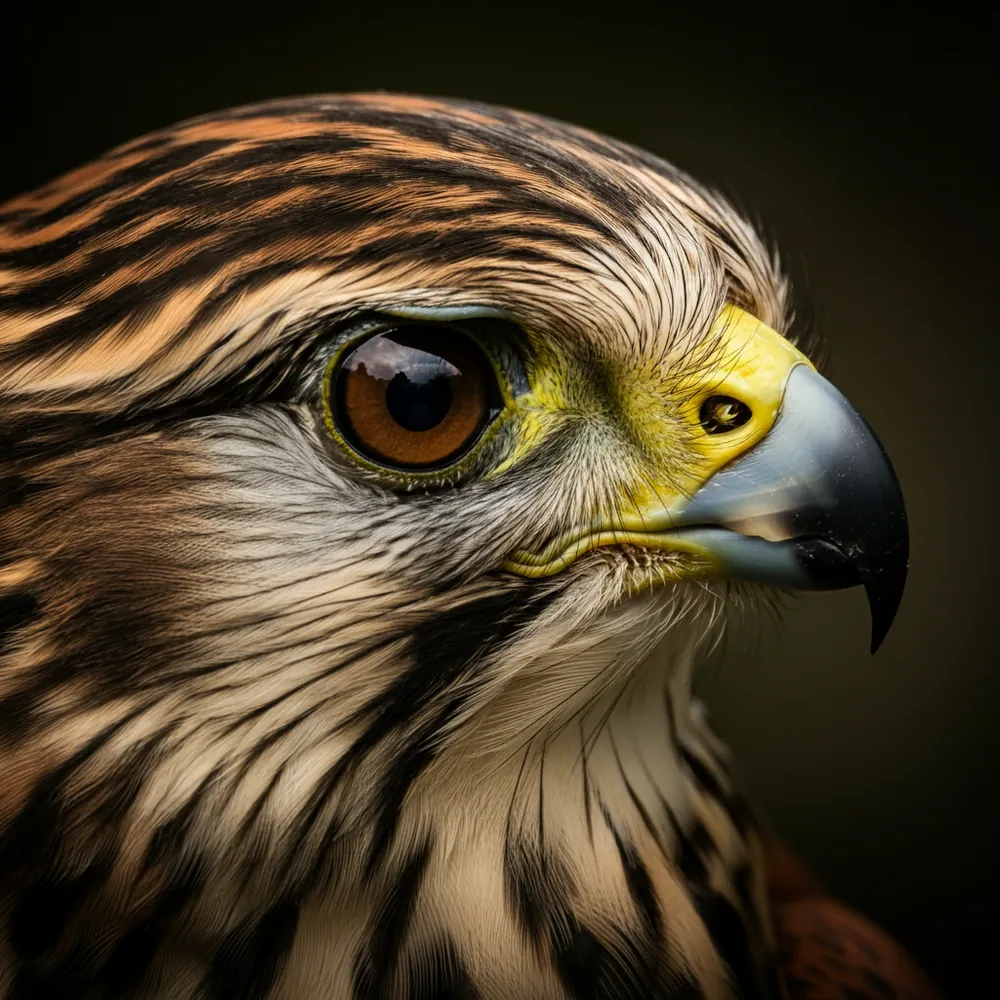
Get ready to meet one of the most incredible feathered superheroes of the animal kingdom! Say hello to the Mauritius Kestrel, a tiny but mighty falcon from a beautiful island far away. Imagine a bird about the size of a pigeon, but way more dazzling! It wears a coat of rusty-red feathers that shine like polished copper, a soft grey cap on its head, and a creamy-white tummy with cute little dark spots. And check out its tail – it has bold black stripes! With bright yellow feet and super-sharp talons, this bird is perfectly dressed for adventure in the lush green forests of Mauritius.
But this kestrel isn't just a pretty face; it's a super-skilled hunter! Picture this: it can hang almost perfectly still in the air, flapping its wings super-fast like a tiny helicopter, watching for its next meal. This amazing trick is called the 'kestrel hover'! Then, *whoosh!* It dives down like a lightning bolt to catch tasty lizards, especially those colourful day geckos, or big juicy insects. It's like watching a real-life aerial acrobat perform a perfect dive every time!
The Mauritius Kestrel is more than just a magnificent hunter; it's a true symbol of hope! It helps keep the forest healthy by being a top predator, making sure there aren't too many insects or lizards. But here's the most amazing part: not long ago, there were only FOUR of these incredible birds left in the whole wide world! Can you believe it? Thanks to some very dedicated people, they made an incredible comeback. The Mauritius Kestrel shows us that with a little help and a lot of care, we can bring even the rarest animals back from the brink. Isn't that just the coolest story ever?
Where the mauritius kestrel still lives — Mauritius
Farmers sometimes use chemicals called pesticides to stop bugs from eating their crops. But when kestrels eat insects or small lizards that have eaten these chemicals, the kestrels can get very sick.
Being done about itScientists are working with farmers to find ways to grow food without using bad chemicals, so the kestrel's food stays safe. People are also learning to keep their gardens clean without using poisons.
Habitat loss
People are cutting down the beautiful forests where Mauritius Kestrels live to build houses, farms, and roads. This means the kestrels lose their homes, their special nesting trees, and places to find food.
Being done about itBrave conservationists are working hard to protect the remaining forests and plant new trees to create more homes for the kestrels. They also set aside special safe places called reserves where these birds can live without being disturbed.
Scientists are like superheroes on a special mission to save these unique birds! They carefully raise baby kestrels in safe places and then release them back into protected forest homes, making sure they have the best chance to grow their families and thrive.