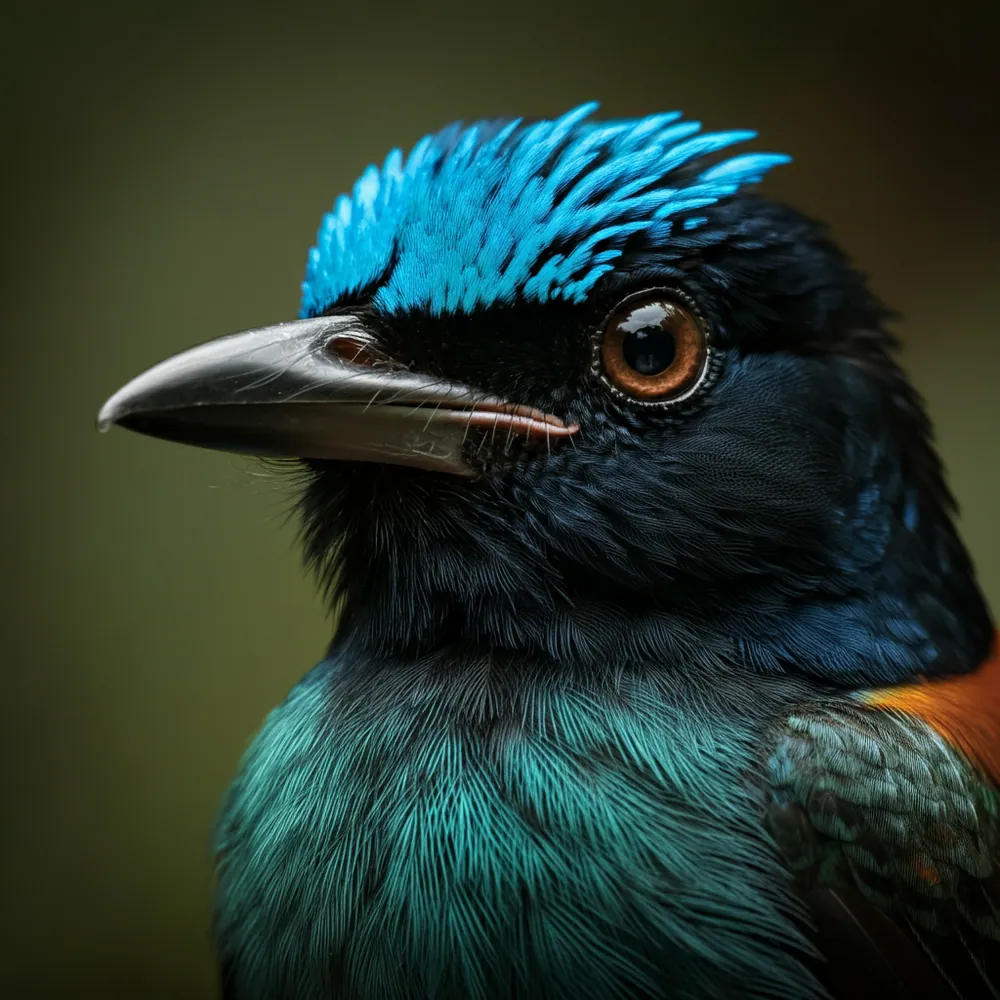
Imagine a bird that looks like it flew straight out of a superhero comic book or a magical fairy tale! Meet the Mascarene Paradise Flycatcher, a feathered fashionista with an incredible secret weapon: a super-long, flowing tail that can be twice as long as its whole body! Picture glossy, dark blue-black feathers that shimmer and sparkle in the sun, and bright, electric-blue rings around its eyes, like tiny, glowing jewels. This bird is a true showstopper, especially the boys with their magnificent, ribbon-like streamers trailing behind them!
But this bird isn't just pretty; it's a super-skilled hunter too! It zips and zooms through the trees like a tiny acrobat, catching bugs right out of the air with amazing speed. Watch closely, and you might see it sitting perfectly still, then *WHOOSH!* it launches into a breathtaking chase, its long tail streaming behind it like a superhero's cape. This amazing bird is like a tiny guardian of its island home, helping to keep the forest healthy by eating all those pesky bugs. It's only found on a few special islands, which makes it super unique and important. So, next time you think about incredible animals, remember this dazzling, darting, tail-waving wonder – the Mascarene Paradise Flycatcher!
Where the mascarene paradise flycatcher still lives — Reunion
The beautiful Mascarene Paradise Flycatcher lives in special forests on islands. When these forests are cut down for farms or buildings, the birds lose their homes and places to find food and raise their families.
Being done about itScientists and conservationists are working hard to protect the remaining forests where these birds live. They are also planting new trees to grow back their homes and create more safe spaces for them.
Invasive species
Sometimes, animals like rats or cats that don't belong on the islands are brought by people. These new animals, called invasive species, can eat the flycatcher's eggs or baby birds, making it hard for them to survive.
Being done about itRangers and volunteers are helping by carefully removing these harmful invasive animals from the flycatcher's habitats. They also work to make sure new invasive species don't arrive and cause more problems for the birds.
Brave scientists and conservation heroes are working hard to protect the special forests where these birds live and keep them safe from sneaky predators, making sure these beautiful birds have a chance to grow their families!