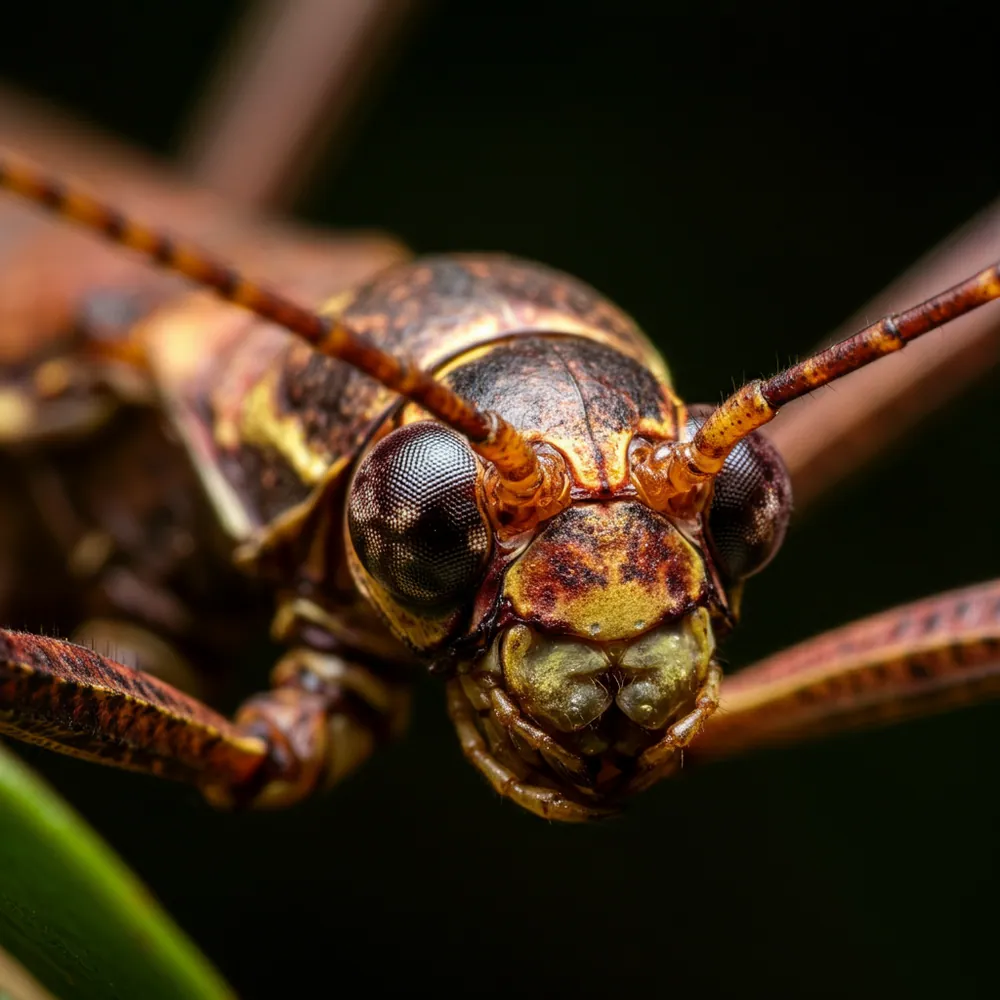
Hey, adventurers! Get ready to meet one of the most incredible insects on Earth – the Lord Howe Island Stick Insect, also known by its awesome nickname, the "tree lobster"! Imagine an insect that looks like something from a dinosaur movie, shiny black, with spiky legs, and as long as your hand (up to 15 centimeters!). But here's the really wild part: for 80 whole years, everyone thought these amazing creatures were gone forever. Poof! Extinct! Then, in 2001, scientists found a tiny group of them clinging to life on a super-steep, rocky island called Ball's Pyramid. It was like magic, bringing an animal back from the dead! That's why they're called a "Lazarus species."
These "tree lobsters" are super special in how they live. They're nocturnal, which means they wake up at night to munch on leaves from a special tea tree. During the day, they hide and sleep, moving slowly and carefully. What's even cooler is how they hang out: the smaller boy stick insects often ride around on the back of the bigger girl stick insects! And if a predator tries to bother them, they have a secret weapon: they curl up their tail and let out a musky, stinky smell. Yuck! But it works to keep them safe.
More than just cool, these amazing insects are like tiny gardeners, helping to keep their island healthy by breaking down plant matter. Their incredible comeback story is a huge win for nature! Scientists are now carefully helping baby "tree lobsters" go back to their original home on Lord Howe Island, where rats had made them disappear. It shows that with a little help, even the most lost creatures can find their way back, proving that anything is possible!
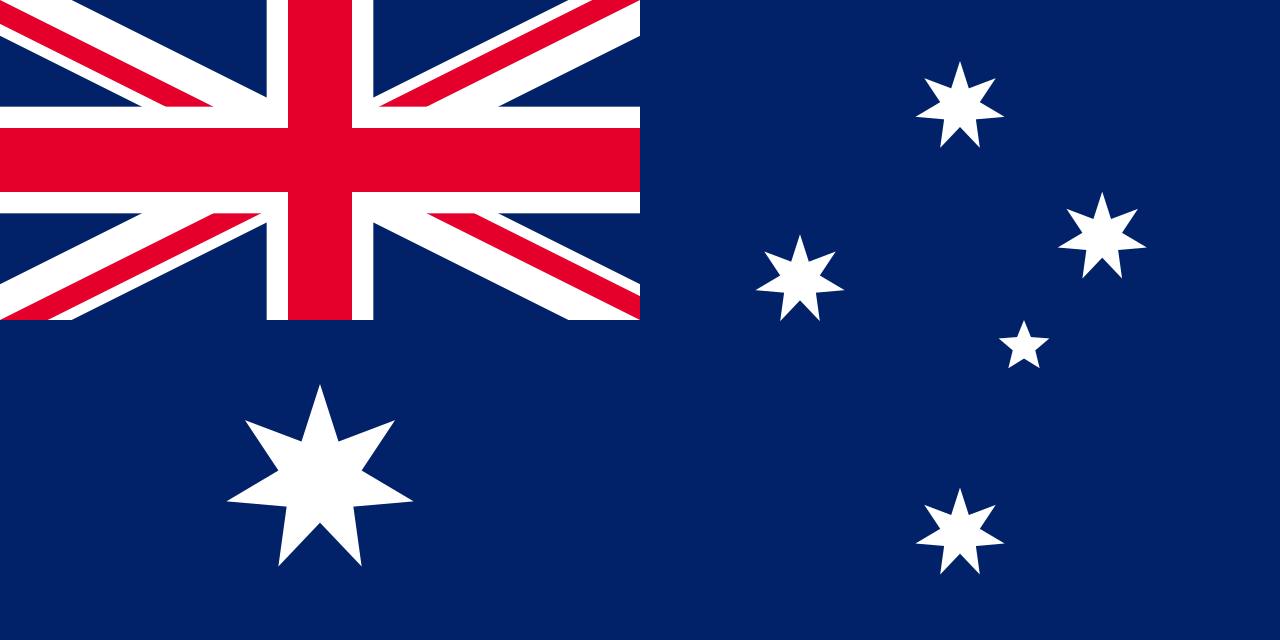
Where the lord howe island stick insect still lives — Australia
Imagine your house disappearing! The Lord Howe Island Stick Insects lost most of their forest homes where they found food and shelter, making it very hard for them to survive.
Being done about itPeople are now working hard to protect the special places where these stick insects live and are even trying to grow more of the plants they love to eat.
Invasive species
Long ago, black rats arrived on Lord Howe Island by accident and started eating these slow-moving stick insects, which had no way to protect themselves.
Being done about itScientists and island rangers worked super hard to remove all the rats from Lord Howe Island, making it safe again for the stick insects to someday return home.
Brave scientists are working like detectives, carefully breeding these amazing insects in special 'safe houses' like zoos, hoping to return them to their island home once it's safe from all dangers!
Also known asDryococelus australis
GroupAnimal
DietHerbivore
SizeUp to 25 grams for adult females, males are typically lighter.