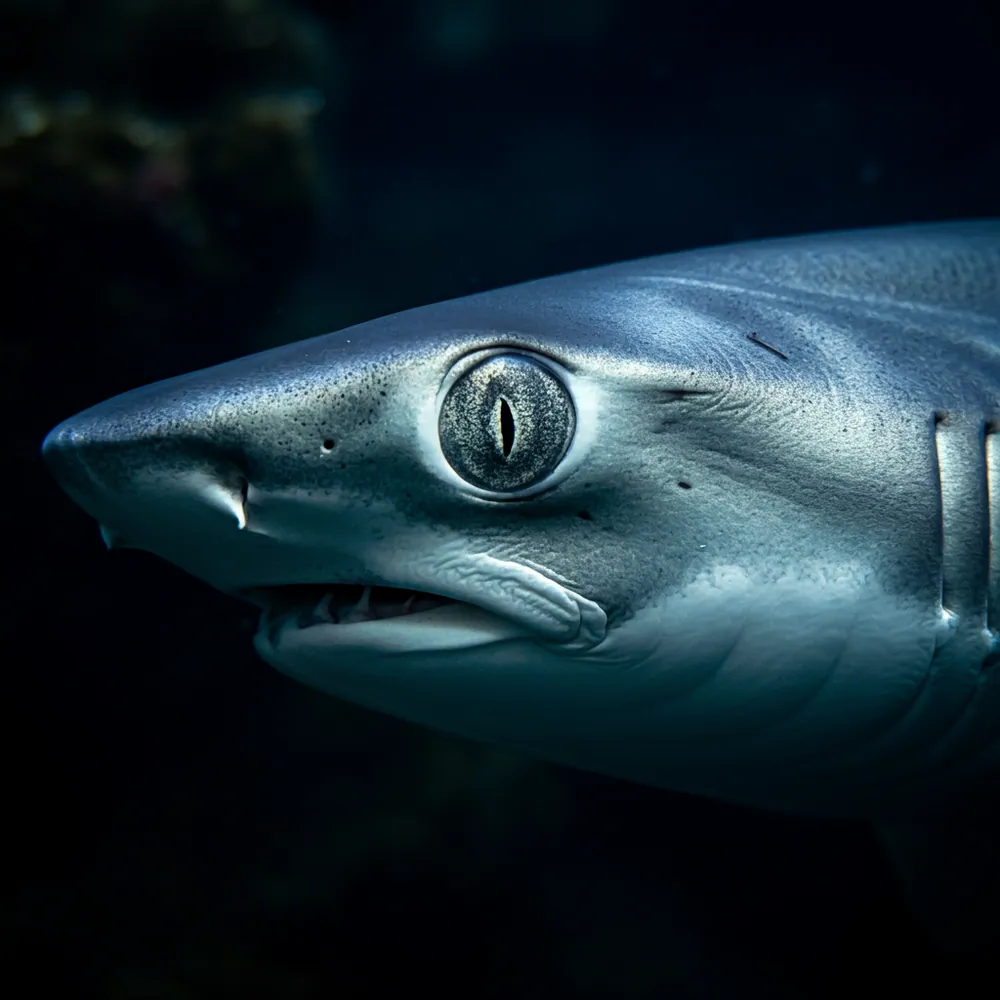
Imagine a super-fast, super-sleek submarine, but it's alive! Meet the Longfin Mako Shark, one of the ocean's most amazing athletes. This incredible shark looks like it was built for speed, with a smooth, dark blue body that fades to bright white underneath – perfect camouflage for sneaking up on dinner! But the coolest part? Check out its super long, paddle-shaped fins on the sides. They help it glide through the water with incredible grace, while its powerful, crescent-moon tail acts like a rocket engine, pushing it forward!
And boy, can it go! People call the Longfin Mako the "ocean's cheetah" because it's the fastest shark in the world! It can zoom up to 45 miles per hour – that's faster than most cars on a neighborhood street! With a mouth full of super sharp, pointy teeth, it's a master hunter, chasing down speedy fish like tuna and even swordfish. Sometimes, if you're super lucky, you might even see one leap high out of the water, like a giant, shimmering rocket – what an amazing sight!
So, why is this super-speedy shark so special? Well, besides being incredibly cool, Longfin Makos are like the ocean's superheroes! By hunting fast fish, they help keep the ocean healthy and strong, making sure other fish populations don't get too big and stay robust. They show us how amazing and important every creature is in our big blue world. Isn't that incredible? Let's cheer for the magnificent Longfin Mako!
Imagine a big net trying to catch tuna, but a Longfin Mako Shark accidentally swims into it too! This happens often, and sometimes these sharks are caught on purpose for their fins and meat, meaning too many are taken from the ocean.
Being done about itScientists are working to understand how many Longfin Mako Sharks are left and tell governments to set limits on fishing. Fishermen are also trying new ways to fish that avoid catching these sharks by accident, like using special hooks or nets.
Brave scientists and ocean heroes are on a mission to save these amazing sharks! They are working with governments to set rules for fishing so fewer Longfin Makos are accidentally caught, and helping create safe ocean zones where these speedy swimmers can thrive.
Also known asIsurus paucus
GroupAnimal
DietCarnivore
SizeUp to 70 kg (154 lbs), with larger specimens occasionally recorded