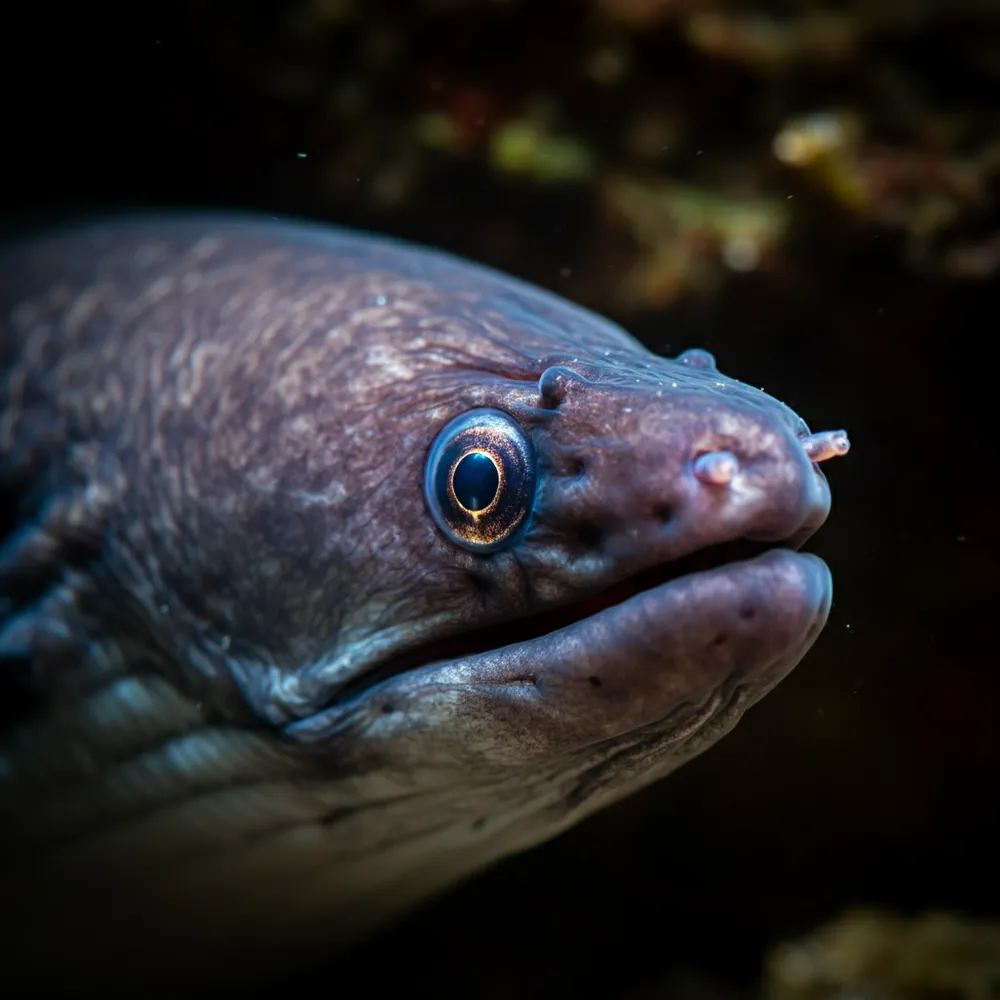
Hey explorers! Get ready to meet a super cool creature that's part fish, part mystery, and all amazing! Say hello to the Japanese Eel, also known as "unagi" (ooh-NAH-gee)! Imagine an animal that looks like a snake but can breathe underwater and swim like a champion. These slippery superstars live in places like Japan, Korea, and China, and they have a secret life that's truly wild!
What makes the unagi so special? Well, these eels are like nature's ultimate travelers! They're born way out in the big, wide ocean, sometimes thousands of miles away from land. But instead of staying there, baby eels swim all the way to freshwater rivers and streams. They grow up there, spending most of their lives exploring riverbeds. Then, when they're all grown up and ready to have their own babies, guess what? They swim *all the way back* to the ocean to lay their eggs! It's an incredible journey, like a super-long road trip without a map!
These amazing eels are not just champion swimmers; they're also super important to the places they call home. People have admired "unagi" for a long, long time, and their epic life story is one of the most fascinating tales in the animal kingdom. But these magnificent migrators need our help to keep their incredible journey going. Isn't it wonderful to think about such a small creature making such a giant trip? Let's learn more about how we can protect these wondrous wanderers!
Where the japanese eel still lives — Japan, China, Taiwan
Japanese eels live in both fresh rivers and the vast ocean, and sadly, pollution like plastic trash and harmful chemicals can make their homes dirty. This pollution can make eels sick, make it hard for them to find healthy food, or even poison them.
Being done about itScientists are working hard to understand how pollution affects eels, and many people are helping by cleaning up rivers and beaches. We can all help by reducing our trash and making sure fewer chemicals go into the water.
Habitat loss
Japanese eels need healthy rivers and oceans to complete their amazing journey from tiny larvae to grown-up fish. When dams are built or riverbanks are covered with buildings, it destroys their homes and blocks their path to where they need to go to grow and lay eggs.
Being done about itEngineers are now designing special 'eel ladders' or 'eel passes' that help eels climb over dams to reach their freshwater homes. Conservation groups are also working to protect and restore important wetland and river areas where eels live.
Bycatch / Overfishing
Sometimes, young Japanese eels are accidentally caught in fishing nets meant for other fish, which is called bycatch. Also, too many eels are sometimes caught on purpose for food before they have a chance to grow big and lay their own eggs, leading to fewer eels in the future.
Being done about itGovernments are creating rules about how many eels can be caught each year and during which seasons to give them a chance to reproduce. Scientists are also teaching fishermen about special nets that let young eels escape, and encouraging sustainable fishing practices.
Scientists are on a super important mission to save the Japanese Eel! They are working hard to protect the special rivers and ocean areas where eels live and travel, and are even trying to raise baby eels in special safe places to help their numbers grow big and strong again.
Also known asAnguilla japonica
GroupAnimal
DietCarnivore
Size0.5 - 2.0 kg (1.1 - 4.4 lbs) for adults, though larger specimens have been recorded.