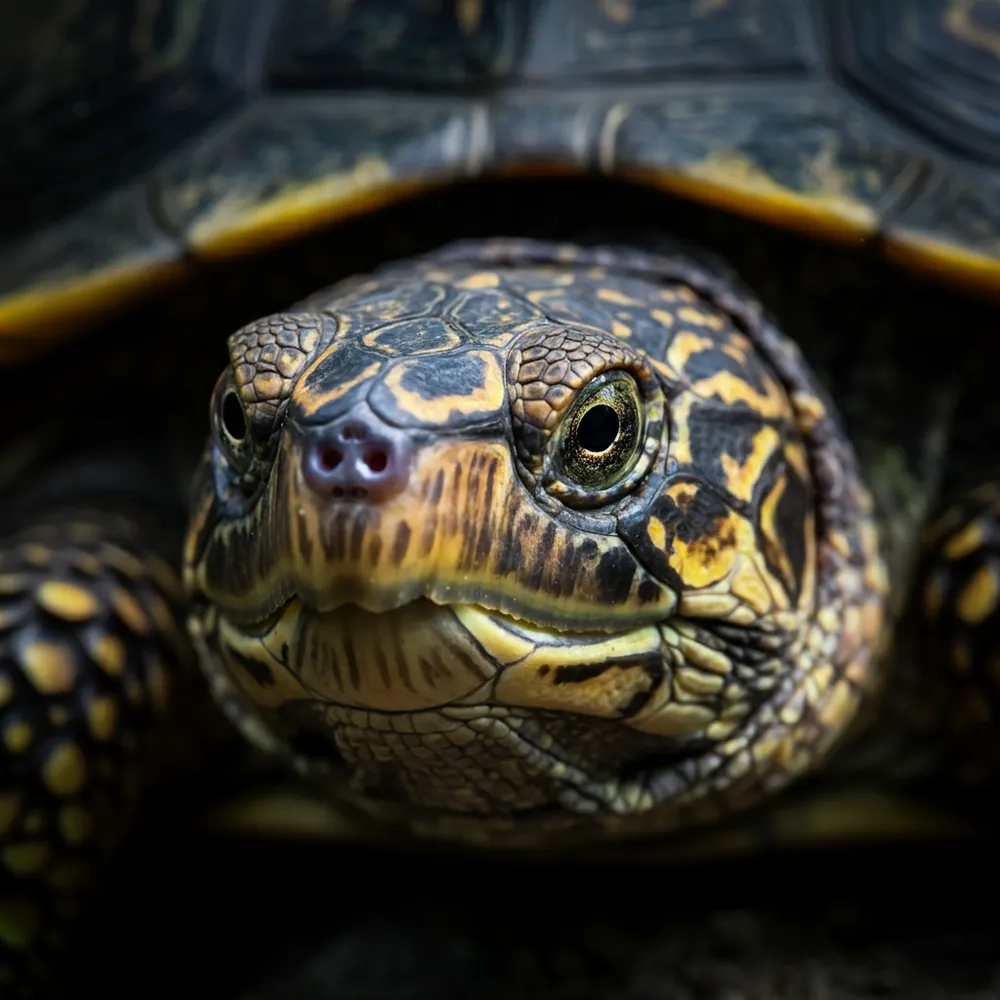
Hey ocean explorers! Get ready to meet one of the most stunning superheroes of the sea: the Hawksbill Turtle! Can you guess how it got its name? Look closely at its head, and you'll see a super cool, pointy beak, just like a hawk's! But that's not all – its shell is like a living treasure chest, shimmering with amazing patterns of amber, brown, and gold. Each Hawksbill has a one-of-a-kind shell, making it a true underwater masterpiece. Imagine seeing one of these graceful swimmers gliding past, almost three feet long, like a living jewel!
But these beautiful creatures aren't just pretty faces; they have a super important job! Hawksbill Turtles love to hang out in warm, shallow coral reefs, where they're like the ocean's best gardeners. With that special beak, they munch on sponges – yes, squishy sponges! – that grow on the reef. Why is that awesome? Because sponges can sometimes grow too fast and cover up the delicate corals. By eating them, Hawksbills keep the coral reefs healthy and happy, making sure there's plenty of space for all the other amazing fish and creatures to live. How cool is that? They're vital guardians of our oceans, and that's why we need to protect these incredible, critically endangered heroes!
It is about as long as you are tall.
Where the hawksbill turtle still lives — Indonesia
Hawksbill turtles lose their homes when people build on the beaches where they lay their eggs, and when coral reefs, their favorite feeding spots, get damaged or disappear. This means fewer safe places for these beautiful turtles to live and raise their babies.
Being done about itMany people are working to protect important nesting beaches and coral reefs, sometimes by creating special marine parks where building and harmful activities are not allowed. Scientists are also helping to grow new corals to restore damaged reefs, giving turtles back their homes.
Bycatch / Overfishing
Hawksbill turtles often get accidentally caught in fishing nets or on fishing lines meant for other fish, which is called 'bycatch.' This can trap them underwater, stop them from breathing, or cause serious injuries.
Being done about itScientists and fishermen are working together to design smarter fishing gear that allows turtles to escape safely, like special escape hatches in nets. Rules are also being made about where and when people can fish, to keep turtles out of harm's way.
Ocean heroes around the world are on a mission to save them! They protect the special beaches where momma turtles lay their eggs and rescue injured turtles, helping them get strong enough to swim free again.
Also known asEretmochelys imbricata
GroupAnimal
HabitatOcean
DietPrimarily sea sponges, but also sea anemones, jellyfish, and shrimp.
PredatorsHatchlings are eaten by crabs and birds; adults are preyed upon by large sharks.
Lifespan30 - 50 years
SizeUp to 3 ft long (90 cm); 100 - 150 lbs (45 - 68 kg)