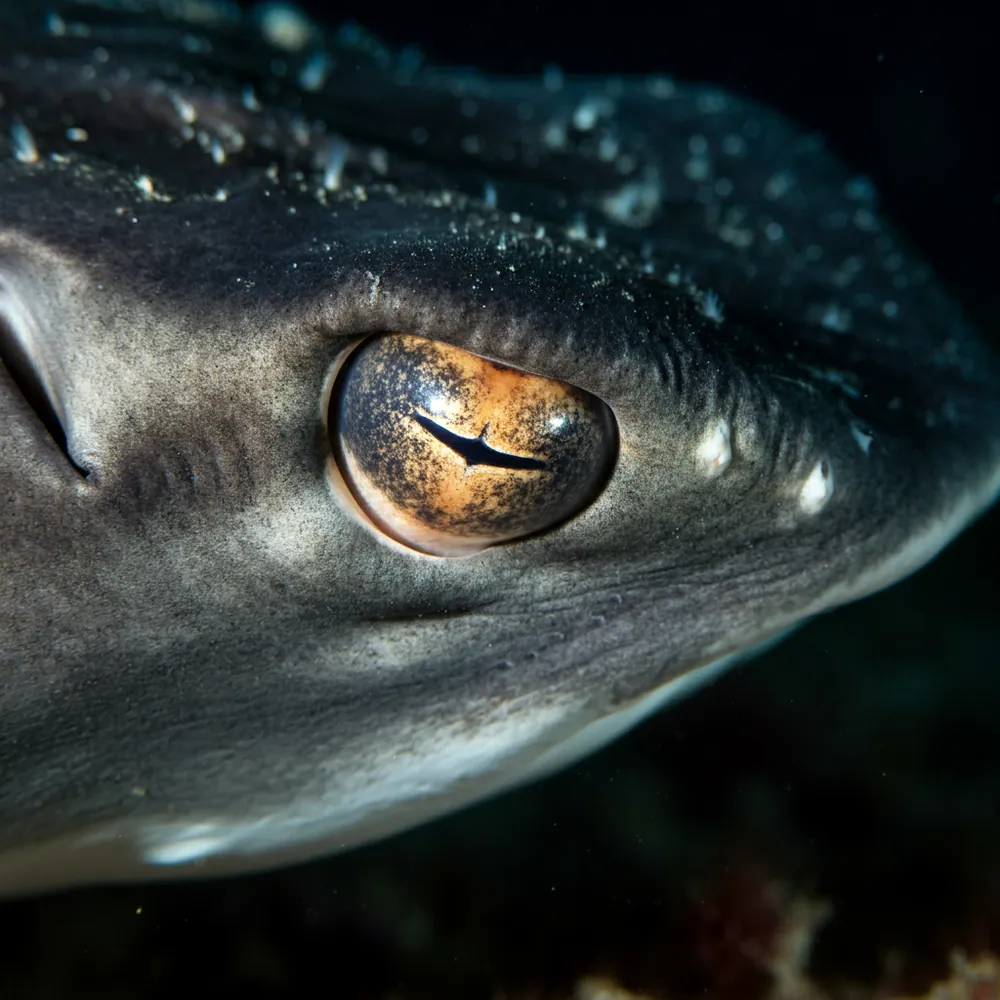
Get ready to meet one of the ocean's most amazing superheroes – the Devil Ray! Imagine a creature that looks like it's flying underwater with giant, graceful wings. These incredible animals are cousins to sharks and skates, but they have a super cool secret weapon: two horn-like fins sticking out from their heads! Don't worry, they're not for mischief; they're actually clever tools these rays use to grab their dinner. With their sleek, dark tops and bright white undersides, they glide through the ocean like mysterious, elegant birds.
But wait, there's more! These magnificent gliders aren't hunting big fish. Instead, they're expert filter feeders, meaning they munch on teeny-tiny microscopic snacks called zooplankton. They unfurl those 'horns' like giant scoops, guiding water packed with their favorite treats right into their mouths – talk about a clever way to eat! And sometimes, just for fun (or maybe to say hello!), you might even spot them launching their entire bodies out of the water in a spectacular, acrobatic leap! Imagine seeing a whole school of them doing a synchronized water ballet – it's an ocean show like no other!
Devil Rays are not just pretty faces; they're super important for keeping our oceans healthy! By eating all that plankton, they help balance the ocean's food web. Sadly, these gentle giants need our help because they're facing some tough challenges. Protecting these awesome underwater flyers means we're helping to keep the whole ocean happy and healthy for future generations. So next time you think about the ocean, remember the amazing Devil Ray, dancing through the waves and making the world a better place!
Imagine big fishing boats casting huge nets for other fish like tuna; sometimes, the curious devil rays accidentally swim into these nets and get caught. This is called 'bycatch,' and it means they're caught by mistake, or sometimes, too many are caught on purpose for their gill plates.
Being done about itScientists are working hard with fishermen to invent special nets that have escape hatches for rays, so they can swim right out if they get tangled. Also, many countries are making rules to protect devil rays, helping to make sure they are not caught too often.
Brave ocean scientists and conservationists are on a mission to save them by creating special protected areas in the ocean where Devil Rays can swim safely, and by working with fishermen to use special gear that helps avoid catching them by accident.