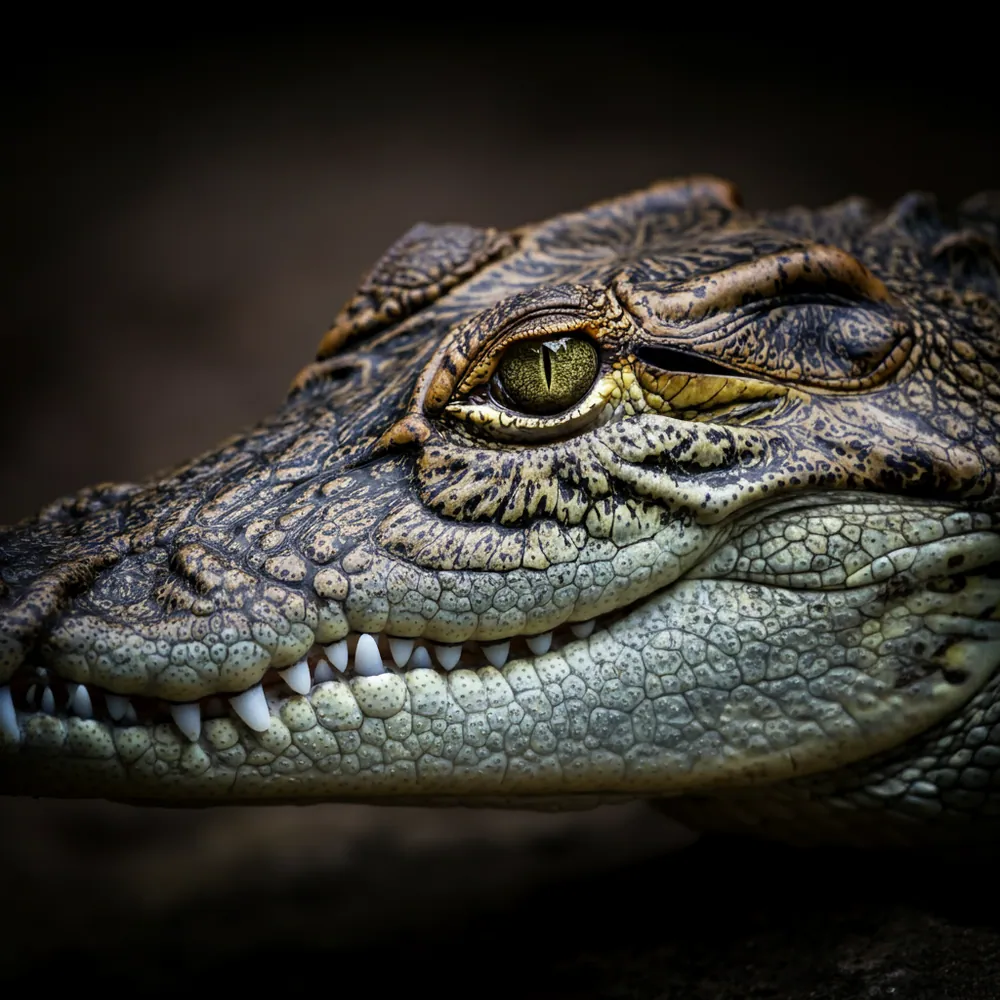
Hey nature explorers! Get ready to meet one of the coolest creatures from the sunny Caribbean – the incredible Cuban Crocodile! Imagine a reptile that looks like it stepped right out of a dinosaur movie, with a super tough, dark olive-green body, splashed with awesome black and yellow speckles. It’s like nature’s camouflage expert, blending perfectly into its marshy home. But wait, there’s more! Its back is covered in bumpy, bony armor, called scutes, making it look like a real-life armored tank!
Now, here's where it gets REALLY exciting! These crocs aren't just great swimmers; they're also super athletes! Unlike most crocodiles, the Cuban Croc can do something totally jaw-dropping: it can run on land with a special "gallop" – like a mini-dinosaur dash! And get this – they can even LEAP out of the water to snatch birds right out of the air! Talk about an amazing jump! With powerful jaws and a super-strong tail, these clever hunters are masters of their wetland world, patiently waiting for their next meal before a lightning-fast attack.
But these amazing reptiles are more than just cool hunters; they're super important for their home. As top predators, they help keep their wetland ecosystems healthy and balanced, making sure all the other animals thrive. So, when you see a Cuban Crocodile, you're not just looking at a fantastic animal; you're looking at a guardian of the wild, helping protect an entire, precious part of our planet. Isn't that just incredible?
Cuban crocodiles live in wetlands, like swamps and marshes, but these special homes are disappearing. People sometimes drain these areas to build farms or houses, leaving the crocodiles with nowhere to live or hunt.
Being done about itScientists and park rangers are working hard to protect these important swampy areas where Cuban crocodiles live. They are setting up special protected parks and even trying to restore wetlands that have been damaged.
Scientists and animal heroes are on an important mission to save these unique crocs! They run special 'crocodile nurseries' where baby crocs are raised safely, and they're working hard to protect their wetland homes, especially in places like Cuba's Zapata Swamp, so these amazing reptiles can thrive again.
Also known asCrocodylus rhombifer
GroupAnimal
DietCarnivore
Size70-80 kg (150-180 lbs), with large males up to 200 kg (440 lbs)