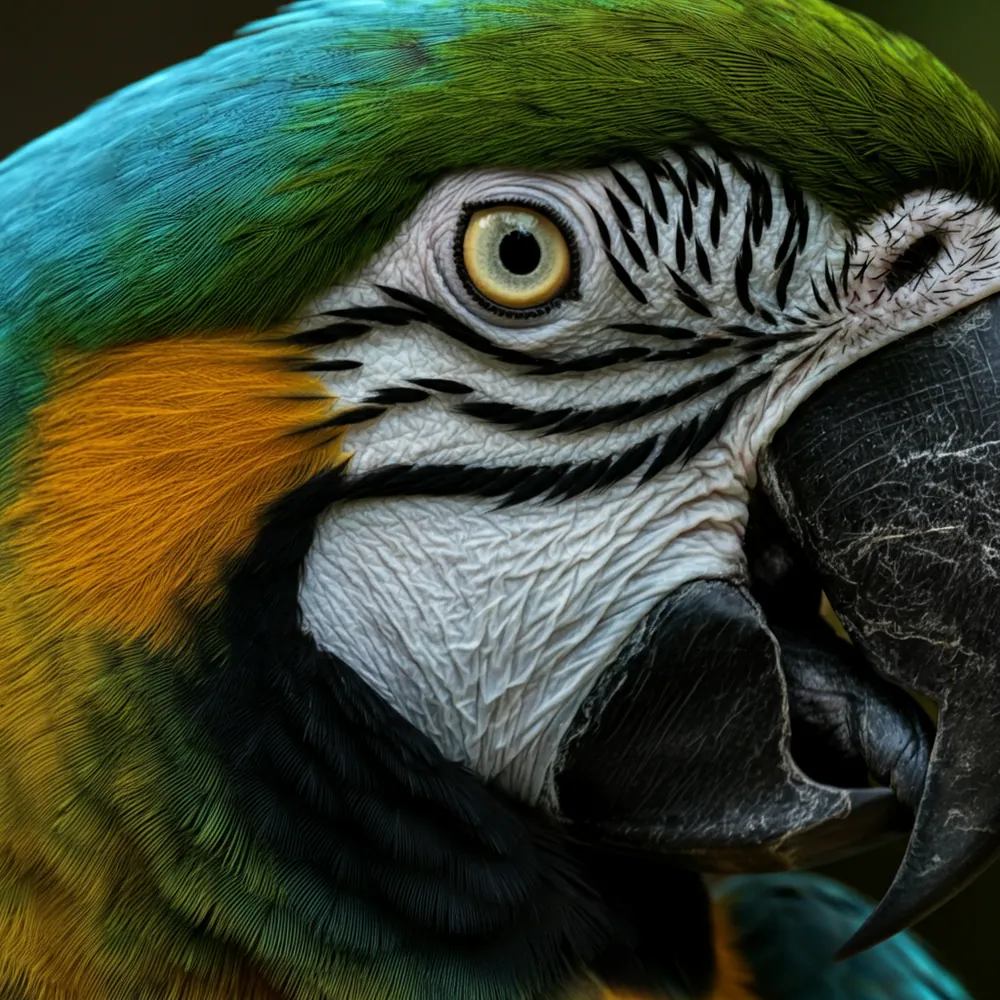
Hey there, future wildlife explorers! Get ready to meet a bird so dazzling, it looks like it flew right out of a painter's dream! Say hello to the Blue-throated Macaw, a feathered superstar with a name that tells you exactly why it's so special. Imagine a bird with a sky-blue throat and a crown so blue it matches the brightest day, all set against a chest and belly of brilliant sunshine yellow! Its back and wings shimmer with that same gorgeous blue, making it truly one of a kind. And check out that super-strong beak – it's like a built-in nutcracker, perfectly designed for cracking the toughest treats!
These amazing macaws are super social, flying in pairs or small families across the sunny savannas of Bolivia, their only home on Earth! They absolutely love munching on the super-tough nuts from *Attalea* palm trees. With their powerful beaks, they crack open these tricky snacks like it's no big deal, showing off their incredible strength. Their loud, booming calls echo through the air, letting everyone know they're around, and when they fly, they soar with incredible speed and grace.
But here's what makes them extra, extra cool: these macaws are like nature's gardeners! When they eat those palm nuts, they accidentally help plant new trees, keeping their forest home healthy for everyone. They're also an "indicator species," which means if they're doing well, their whole habitat is doing well! Sadly, there aren't many Blue-throated Macaws left – fewer than 1,500 – because their homes are disappearing and some people try to catch them for pets. Protecting these magnificent blue and yellow beauties means protecting a whole world of amazing plants and animals!
How many are left?
Have a guess first — how many do you think are still alive?
about 450
each dot ≈ 10 individuals
Imagine if all the Blue-throated Macaws in the entire world could fit into just one or two classrooms – that's how few there are, only about 450 of these amazing birds left!
It is about as long as you are tall.
Where the blue-throated macaw still lives — Bolivia
Some people want these beautiful birds as pets, so they illegally catch them from their homes in the forest. This means fewer macaws are left in the wild to have babies and fly free.
Being done about itBrave rangers and special police work hard to stop people from illegally catching and selling these macaws. They also help teach everyone why it's important for these birds to stay wild and free.
Habitat loss
The forests where Blue-throated Macaws live are shrinking because trees are being cut down to make space for farms or homes. This means the macaws lose their homes, food, and safe places to raise their chicks.
Being done about itScientists and local people are working together to protect the macaws' forest homes and even plant new trees. They also help farmers find ways to grow food without cutting down the macaws' special trees.
Brave conservationists are on a super important mission, building special 'adoptive nests' for the macaws and working with local ranchers to protect their homes, so these incredible birds can grow their families safely.