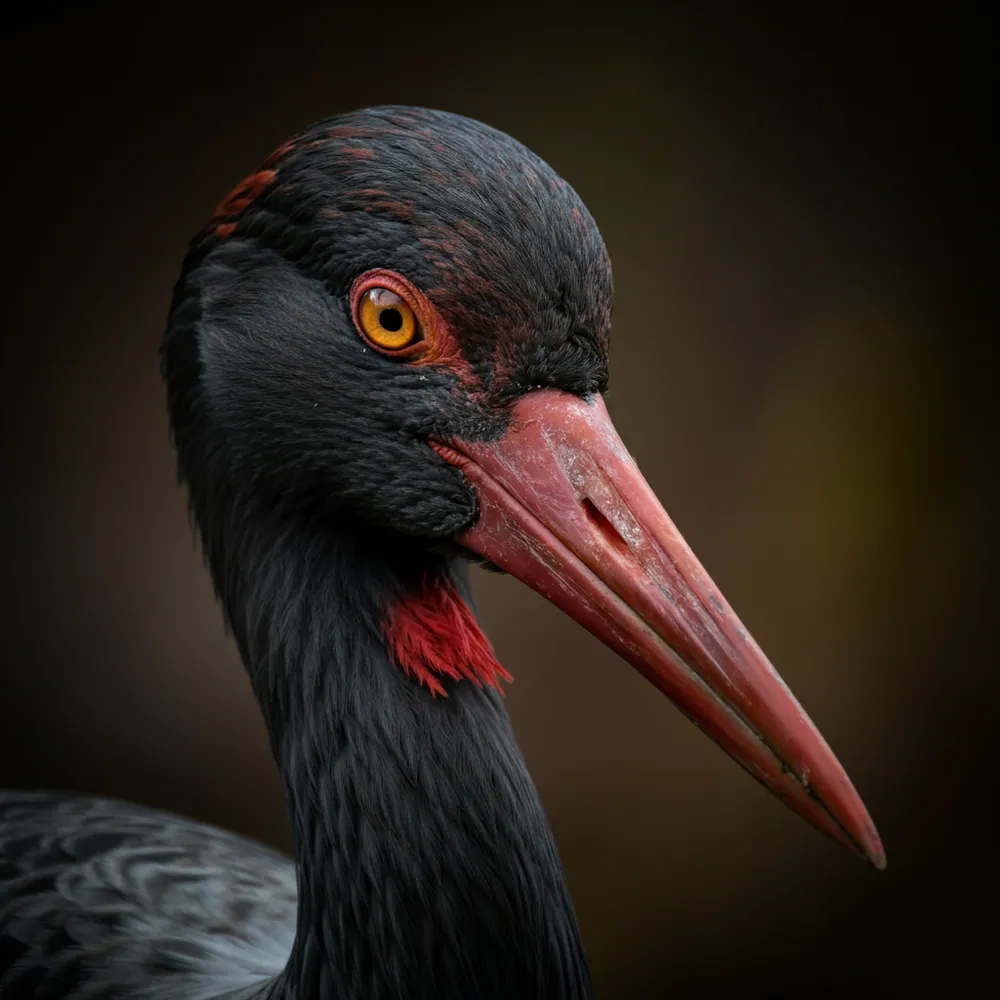
Get ready to meet one of the most magnificent birds on Earth, the Black-necked Crane! Imagine a bird as tall as you are, living high up on the 'roof of the world' in places like the snowy Tibetan Plateau. These graceful giants have a wingspan wider than some small cars, allowing them to soar through the sky like a moving cloud against the mountain peaks.
But it's not just their size that makes them special. These cranes are super stylish! They wear a beautiful whitish-gray coat, but their head and upper neck are a sleek, shiny black. And look closely – they have a tiny, bright red patch on their head, like a fancy jewel, and a cool white spot right behind their eye. Their long, black legs help them wade through wetlands, and when they fly, their black wingtips look like elegant gloves against the sky!
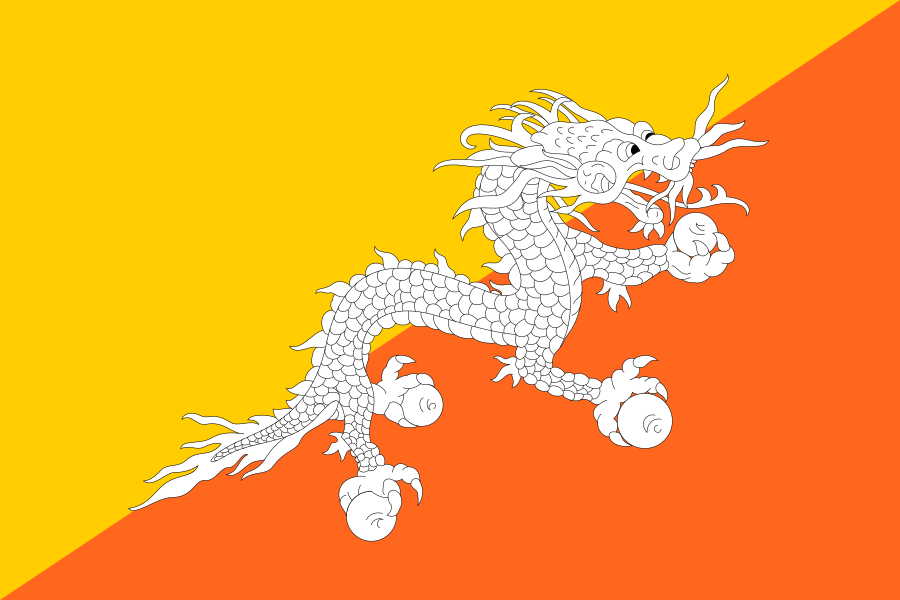
What makes them truly incredible is how much people love and respect them. In many places where they live, like Bhutan and parts of India, these cranes are considered sacred and are a symbol of good luck and long life! People even have special festivals to celebrate their arrival, and one region has chosen it as its special state bird. So, when you see a Black-necked Crane, you're not just seeing a beautiful bird, you're seeing a living legend, cherished by cultures for centuries!
Where the black-necked crane still lives — China, India, Bhutan
Black-necked Cranes need special wetlands high in the mountains to find food and raise their babies, but these places are shrinking. People sometimes build farms, roads, or towns in these areas, taking away the cranes' homes.
Being done about itScientists and rangers are working to protect these important wetland areas by making them special wildlife reserves. They also teach local people how to live peacefully with the cranes and help keep their homes safe.
Climate change
The high mountain homes of the Black-necked Cranes are getting warmer because of changes in our planet's climate. This can melt ice too quickly, change when plants grow, or even dry up the wetlands where cranes find food.
Being done about itScientists are carefully watching how climate change affects the cranes so they can figure out the best ways to help them. Many people are also trying to reduce pollution to slow down climate change and keep the cranes' mountain homes just right.
Brave scientists and local communities are working together like a detective team to protect the cranes' homes, especially their special wetland nurseries where baby cranes hatch. They're also teaching everyone how to be good neighbors to these magnificent birds, making sure they have safe places to live and grow.